
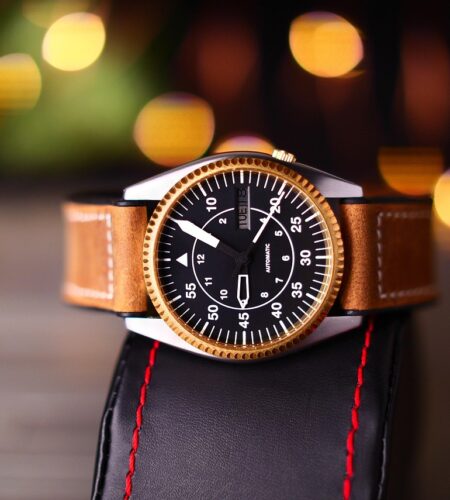
Flawless by day — puzzling by night.
An enthusiast unwraps a new watch, admires the dial under daylight, then notices in a dark room that some markers glow strongly while others are dim or patchy. The emotional impulse is to return immediately, especially when the watch was just purchased.
Before returning, pause and collect objective evidence: charge the lume with a bright light for a fixed time, photograph or record a short video in the same low-light conditions from a stable distance, note the time after charging, and compare to the maker’s lume claims (e.g., Super-LumiNova grades). Attach these files to a clear message to the seller or forum — an evidence-backed query often resolves defects faster than an impulsive return.
Why new lume often looks uneven
A patchy glow on a brand‑new watch is a common sight and usually has simple explanations. Uneven lume rarely means a failed movement or a ruined dial — more often it reflects how lume is applied, charged, and viewed.
Common harmless causes
- Application variation: Lume is a paste laid into tiny recesses; slight thickness changes or gaps are normal, especially on printed numerals vs recessed indices.
- Different compounds: Hands, markers, and pip may use different lume types or batches, producing different brightness or color.
- Insufficient initial charge: Fresh out of the factory a watch may have little stored light; the first charge can make the pattern even out.
- Surface finishes and depth: Textured dials, glossy varnish, or thin bezels can reflect or hide glow, making some areas appear dimmer.
- Protective films or residue: A factory film, oil, or adhesive can mute parts of the lume until removed.
Quick checks before returning
Owners should fully charge the watch under bright light for 10–15 minutes, test in a truly dark room after a few minutes, inspect with a loupe for coverage issues or films, and photograph the result. If unevenness persists after these checks, then contact the seller for warranty support.
Repeatable at‑home lume test — exact steps
-
Prepare the scene and tools
Work in a room that can be fully darkened. Use a tripod or stable surface, a camera (DSLR or a phone with manual mode), a neutral white card, and a notebook or timestamped voice note app; include the white card in every shot for exposure reference. Start with the simple tests to check lume type if unfamiliar with lume materials.
-
Charge consistently
Expose the watch to a bright, consistent light source for 15 minutes — direct sun through a window or a 1000–2000 lux LED lamp held ~10 cm away. Record start and end times; do not touch the dial after charging.
-
Photograph sequence (DSLR settings)
Mount the camera, focus manually on the dial, shoot RAW. At lights-out take: Photo A (within 5 s): Manual, ISO 1600, f/4, shutter 2 s. Photo B (30 s): ISO 1600, f/4, shutter 8 s. Photo C (5 min): ISO 3200, f/4, shutter 15 s. Use a remote or timer to avoid shake and include the white card in frame.
-
Smartphone alternative
Use a manual exposure app: lock focus and white balance, set exposure 2–8 s and ISO to maximum allowed without clipping, and capture at the same time points (0–5 s, 30 s, 5 min). Save originals and note exact timestamps.
-
Physical checks and documentation
After photographic proof, tilt the watch under a flashlight and inspect with a loupe for thick or missing paint. If dark patches persist in timed photos and physical inspection, consult guidance on when uneven lume indicates a defect. Attach all RAW files and timestamps to any claim.
Keep camera settings identical between watches/tests for defensible comparisons.
Always keep RAW files and a plain‑text note of start/stop times and charging method.
Include a neutral white card in every frame to prove exposure consistency.
If returning the watch, supply the photos, timestamps, and a short note describing the light source used; this prevents disputes about charging or photographic artefacts.
What Uneven Lume Really Means
Not necessarily—small brightness or texture differences are common and usually cosmetic.
Lume thickness, application method and initial charge pattern create visible variation even when performance is fine.
Slight hue shifts commonly occur between production batches or different lume formulas on genuine watches.
Pigment batches, curing conditions and the substrate color change perceived tone even with correct application.
They often don’t; shape, thickness and surface area affect how much lume they hold and how they charge.
Thinner hands or recessed markers contain less photoluminescent material, so dimmer output can be normal.
Permanent dark areas, visible gaps, flaking or missing lume are real defects and justify return.
Red flags: persistent unlit patches after a full charge, obvious gaps or missing material, loose/flaking lume, or inconsistent glow on identical elements—these indicate application failure.
When uneven lume is intentional or harmless
Uneven lume often reflects deliberate design or material limits rather than a manufacturing flaw. Common intentional treatments include two-tone or contrasting lume colors, selective application (hands left lightly filled to preserve shape), and textured dials that make pigment sit unevenly when seen close-up.
- Two-tone or colored lume: Brands sometimes use green on markers and blue on hands for a layered look; this will appear uneven by purpose.
- Thin hands vs broad markers: Narrow hands hold less pigment and look dimmer even if perfectly applied.
- Different lume grades/pigments: Super-LumiNova variants (e.g., C3 = warm green, BGW9 = cool blue) vary brightness and hue.
- Applied vs printed lume: Raised fills catch light differently than printed paint.
Compare the watch to official press photos, factory sample videos, and spec sheets that list lume type. If samples match the delivered piece, the effect is likely intentional. If the lume visibly deviates from official imagery or one side is inconsistent under repeatable tests, then a warranty claim or return is warranted.
Photos, timestamps, charges — what to collect
-
Document purchase and watch ID
Photograph the watch, receipt, serial number, and packaging in daylight; include a dated receipt or order confirmation visible in one shot.
-
Take staged charge photos
Charge the watch under a strong light for 2 minutes, then take unedited photos at: immediately, 10 seconds, 1 minute, and 5 minutes in the dark so brightness and hotspots are comparable.
-
Capture views and scale
Take a close macro of the dial, a full-watch shot, and one with a ruler or coin for scale; include multiple angles (hands, markers, applied indices).
-
Record a short video
Make a 15–20s video showing the charge, initial glow and any change while the camera is stable; include audible time reference (phone clock) if possible.
-
Preserve originals and metadata
Keep raw/uncompressed files, don’t crop or apply filters, note timestamps and exact charge conditions (light source, distance, duration), and retain box, tags, and packaging.
Do not edit photos or videos. Originals prove timestamps and metadata.
Keep the box, tags, invoice and serial photos. Avoid sending images via social apps that compress files; attach originals or a ZIP. If unsure, include a short caption with charge time and light source.Seller and warranty responses
Likely responses from sellers
Most sellers follow a few predictable paths:
- Replacement: Full exchange or refund if reported within the retailer’s return window and the issue is judged a defect.
- Repair or relume: Factory service may be offered; sometimes relume is charged as a paid repair, especially if deemed cosmetic or outside warranty.
- Partial refund/price adjustment: Some dealers offer a discount if the owner accepts a minor imperfection.
- Cosmetic denial: If the brand classifies the uneven lume as intentional finish variation, a claim may be declined.
Warranties typically cover manufacturing defects but not normal variation, wear, or aftermarket modifications. Reluming by a third party can void coverage.
Timing and documentation
Act quickly: the best outcomes come when the claim is made inside the return window. Provide timestamped photos, short videos showing charging and runtime, and keep original packaging and purchase receipts. Maintain written correspondence; it makes exchanges, repairs, or refunds far easier to obtain.
Decision checklist
Decisive takeaway
- Objective tests remove emotion.
- Keep clear, timestamped evidence.
- Request replacement if defect is proven.
Translate test results into one action: keep, query, or return. Objective testing and clear evidence turn an emotional impulse into an informed choice.
Quick question for others: when you do the charge shots, do you manually set exposure on your phone or just use auto? I worry auto might hide subtle differences.
I returned one once without doing the timed-charge photos and got denied — seller said “normal variation.” Lesson learned: document everything.
Also: if the lume is intentionally two-tone (I’ve seen this on retro reissues), sellers will usually say it in the spec sheet, so check that before you open a returns case.
Same here — got a partial refund the second time because I sent clear, timestamped photos. Sellers respond much faster when you make it easy for them to see the problem.
I had uneven lume due to a thin paint coat on the hands. It looked bad straight from the factory but matched up with the hour markers after a solid 20‑30 minute charge. I chose to keep it because the brand’s sample photos showed the same look, and the seller offered a paid relume but it was expensive.
If you’re not comfortable, follow the decision checklist in the article: keep if repeatable and matches brand, query if borderline, return if red-flag behaviours (one spot never charges, flaking, massively dim sections).
Good point, Alicia. Another option before committing to a paid relume: ask the seller for close-up brand sample photos of the same reference or request service history. Sometimes the factory applies a different pigment batch and the brand will confirm whether it’s within tolerance.
Minor rant: some sellers are just lazy and will deny everything if you don’t look like a ‘pro’ with your photos. The photo/timestamp requirement in the article is spot on.
Also, if you’ve got packaging and tags still, that helps a ton during disputes.
Short and sweet: if the unevenness is repeatable after the exact steps in the guide, return. If it’s only after a short charge or inconsistent, give it a proper charge and take vids.
I used the article’s exact timestamps when contacting support and they offered me a replacement within 48 hours.
Thanks for sharing, Laura. And remember to keep all unedited files — sellers sometimes ask for RAW or full-res images, and some buyers have found that sending the uncompressed video speeds things up.
Good checklist. I did the timed photos test and it saved me from returning a watch that just needed a longer charge. Tip: use your phone’s timer and take shots at 0, 5, 15, and 30 minutes like the article says.
I got a brand-new diver and the hands looked way dimmer than the markers. Followed the repeatable at-home lume test: same result after 30 minutes, and the video showed one spot barely charging. Definitely a defect in my case.
Sorry you ran into that, Mike. Since your photos and video were repeatable and showed a persistent spot, that meets the article’s red-flag criteria. When you contact the seller include those timestamped images and the short video — ask for a replacement first, mention the warranty if it’s still valid.