
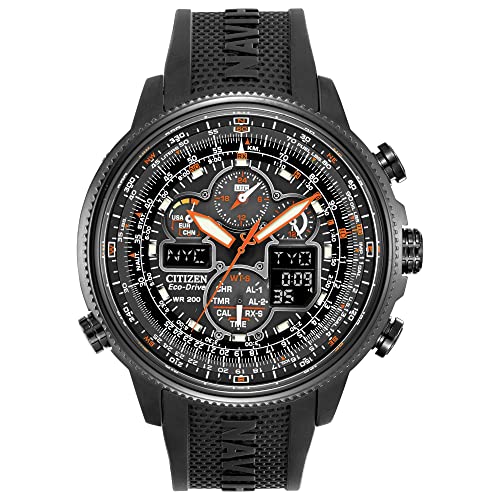
One wrist, one decision: which complication will actually earn its place in the cockpit?
A late-afternoon cross‑country with multiple legs makes the choice concrete: ELAPSED‑TIME tasks — fuel checks, holds, timing approaches — occur repeatedly. A chronograph becomes a tool, not an ornament: start, stop, reset, glance. Limited wrist real estate and maintenance budgets push toward the complication that will be used every flight.
A GMT excels on regular international routes or frequent timezone hops, but its advantage fades if timezone changes are rare. The right mindset is a tradeoff: accept occasional redundancy for daily timing utility, or pay for timezone convenience that may sit idle. There is no universally “better” choice.


When pilots reach for a chronograph
Typical in‑flight tasks
A chronograph is pulled out for discrete, repeatable timing tasks rather than broad situational awareness. Frequent uses include:
- timing holds and outbound/inbound legs (60–90 second reference intervals),
- timing instrument approaches and missed‑approach segments,
- short cross‑country legs or step climbs where minutes matter,
- engine run‑ups, taxi and takeoff checks, and fuel burn spot checks.
When these tasks occur multiple times per flight or on almost every sortie, the chronograph becomes a primary tool rather than a nicety. For single‑pilot IFR or flight instruction, the ability to start/stop/reset quickly without menu diving is a real advantage.
Choosing a chrono over a GMT
If horizon awareness and multiple timezones are rarely consulted but precise intervals are checked several times per flight, a chronograph wins. Mechanical chronographs like the [Seagull 1963 Aviation Chronograph Mechanical Watch] provide a tactile pushbutton feel for repeated starts; multifunction models such as the [Citizen Promaster Navihawk: Top Pilot Chronograph] add aviation‑grade features for frequent users. Contrast this with GMT models that suit constant timezone tracking rather than repetitive stopwatch work.
Consider the rule of thumb: if timing tasks happen on most flights, pick a chrono — decide using the when a chronograph is more useful for pilots.
If timing occurs several times per flight, choose a chronograph. Mechanical pushers give faster, more reliable starts than multi‑function digital menus.
Practical cockpit uses for a GMT
When a GMT is actually used
A GMT hand is most useful when flight operations regularly reference Zulu/UTC alongside local time. Common real examples: airline and cargo crews who file and dispatch in Zulu, charter and medevac pilots juggling origin and destination times, and ferry pilots crossing multiple time zones. For those roles, the GMT becomes a daily instrument rather than an occasional convenience.
Frequency guidance and who benefits
- Daily: airline, cargo, long‑haul charter, military — these crews save constant conversion steps by keeping the 24‑hour hand set to Zulu.
- Weekly to monthly: flight instructors and frequently routed GA pilots — useful during cross‑country or international training hops.
- Occasional: local VFR pilots — the complication is handy but not essential.
A GMT reduces mental math in multi‑leg ops by showing both zones at a glance: compare planned Zulu departure times, calculate enroute blocks, and check crew duty windows without adding or subtracting offsets. For shoppers, the setting GMT for practical cockpit use walkthrough explains how to lock the 24‑hour hand on UTC while keeping main hands on local time.
Among the picks here, the Torgoen T9 GMT is the practical choice for daily Zulu tracking, while the Citizen Promaster Navihawk and the Seagull 1963 remain strong options for chronograph‑focused pilots.
Set the GMT/24‑hour hand to UTC at engine start and leave the main hands on local time. This single habit removes a conversion step for every timed dispatch or ETA check.
|
premium chrono
Citizen Promaster Navihawk: Top Pilot Chronograph
|
value GMT
Torgoen T9 GMT: Bold Pilot Watch
|
retro chrono
Seagull 1963 Aviation Chronograph Mechanical Watch
|
|
|---|---|---|---|
|
|
|
|
|
| Timing tasks | Excellent (stopwatch) | Limited | Excellent (stopwatch) |
| Timezone management | Basic (world time models only) | Excellent (GMT hand) | Basic |
| Cockpit usability | Good (multi-button) | Very good (simple set) | Good (mechanical pushers) |
| Buy now | Buy now | Buy now |
Myths vs facts
GMTs simplify multi-leg planning and reduce math even for occasional timezone changes.
A single extra hand or adjustable hour makes cross‑country legs and NOTAM timing easier.
Chronographs are built to time holding patterns, fuel checks and approaches.
Start/stop timing and lap measurement match many cockpit tasks.
Each tool solves different problems; multifunction models trade simplicity for features.
Atomic/GPS watches (e.g., Navihawk) blur lines, but controls and readout still differ.
Side‑by‑side decision guide
Compare priorities first: timing precision vs timezone convenience. Chronographs win when repeated stopwatch use is routine—fuel checks, holds, pattern work. GMTs win when crossing zones, coordinating with dispatch, or planning ETAs across airports.
Key quick checks:
- If flights involve frequent short timing tasks: pick a chronograph (mechanical like the Seagull 1963 for feel, or tech-forward Citizen Navihawk for added features).
- If schedule coordination & multi‑leg routing dominate: pick a GMT (Torgoen T9 offers readable GMT functionality at a value price).
- If both needs are roughly equal: prefer a multifunction pilot watch (atomic/GPS or dual‑time models) or accept a small compromise in cockpit simplicity.
Practical cockpit considerations:
- Ease of use: GMTs usually adjust the hour hand independently — faster and less fiddly than running a chrono.
- Legibility under pressure: large hands and clear markings trump complication count.
- Maintenance: mechanical chronographs need winding/servicing; quartz GMTs are lower maintenance.
Scoring heuristic (simple)
Assign 1 point for each match: frequent stopwatch tasks, regular timezone changes, low maintenance preference, vintage/tool aesthetic. If chronograph scores higher → favor chronograph. If GMT scores higher → favor GMT. Tie → choose a multifunction pilot watch or the model that feels more intuitive in flight.
Unit examples: Citizen Navihawk (chrono with nav features), Seagull 1963 (retro chrono), Torgoen T9 (value GMT).
Instrument-grade Pilot Chronograph
Atomic Timekeeping with 1/100s Chrono
Citizen Promaster Navihawk is an instrument-style pilot chronograph that pairs atomic timekeeping, world‑time synchronization and a 1/100s stopwatch in a single, utility-first package. It suits crew and frequent operators who need repeatable elapsed timing and reliable, cross‑airport time sync rather than a dressy aviator aesthetic.
- Atomic timekeeping keeps the watch synchronized to the second
- 1/100s chronograph and 24‑hour totalizer for precise elapsed timing
- Built‑in world time (43 cities) simplifies multi‑leg planning
- Sturdy, highly legible cockpit‑style display
- Large 48 mm case feels bulky under flight gear
- Dense, information-rich dial can be hard to scan quickly
- Multiple modes and slide‑rule controls have a learning curve
- Eco‑Drive needs regular light exposure for long trips
The Navihawk earns a spot on a pilot’s wrist by delivering real, repeatable cockpit utility rather than mere styling. Atomic synchronization plus a detailed chronograph and world‑time tools make it a practical instrument for timing holds, legs and crew coordination. The trade‑offs are bulk and a busy user interface — acceptable for those who prioritize function over minimalism.
Pilot‑Focused Value GMT
Vintage-inspired GMT with clear readability
A straightforward GMT designed for pilots who value clear, reliable dual‑time reading over gadgetry. It pairs cockpit‑inspired styling with Swiss‑quartz simplicity, aimed at flight crews and private pilots seeking a usable GMT without the premium price.
- Clear GMT hand and high legibility
- Vintage pilot aesthetic that reads easily in cockpit light
- Affordable Swiss‑quartz reliability
- Comfortable leather strap and wearable 42mm case
- Mineral crystal rather than sapphire
- Quartz movement lacks mechanical cachet
- Basic lume (non‑radioactive) versus professional-grade illumination
- Fewer advanced features than pricier pilot GMTs
Torgoen T9 GMT is an efficient, no‑nonsense choice for pilots who need dependable GMT tracking without a high cost. It prioritizes legibility and practical design over premium materials or a mechanical movement, making it a sensible operational tool rather than a collector’s piece.
Tactile retro chronograph for hobbyist pilots
- Satisfying manual-wind action and crisp pusher feel
- Authentic 1960s pilot aesthetic at an affordable price
- Compact, wearable case with clear chronograph layout
- Requires regular hand-winding; not automatic
- Limited low-light legibility and smaller subdials
- Chronograph ergonomics and reset not ideal for rapid cockpit timing
Quick take A mechanically engaging chronograph that trades cockpit practicality for vintage charm and tactile satisfaction.
The Seagull 1963 is primarily an emotional, hands-on chronograph: winding it, hearing the escapement, and actuating the pushers is part of the appeal. That mechanical intimacy appeals to hobbyists but brings trade-offs—daily winding, modest lume, and ergonomics that fall short compared with instrument-grade chronographs. Treat it as a collectible or weekend companion rather than a primary cockpit timing tool.
Checklist and trigger rule
- Tally hours: >12–15 flight hours/month with regular timezone changes → lean GMT.
- Timing frequency: if start/leg timing, holds, or fuel checks happen on most flights → lean chronograph.
- Quartz vs mechanical: quartz for low maintenance and accuracy; mechanical for tactile appeal and service willingness required.
Use a short checklist: count flight hours, note how often timezones are crossed, and record how frequently timing tasks occur. Apply the trigger rule below to make a fast, practical choice.
