

The charm of a vintage chronograph is easier to enjoy when the watch itself is new.
A cream dial and twin registers can look convincing in a listing photo. The harder questions sit off-camera: who handles a faulty pusher, whether the movement is clearly identified, and what the return policy covers. A mechanical ST1901 offers the ritual of winding; a mecha-quartz chronograph offers a similar look with less fuss.
That trade-off matters more than a vintage-style dial alone. When weighing vintage and modern budget picks, clear seller terms and photos of the actual watch are worth as much attention as the case and dial.
Five ways to wear a vintage chronograph

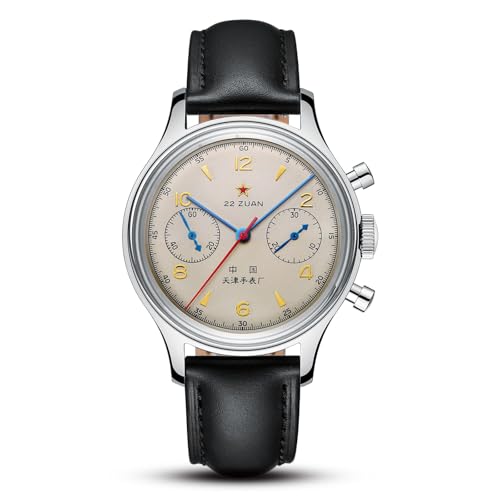
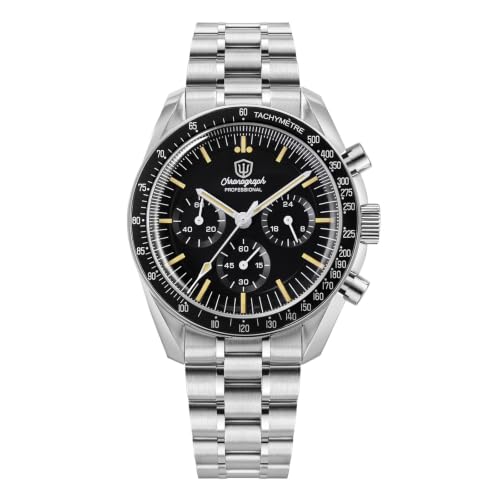


Vintage looks, modern ownership
These are modern watches with vintage-inspired designs, not old chronographs with uncertain service histories. The microbrand label fits smaller names here more neatly than it fits established manufacturer Sea-Gull.
-
Design and fit
The Sugess and Sea-Gull lean into hand-wound, period-style appeal; Watchdives and About Vintage offer less demanding alternatives. Compare lug-to-lug length and thickness alongside diameter: a handsome dial cannot rescue an awkward fit.
-
Listing clarity
Check the exact movement, case dimensions, dial variant and water-resistance claim against actual-watch photos. Clear return terms and responsive seller support count for more than nostalgic product copy.
-
Ownership trade-offs
A mechanical chronograph brings the pleasure of winding it, along with potential servicing costs. Mecha-quartz and quartz simplify ownership; the better buy depends on whether that convenience matters more than the mechanical feel.
Where to buy with confidence
An official store is usually the clearest source for current specifications, warranty terms and returns. An authorized seller can offer similar backing, but authorization is worth checking on the brand’s website rather than taking a listing badge at face value. Marketplaces offer more choice; their buyer protection may help with a misdescribed watch, but it does not replace a manufacturer’s warranty. Secondhand listings may cost less, while typically placing more of the condition and service risk on the buyer.
Match the watch before comparing prices. Check the reference, movement, case size, dial variant and included strap against the brand’s specifications. A Sugess ST1901 listing should identify the hand-wound movement; a Watchdives WD1863 listing should identify mecha-quartz. For an About Vintage watch, confirm whether the listing is for the 1815 or the 1960 rather than relying on a similar-looking dial photo. Actual-watch photos matter especially when finding vintage-style pieces on marketplaces.
Then compare the delivered price: shipping, import taxes and any return postage can erase a discount. Check where the watch ships from, how long returns remain available, whether a worn watch qualifies, and who handles warranty claims.
Ask for clear photos of the case, dial and caseback, plus a short video showing the chronograph start, stop and reset. Keep the listing and seller’s answers.
Sugess Chrono Heritage: a hand-wound racing chronograph
01
Column wheel movement with exhibition caseback
The Sugess Chrono Heritage is for someone who wants the ritual of winding a watch as much as the look of a vintage racing chronograph. Its brown leather strap, 40mm case and display back give this roughly $230 model a different appeal from a grab-and-go quartz watch.
- Hand-wound column-wheel chronograph offers a hands-on mechanical experience.
- Listed sapphire crystal and exhibition caseback add practical and visual appeal.
- 40mm case is a manageable size for many wrists.
- Manual winding requires regular attention; the stated power reserve is 45 hours.
- Mechanical servicing may cost a meaningful share of the purchase price.
- Listing calls the movement ST1901 in one place and ST1902 in another.
This is the pick for a buyer willing to trade quartz convenience for a hand-wound chronograph and vintage racing character. Before ordering, confirm photos of the actual dial, the movement designation—ST1901 or ST1902—and the seller’s return, warranty and servicing terms. Budget for eventual maintenance rather than treating the purchase price as the full cost of ownership.
Sea-Gull 1963 International Edition: a hand-wound pilot chronograph
A well-reviewed take on the classic aviation design
The Sea-Gull 1963 International Edition brings the look of a mid-century aviation chronograph to a watch priced around $280. Its two-register dial and hand-wound ST1901 make it a natural fit for someone who wants a mechanical stopwatch and enjoys the ritual of winding it.
Sea-Gull is an established watchmaker, not strictly a microbrand. It belongs in this lineup because it offers the vintage styling and accessible mechanical ownership that draw readers to smaller chronograph brands.
- Hand-wound ST1901 gives the stopwatch a distinctly mechanical feel.
- Aviation-inspired design at an approachable price.
- cons
- best_for
- not_for
- Winding and eventual servicing require more attention than quartz.
- 30 m water resistance is not a swimming specification.
- Numerous “1963” listings make the exact edition easy to confuse.
Watchdives WD1863: vintage chronograph style for less
Affordable vintage styling with quartz convenience
At roughly $130, the Watchdives WD1863 brings a compact 39mm case and 1963-inspired chronograph styling within reach. Its VK63 mecha-quartz movement uses battery-powered timekeeping, while the pushers operate a central chronograph hand and 60-minute counter. It suits someone drawn to the look of an older chronograph without seeking the daily winding ritual.
For another point of reference, see how vintage chronographs compare with Seiko models.
- 39mm case keeps the vintage-inspired proportions
- Quartz timekeeping requires no daily winding
- Chronograph pushers offer a crisp, mechanical-style reset
- Does not provide the feel or ownership ritual of a hand-wound movement
- Battery replacement remains part of long-term upkeep
About Vintage 1815: a quieter everyday chronograph
Sapphire glass and Italian leather in a refined design
The About Vintage 1815 trades racing stripes and military references for a dressier steel case and blue sunray dial. It makes sense for someone who wants chronograph timing without making the watch the loudest part of an outfit. The AV1008 listing describes a 41mm case that is 11mm thick, so it is worth comparing those dimensions with a watch that already fits well. At roughly $350, this is a purchase to judge by the exact dial, strap and seller terms on offer—not by specifications borrowed from another 1815 variant.
- Listed sapphire crystal has an anti-reflective coating.
- Italian leather strap suits the restrained styling.
- Quartz Miyota 6S11 avoids hand-winding.
- At roughly $350, it costs considerably more than the budget picks.
- A 41mm case may feel broad on smaller wrists.
- Blue sunray reflections could affect at-a-glance reading; check actual-watch photos.
About Vintage 1960 Racing: a bolder quartz chronograph
Racing-inspired styling with 10 ATM water resistance
The 1960 Racing is the sportier alternative to About Vintage’s restrained 1815. Its steel-and-off-white colorway leans into motorsport style, making it a better match for casual clothes than for someone seeking one understated chronograph for every occasion. At around $400, it suits a buyer who wants that look without the winding routine of the mechanical Sugess.
- Miyota 6S20 quartz movement requires no daily winding.
- Sapphire crystal and stated 10 ATM water resistance add everyday practicality.
- Distinct racing style offers a livelier alternative to the 1815.
- Around $400, above the approximate prices of both the 1815 and Sugess.
- Only five reviews support the listing’s five-star rating.
- Bold styling is less adaptable to dressier settings.
Check the listing, then the watch
-
Match the exact model and dial
For a new vintage-inspired watch, compare the seller’s reference number with the maker’s listing. Check the dial color, subdial layout and handset against actual-watch photos; similar names can hide different versions.
-
Confirm the movement and case size
Ask for the movement designation rather than assuming it from the styling. Compare case diameter, thickness and lug-to-lug length with a watch that already fits.
-
Check what arrives in the box
Confirm the strap or bracelet, spare links, packaging and any promised papers. A product photo may show accessories that are not included.
-
Read the terms and calculate the delivered price
Check who provides the warranty, when the return window starts, and whether a return requires unused condition. Add shipping, tax and possible import charges before comparing sellers.
-
For a genuinely old chronograph, verify the watch itself
A matching model name is not proof of originality. Request clear photos of the dial, caseback, movement and serial markings, plus service history and a description of chronograph function. Use authenticity checks for vintage chronographs to assess replaced parts, refinished dials and condition before paying.
For regular wear on a budget, the Watchdives WD1863 offers a compact 39mm case and a mecha-quartz movement that needs no winding. The About Vintage 1815 is the more polished everyday choice, while the 1960 Racing suits bolder styling and offers stated 10 ATM water resistance. For a hand-wound watch, choose Sugess for racing character or the Sea-Gull 1963 International Edition for classic pilot styling.
Wrist fit, dial style, movement upkeep, listing evidence, and seller support still matter. Save the precise reference, then compare photos, warranty, returns, shipping, and total delivered price across credible sellers. On overseas orders, account for international watch import costs before calling a lower sticker price a bargain.