
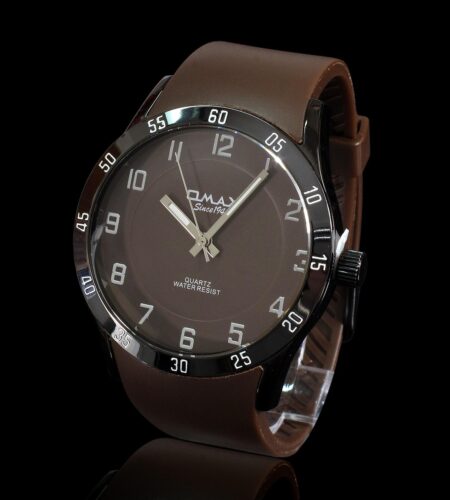
Stop and verify: slow the sale, document condition, and control shipment before releasing the watch.
A seller lists a vintage watch and soon gets urgent messages asking for rush payment, odd transfer methods, or delivery-before-payment. SLOW DOWN. Rapid pressure often masks a scam; treat speed as a warning sign, not an advantage.
Make verifiable payment, clear condition records, and controlled shipping the non-negotiable steps. Require cleared funds or an established escrow service, produce dated photos of the dial, caseback, movement and serial, and ship only via tracked, insured carriage with signature on delivery. Preserve screenshots, transfer receipts, and the courier tracking number—these turn disputes into provable evidence.
- Wait seven business days after a bank transfer clears before releasing the watch.
- Insure the parcel for at least 110% of the sale value and require signature-on-delivery.
- Prefer marketplace escrow or bank-to-bank transfers; decline payments to personal accounts or anonymous crypto.
Common buyer‑side scams and quick defenses
This catalogue lists common buyer‑side scams, early warning signs, and one immediate defensive step to stop problems before shipment.
- Overpayment/reimbursement scam: Early signs: buyer sends more than the asking price then asks for a refund of the excess. Immediate defense: refuse refunds outside the original cleared payment channel; wait for payment to fully clear.
- Fake payment confirmation (screenshots): Early signs: glossy receipts or forwarded emails claiming payment. Immediate defense: verify payment in the seller account or bank — never rely on images.
- Chargeback fraud: Early signs: new buyer, high-pressure purchase, insistence on fast shipping. Immediate defense: keep all transaction records, tracked insured delivery, and ID‑verified signatures.
- Phony escrow/marketplace site: Early signs: buyer suggests off‑platform escrow or sends a link. Immediate defense: use only reputable, known escrow services; verify URL and TLS certificate.
- Reshipping/mule request: Early signs: buyer asks items forwarded to different address or another country. Immediate defense: decline and require original shipping to the buyer’s verified address.
- Request for personal or banking info: Early signs: asks for SSN, bank routing, or remote access. Immediate defense: refuse; share only platform‑required, minimal details.
- Change of shipping after payment: Early signs: sudden address change post‑payment. Immediate defense: suspend shipment until payment and address are reverified with the payment provider.
- Return/exchange manipulation: Early signs: buyer describes minor issue to return, then reports different damage. Immediate defense: photograph and document condition before shipping and require tracked returns.
Step-by-step payment verification protocol
-
Pause and name the payment route
Seller should state the acceptable payment channels (insured bank wire, verified PayPal with seller protection, trusted escrow) and pause if the buyer pushes a different route. Any rush or insistence is a red flag; refuse pressured shortcuts.
-
Obtain verifiable payment evidence
Request a transaction reference, payer name, and a screenshot showing the payment status. Independently verify the reference with the bank or payment provider using the institution’s public contact details—not any number supplied by the buyer.
-
Confirm funds have fully cleared
Distinguish cleared funds from promises or pending statuses (e.g., eCheck, ACH, ‘on hold’). Wait for the seller’s bank or payment service to show final settled credit before shipping; allow the typical clearance window (varies by method).
-
Match payer identity and shipping details
Ensure the payer name and billing address match the payment record; send a dated, signed invoice to that exact name and require shipment only to the verified address. For third-party payers, request additional verification and treat as higher risk.
-
Document everything and refuse unsafe shortcuts
Keep all messages, receipts, and bank confirmations. Decline payments lacking seller protection, resist refund/overpayment schemes, and ship only with tracked, insured delivery requiring signature upon receipt.
Avoid Zelle, Cash App, Venmo for high-value sales. These services generally lack seller protection and transfers are often irreversible. If a buyer insists on them, treat the sale as unacceptable or insist on escrow through a reputable platform.
Stop interception and false non‑receipt claims
Scammers exploit address tricks to intercept shipments or later claim non‑receipt. Common tactics include false forwarding or temporary forwarding services, redirecting a parcel to a different street or business, authorizing a carrier ‘hold for pickup’ at an address they control, and persuading the courier to release a package to a neighbor or receptionist.
To defend delivery in a dispute, require the following documentation and carrier services before shipping:
- Insured shipment for full sale value (carrier insurance or third‑party insurer) with a copy of the insurance contract and claim reference number.
- Adult signature required (not “no signature” or indirect release). For highest assurance, request ID‑verified adult signature when available.
- Electronic proof of delivery: legible signature image, timestamp, delivery GPS coordinates or delivery‑location photo.
- Chain‑of‑custody scans: pickup scan, transfer scans, and final delivery scan showing each handoff.
- Registered Mail/secure courier option for very high values (USPS Registered Mail or equivalent secure service from FedEx/UPS).
- Retain packing photos, weight, and the original tracking history exported as PDF.
These records are essential when contesting a buyer claim or chargeback; see proving ownership to avoid chargebacks for documentation strategy.
Once payment clears, do not accept a new delivery address or redirection requests. Redirects and last‑minute drops dramatically increase interception risk and often void carrier protections. Keep records of any buyer communications about address decisions.
Preventing post‑sale authenticity disputes
Why disputes succeed
Buyers often win authenticity disputes because platforms favor the claimant when the seller lacks contemporaneous, verifiable proof. Photos can be edited, watches can be altered after delivery, and serialized components may be swapped — leaving no easy way to prove the item left the seller in the advertised condition. A short, time‑stamped record taken before shipping shifts the balance of evidence.
Practical checklist to reduce false returns
- High‑resolution photos (front, caseback, serial, movement, clasp, lug holes) with a dated paper or phone lockscreen in shot. Capture wear marks and unique flaws.
- Short videos (30–60 sec): show running movement, crown action, bezel rotation, and a slow pan across serial numbers. Record with visible date/time if possible.
- Paperwork and provenance: photographed original box, warranty card, receipts, service invoices, and any prior appraisal — include scans and photos of both sides of documents.
- Shipment evidence: chain‑of‑custody labels, insured tracking, and signature capture saved as PDFs.
- Independent checks: obtain a stamped inspection or report from a brand service center or reputable third‑party authenticator; consider authentication to reduce fraud risk and attach the report to the listing.
Store all evidence in a timestamped cloud folder and keep local backups.
Make a five‑second, date‑visible video of the watch running beside an open calendar app. Save the file with a clear filename and upload immediately to cloud storage.
Keep marketplace protections intact
Marketplace traps
Buyers often try to move communication or payment off the platform, ask to mark a sale as a “gift,” request alternate shipping addresses, or send fake payment screenshots. Others will open disputes quickly or claim “item not as described” to trigger buyer-protection rules. These tactics are designed to strip away the marketplace’s automated protections.
Best practices to preserve protections
- Keep all communication on the marketplace. Refuse off‑platform chats or payments.
- Use platform-approved payment flows only and confirm clearance in the seller dashboard before shipping.
- Don’t change shipping instructions or mark items as gifts; ship to the verified address with insured, signature-required delivery.
- Document everything: save timestamps, messages, and post‑sale photos. Upload images per the marketplace photo checklist.
See the related guides below for marketplace-specific scenarios and the photo checklist.

Assemble a chargeback/evidence packet (step‑by‑step)
-
1. Build a precise timeline
List every event with date and time: listing created, payment received, messages, shipment date, delivery scan. Export platform timestamps and include them in the same order as events.
-
2. Add payment documentation
Include merchant dashboard screenshots showing transaction ID, payer name, amount and date, plus processor reference numbers. Attach bank traces or settlement advices if available.
-
3. Include fulfillment proof
Provide carrier tracking history, delivery scans, insured amount, and the signature image or electronic POD. Add photos of the sealed package, drop‑off receipt and any chain‑of‑custody scans.
-
4. Prove item authenticity and condition
Attach pre‑shipment photos with timestamps and visible serial numbers, service or authentication reports, and original listing photos. Note any marks or defects referenced in the sale.
-
5. Collect communication and policy evidence
Export the complete message thread showing terms, buyer acknowledgments, and return instructions. Include the listing’s stated return policy and any written refund offers or repair agreements.
-
6. Organize, label and submit
Create a one‑page cover sheet with a short chronology and contact details. Convert items to a single PDF, name files clearly, keep originals, and submit through the processor/marketplace channel before the deadline.
Filename format: YYYYMMDD_TXNID_topic.pdf (keeps files chronological).
Cover sheet: 3‑line chronology, transaction ID, requested action.
Order: Timeline → Payment → Shipping → Item → Communications.
Keep originals: retain high‑res images and raw messaging for 12 months.
Submit promptly: processor deadlines vary; act as soon as a chargeback notice arrives.
Pre‑sale checklist
- Clear payment Confirm funds are fully cleared (not pending) with the receiving bank or platform before authorizing shipment.
- Document condition Photograph the watch from all angles with dated proof, record serials, box/papers, and a short video of movement and timekeeping.
- Set shipping terms Require insured, tracked delivery with adult signature, no redirects; state return/authenticity window in writing.
- Preserve protections Keep all communications on the marketplace, save receipts and screenshots to preserve buyer‑protection eligibility.
If fraud is suspected
- Trigger: payment reversal, buyer insists on off‑platform change, or falsified tracking/POD.
- Trigger: conflicting authenticity claims after delivery with no prior inspection agreement.
- Trigger: urgent pressure to ship before verification completes.
Immediate steps: Freeze shipment (if not shipped), notify the platform and payment provider, and assemble the evidence packet. Do not engage in off‑platform negotiations.
When to escalate: File a formal dispute with the payment processor and local police if funds are reversed or identity fraud is suspected; provide the timeline, payment records, shipping scans, and all messages.
Question: when you require “detailed dated photos and video” before shipping, how much is too much? I had a buyer demand a 10‑minute authenticity video and weird angles — I complied but felt it was excessive. Also the section about assembling an evidence packet is gold, but how do you store that securely for months in case of a dispute?
Totally get the annoyance. I do a 1–2 minute video showing serial number, clasp, movement if possible, and a clear shot of the date on my phone screen next to the watch. That’s usually enough for buyers and disputes. For storage I keep a timestamped folder on cloud storage and back up to an external drive monthly.
Good questions. For authenticity media: a concise 60–90 second video is sufficient — show serials, hallmarks, movement (if you can), and include a handwritten dated note next to the watch.
For storage: export your evidence packet (photos, video, payment screenshots, messages) into a single chronological PDF/ZIP and store copies in two places: an encrypted cloud folder (e.g., with 2FA) and an offline drive. Keep retention for at least 180 days or the platform’s dispute window, whichever is longer. Label the packet with the sale date and buyer identifier for quick retrieval.
I had a buyer try to get me to ship to a different address after payment cleared, claiming a family emergency. I followed the article and refused redirects and asked for insured signature delivery.
Payment did ‘clear’ on their end (PayPal-like screenshot), but I waited for the bank confirmation as recommended and then canceled when the payment didn’t actually land. Lesson: screenshots = worthless, always verify through the platform/bank.
Short and sweet: the marketplace protections section literally saved me last month. Follow their steps exactly and don’t give in to pressure — scammers count on urgency. 😉