
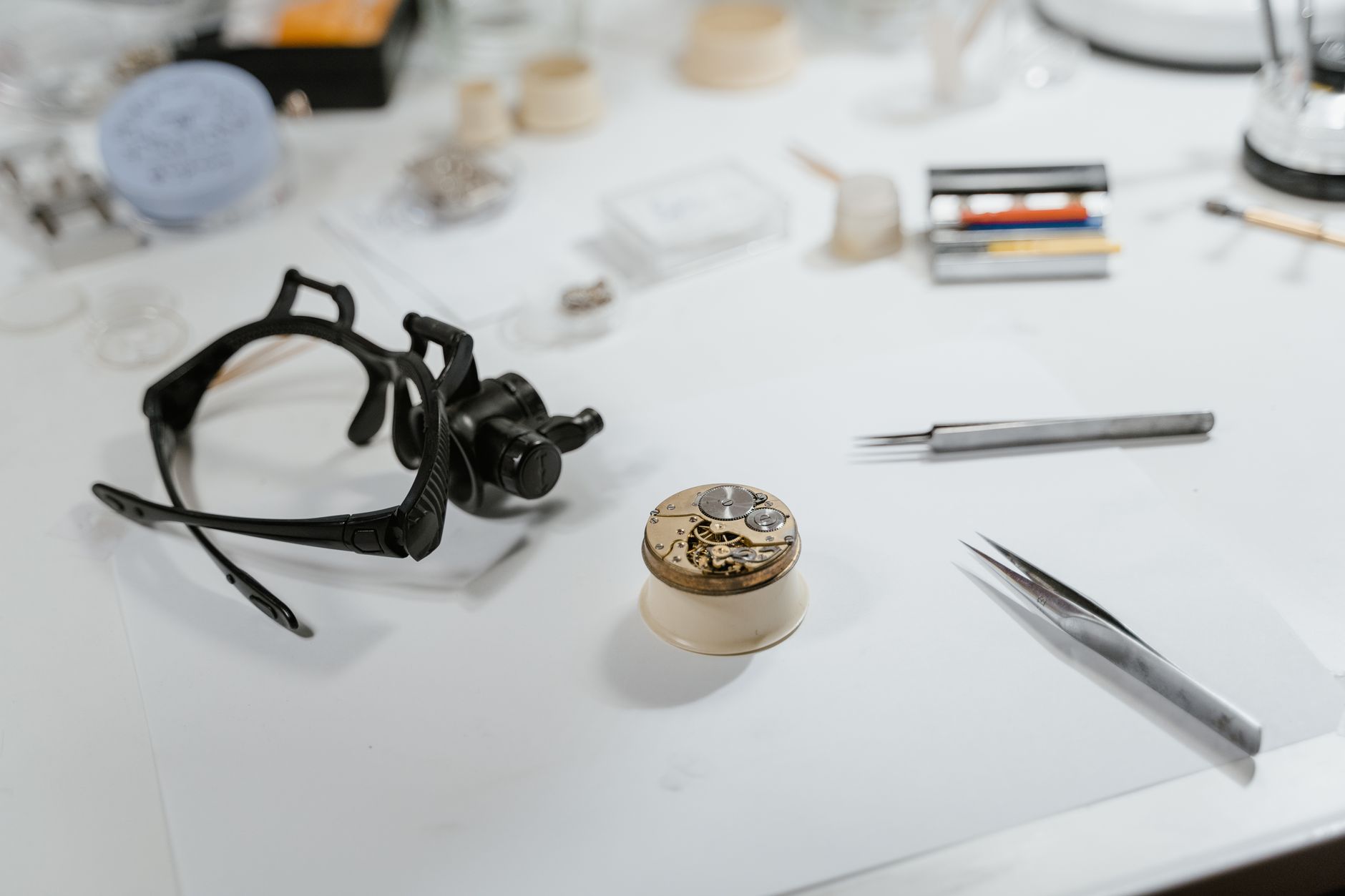
A modest tool roll protects a build better than a drawer full of rarely used gadgets.
The parts cart can look inexpensive until it sits beside a £60 crystal press, a caseback opener for one case style, and a specialised hand tool that may be used once. That is where a first mod quietly becomes an expensive collection of tools.
The sensible middle ground is not improvising with household pliers, knives, or tape-wrapped screwdrivers. A slipped tool can mark a polished case flank, chip a crystal edge, or bend hands that are far harder to replace than a basic tool. Start with dependable, broadly useful items—precision screwdrivers, non-marring tweezers, a hand-setting tool, movement holder, caseback opener, and dust blower—then add niche equipment only when a planned build genuinely requires it. Borrowing or sharing a press is often smarter than buying one for a single job.
Buy for the build on the bench
Before adding anything to a cart, write down the next job: the movement, case model, crystal setup, and how far the work will go. A NH35 in a familiar case asks for different tools than a hand-wound movement or a case needing a pressed crystal. The beginner’s guide to watch modding can help confirm that the chosen parts are compatible before tools are chosen.
Three common starting points
- Bracelet swap: spring-bar tool, spare spring bars, and a soft mat. Nothing more is normally required.
- Dial and hands swap: add a caseback opener suited to the case, movement holder, hand levers or pressers, Rodico, and a loupe. A handset must match the movement.
- Full build: add movement-specific stem cutters, a crystal press with correctly sized dies, case clamps or holders, and blower dust control. This is the point where a few extra tools become necessary—not before.
Buying against a written build list avoids the common mistake of owning a crystal press without any compatible dies, or hand tools for a movement never planned for.
Choose Tools That Reduce Risk
-
Exact fit at the contact point
A correctly sized screwdriver, case-back die, or hand-setting tip is safer than a more expensive tool in the wrong size. Slop is what rounds screws, slips off notches, and marks a dial.
Worth paying forSizes matched to the actual watch partsEasy to skipOne-size tools with loose, vague engagement -
Control before brand
A modest holder that keeps a case still and a tweezer that closes cleanly can matter more than a famous name on the handle. The useful test is whether the tool can be placed and released predictably.
Worth paying forStable grip, clean alignment, repeatable movementEasy to skipLarge kits chosen for logos or tool count -
Replaceable working ends
Pins, blades, tips, polishing sticks, and dust-removal supplies wear out or get contaminated. Tools designed around replaceable consumables stay useful without forcing a full repurchase.
Worth paying forCommon replacement tips and inexpensive refillsEasy to skipDisposable tools with proprietary parts -
Protection built into the process
Soft jaws, movement cushions, bench mats, and masking tape are inexpensive safeguards. They prevent the small scratches and lost parts that turn a simple mod into a costly correction.
Worth paying forNon-marring surfaces and contained work areasEasy to skipBare metal contact and cluttered tabletops
Create a Safe Handling Kit Before Touching the Movement
-
Start with a clean, light-coloured work mat
A silicone or dense foam mat stops small screws and spring bars from rolling away and makes dirt easy to spot. Avoid gritty rubber mats, printed towels, or loose paper that can shed fibres onto the dial.
-
Keep parts in a covered tray
A compartment tray or small dust cover gives hands, dial screws, and movement spacers a home between steps. Shallow metal dishes are acceptable only if lined with clean tissue; bare steel can scratch a caseback or hand set.
-
Use fine, non-magnetic tweezers with smooth tips
No. 2A-style stainless tweezers suit small screws and gaskets, while plastic or brass-tipped tweezers are kinder to delicate parts. Tips should meet evenly, without burrs or sharp, serrated jaws that can mark a hand or dial.
-
Protect fingers and clear dust gently
Nitrile finger cots prevent fingerprints on dials, hands, and crystals without the bulk of gloves. A hand blower with a one-way valve removes loose dust; canned air can spray propellant, while breathing on parts adds moisture.
-
Add low-cost inspection and cleaning aids
A 3× to 5× loupe or head-mounted magnifier helps catch lint and misaligned hands before the case closes. Rodico-style watchmaker’s putty lifts isolated dust, and clean microfiber cloths protect crystals and wipe cases—never rub a dial with either.
Keep putty away from printed dial surfaces and luminous material; a blower is the safer first response.
A kit can be useful for opening backs or changing straps, but its bundled tweezers are often magnetic, its cloths may shed lint, and its plastic trays rarely keep parts dust-free.
For dial-side work, a modest separate mat, blower, finger cots, and smooth tweezers offer more protection than a large assortment of poorly finished tools. If a tool feels rough, sheds material, or has visibly uneven tips, it belongs away from the movement.
Match the opener to the case back
A case back is not a generic lid. Before buying an opener, inspect the watch or its listing closely: the back style determines the tool, and the wrong tool usually leaves the first visible damage.
Identify the back before ordering
- Screw-down backs have several perimeter notches or slots. Use an adjustable case wrench with pins, squares, or jaws that fully seat in those notches. A cheap three-pin wrench can work on common backs, but spare tip shapes are more useful than extra handles.
- Snap-on backs have a small pry lip. They need a thin case knife with a controlled, blunt wedge—not a screwdriver or a blade. The tool should enter only at the lip, ideally with tape protecting the surrounding case edge.
- Screw-back cases use tiny individual screws. These need a correctly sized watchmaker’s screwdriver, not a case wrench.
Secure first, then turn
A padded case holder or soft vice keeps the watch from twisting in the hand and lets the opener stay square to the back. For screw-down backs, adjust the wrench so at least two opposing tips engage deeply. Shallow contact is a warning to stop, reset, and choose different tips; force turns a minor mismatch into chewed notches.
For case screws, verify screwdriver width before applying torque. The blade should fill the screw slot from side to side, with no obvious rocking or daylight at either edge. Test the fit gently while the screw is still clean and undamaged. If the driver slips, step to another width rather than pressing harder.
Opening tools also need a closing plan. A press with correctly sized nylon dies is appropriate for snap backs; screw-down backs should start their threads by hand and close evenly with the same well-fitted wrench. Never use a case press on a threaded back.
Resistance can mean a stuck gasket, crossed threads, corrosion, or a tool that is not fully seated. Pause and inspect rather than adding leverage.
Set hands without damage
Use a dial guard, remover, and correctly sized nylon pressers to prevent bends, marks, and uneven seating. Persistent rubbing needs clearance tools or a watchmaker.
Cheap versus premium tools
Lume Shot weighs whether budget modding tools are worth it.
Measure Before Ordering
A movement holder can wait during simple external work. Once the movement comes out of the case, however, it stops being an extra: it keeps the dial level, protects the hands from bench contact, and prevents the movement from rocking while screws, stems, or clamps are handled. Choose an adjustable holder that supports the movement around its edge rather than pressing on the dial or calendar works.
Digital calipers are the other high-value support purchase. Listings often describe a part as “for NH35,” “SKX style,” or “compatible,” yet small dimensions still decide whether it fits. Measure the actual component before ordering a replacement crystal, chapter ring, crown, stem, gasket, bracelet, or handset.
For example, case diameter does not confirm crystal size; the seated crystal diameter and thickness matter. Likewise, a nominal 20 mm lug width does not guarantee that every end link will fit the case shape.
Measurements worth recording
- Case opening and crystal diameter
- Lug width and spring-bar diameter
- Crown tube, stem, and gasket dimensions
- Movement diameter and case spacer size
- Hand post diameters—especially when measuring hand hole sizes
A small notebook or labelled parts bag beside the calipers is enough. Recording measurements from the real watch, rather than trusting a marketplace title, avoids duplicate orders and parts that almost fit.
Specialty Tools Can Wait
Buy individual tools when a planned job actually calls for them.
Large kits often pad their count with duplicate drivers, rough tweezers, and press dies that do not fit the cases on hand. A modest core kit plus a job-specific purchase is usually cheaper—and less frustrating.
A press is worthwhile only when a crystal or bezel job is scheduled.
It needs correctly sized, clean dies and a case that is known to accept the intended crystal. For a later replacement, record the case reference, crystal shape, diameter, thickness, and gasket arrangement; then check reliable sources for crystals and parts against those measurements.
Skip improvised pressure tests and treat an opened watch as unverified.
Warm-water, sink, or condensation experiments can introduce moisture without measuring resistance. A fresh gasket, correct closure, and a professional dry pressure test are the sensible route when water resistance matters.
A tool that has no planned use is not a saving. Keep the budget for the next specific task—and for the exact part measurements that task requires.
Where Cheap Tools Cost More
A bargain kit can suit an occasional strap swap, but false savings appear where a tool touches finished metal or the movement. A poorly cut screwdriver cams out of a slot; a rough spring-bar fork slips and marks a lug. Those repairs cost more than the difference between a basic tool and a decent one.
Buy modestly, but inspect the contact points:
- Screwdriver blades should sit squarely, without side play.
- Hand pressers need clean, flat nylon tips.
- Case-back tools need pins or jaws that fully engage.
Replaceable tips and blades are often better value than a huge kit, particularly when weighing how tool costs affect the total price of a mod. An entry-level opener or press can remain useful for years if it fits the job securely. Conversely, bent press tips, soft driver blades, and loose holders tend to create repeat purchases—and avoidable damage.
Let Each Build Decide the Next Tool
- Keep a short note after each project: tool used, tool missing, and tool that caused trouble.
- Replace worn tips and blades before adding more categories of tools.
Start with the next planned modification, buy only the tools it genuinely requires, and postpone the rest. A modest kit with reliable contact points, clean storage, and measured parts will handle more work safely than an impressive-looking bench full of rarely used extras.
After each build, note what was used and what limited the job. That record turns later purchases into evidence-based upgrades rather than duplicates or wish-list clutter.
The line about putting the build on paper first is probably the thing I needed to hear. I’ve got three half-planned SKX-style projects and a drawer full of random AliExpress bits because I kept ordering before checking compatibility. Somehow I own six strap tools and no calipers. Peak efficiency 🙃