
Millimeter tremors turn crystal-clear closeups into soft blur.
A watch-dial macro can fail on the smallest impulse: shutter vibration, a finger brush, or a passing footstep shifting the scene by fractions of a millimetre. Standard camera tripods are often too tall, awkwardly angled, or heavy to reposition for low tabletop setups. A low-profile, rigid desktop support that isolates shock makes mirror lock, electronic release, and gentle taps actually produce pin‑sharp results.
- Top pick — ULANZI MT-16: extendable, very stable.
- Best value — NEEWER TP29: metal, budget stability.
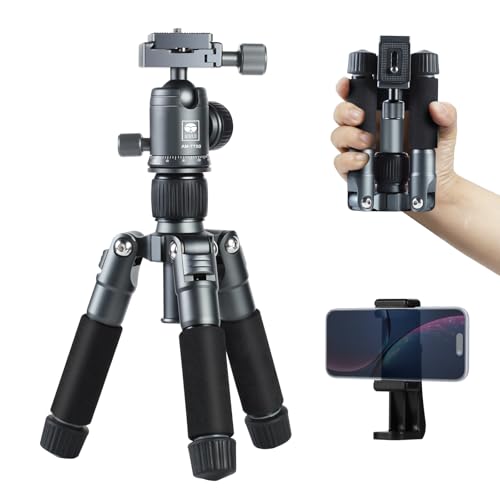
- Best for small setups — SIRUI AM-TT50: compact, low.
Five compact tripods for stable watch macros




Vibration-focused buying checklist
Keeping the camera mass close to the support surface reduces leverage and vibration amplitude. Prefer tripods that collapse very low and allow a wide splay or inverted/shortened center‑column positions.
Stiff, well‑locked leg sections and secure feet reduce resonance and micro‑bounce. Feet with high‑friction rubber or small spikes that grip the tabletop outperform slippery or loose fittings.
Stiffer materials (carbon fiber or heavier‑gauge aluminum) and thoughtful mass at the top damp small vibrations; ultra‑light kits can amplify micro‑motion despite portability.
A low‑profile, rigid head and tight plate-to-head contact eliminate play that translates into blur. Ball heads with strong clamping or heads with integrated damping are preferable for macro shocks.
Hands‑On Hobbyist Test Method
A simple, repeatable protocol evaluated stability, vibration damping, and overhead practicality using commonly available camera gear. Results emphasize photographic outcomes (sharpness, settling time) rather than laboratory measurements.
-
Setup and baseline
Mount a macro lens at the intended working distance and compose a true watch‑macro frame; use a remote release or 2s timer, locked focus/IBIS where available, and capture a reference image for sharpness and framing.
-
Impulse and damping check
Deliver a consistent light tap to the tripod or camera plate, then shoot immediate consecutive frames (burst or timed sequence) and inspect 100% crops for motion blur and pixel shift to judge damping and settling time.
-
Surface and repeatability tests
Repeat the sequence on different surfaces (wood, glass, carpet) and with small added loads or counterweights; record how many seconds until frames return consistently sharp to assess practical repeatability.
No accelerometers or lab vibration tables were used; sample sizes were small and results are practical, not scientific. Readers can reproduce these checks with basic camera gear.
01
4-level extendibility with 360° ball head
A compact, four‑stage tabletop tripod built for low-angle work and quick setup. Suits hobbyists who need a stable, pocketable platform for close‑up watch shots without heavy gear.
- Very low center of gravity when legs collapsed—reduces micro‑vibration at macro distances
- 360° ball head allows fast framing and small corrections without swapping heads
- Four-level extendibility balances reach and stability for tabletop setups
- Lightweight and pocketable—easy to move between watches and surfaces
- Cold shoe adds practical mounting for small LED or mic during styling shoots
- Limited payload—not ideal for heavy mirrorless bodies with large macro lenses
- Head and leg joints use lightweight materials that are less rigid than full‑size tripods
- No geared adjustment for ultra‑fine height or tilt control
- Short legs can struggle on uneven surfaces without additional shims or base
ULANZI MT‑16 stands out because its short stance and tight ball head reduce the leverage that amplifies tiny taps and breathing at close focus distances. The four‑level legs let the tripod sit low without sacrificing framing options, and the cold shoe is a pragmatic touch for small lights used in macro lighting. Expect limits on payload and micro‑adjustment compared with heavier desktop tripods—still, for most hobbyist watch macros this is the most versatile low‑profile choice at the price point.
Sturdy 3 kg load, stable desktop
Best-value metal mini tripod for tabletop watch macros. A compact, all-metal table tripod built around a 360° ball head and rubber feet, aimed at hobbyists using mirrorless bodies with short macro lenses. Its low profile and modest footprint prioritize usable vibration resistance on flat surfaces while keeping cost near ~$20.
- Metal construction gives solid feel and mass
- 3 kg rated load suits most mirrorless setups
- Non-slip rubber feet for secure contact
- 360° ball head for quick framing
- Very affordable (~$20) — great value
- Limited height and leg spread restrict angles
- Ball head lacks fine, click‑style adjustments
- Some small components use plastic
- No dedicated vibration‑damping features or center column
- Tiny footprint for true close-to-surface framing
- Fine micro-height positioning for millimeter adjustments
- Foldable aluminum design packs into small kits
- 360° ball head for quick, precise framing
- High user ratings for value and build
- Limited payload for heavy DSLRs or long lenses
- Very low maximum height — not suitable for overhead shots
- Smaller base offers less vibration damping than larger tripods
04
Carbon fiber, high load for pro use
Premium tabletop stability for heavier setups. The SmallRig carbon‑fiber desktop kit is a compact, pro‑grade tabletop tripod system built to keep cameras and long macro lenses rock‑steady close to the subject. Its thicker carbon tubes and a dedicated video head make it a better match for bulkier mirrorless and DSLR bodies than ultralight mini tripods.
Best suited to hobbyists who need low‑height, vibration‑free support for demanding watch macros and are willing to accept a higher price and a larger tabletop footprint than pocketable minis.
- Very high tripod load (body rated up to 10 kg)
- Carbon‑fiber tubes reduce resonance
- Arca‑style quick‑release head for fast swaps
- Sturdy low‑profile platform for long macro lenses
- Well‑built; tactile, precise adjustments
- Higher price than basic mini tripods (~$110)
- Heavier and larger footprint than pocket minis
- Head rated ~3 kg — heavier pro DSLRs approach limits
- Less instantly pocketable for field carry
Overhead macro-ready with horizontal column
A tall, carbon-fiber tripod built for flat‑lay and overhead macro work where a firm, extended boom is needed. Suits hobbyists who need a rigid horizontal column for food, watch, or product overhead framing without jury‑riggering cantilevers.
- Rigid horizontal/vertical column for true overhead framing
- Carbon fiber shaft reduces flex while keeping weight low
- 10 kg rated load handles mirrorless kits and macro rigs
- 360° rotating column simplifies composing without reorienting the legs
- Taller geometry makes it less pocketable than tabletop kits
- Full extension requires careful leg spread to maximize stability
- Bulkier footprint for strict desktop setups
The X‑Go HR PRO’s geometry is the reason to choose it: a dedicated horizontal column keeps the camera over the subject without relying on a cantilevered arm. Compared with tabletop kits that place the camera far from the support with short legs, this tripod spreads load through a longer shaft and wider leg angle, so torque from an offset camera is transferred into the full tripod rather than bending a tiny hinge. For anyone prioritizing vibration resistance and compositional freedom in overhead and flat‑lay watch macros, its carbon shaft and 10 kg capacity make for a noticeably steadier boom.
Vibration checklist
-
Pick low‑profile tripod
-
Mount and lock camera
-
Use remote or timer
Tip: avoid touching
Use non‑slip pad.
Platypod droplet setup
Lee Hall demos Platypod stability.
Accessories and trade‑offs
Accessories and trade‑offs
Small additions dramatically improve low‑profile macro stability. Useful complementary buys:
- Remote shutter or cable release to avoid contact‑induced shake.
- Rubber feet or mini sandbag for extra damping on slick surfaces.
- Low‑profile quick‑release plate for fast, repeatable framing.
- Flexible LED ring or small lights to cut ISO and shorten shutter time.
Trade‑offs are simple: size vs stability (larger kits and carbon fiber add stability and weight capacity), and price vs features (premium kits give horizontal reach and payload for longer macro lenses).
Decision matrix (one line): ultra‑compact pocket setups → ULANZI MT‑16 or SIRUI AM‑TT50; budget tabletop → NEEWER TP29; heavy DSLR or long macro lens → SmallRig carbon fiber kit; true overhead work → Fotopro 68” X‑Go HR PRO.
Final recommendations and checklist test
- Lock the ball head; keep the camera close to the column to reduce leverage.
- Add a small sandbag or strap to lower the center of gravity for long exposures.
- Use a remote or 2‑s timer and mirror‑lockup when running stability tests.
ULANZI MT‑16 — top pick for light mirrorless tabletop; NEEWER TP29 — best value for tight budgets; SIRUI AM‑TT50 — smallest footprints/phones; SmallRig carbon kit — stability for heavier cameras and long macro lenses; Fotopro X‑Go HR PRO — overhead macro work.
Testing in the actual workspace is essential: run the hands‑on checklist—reference shot, controlled tap bursts, working‑load repeats, and an overhead geometry check.