
A commuting watch must survive potholes, rain and sprinting for the train.
At a red light, glancing down while balancing handlebars and a shoulder bag makes legible time and a secure strap the difference between calm and chaos. The central trade-off is simple: a rugged field watch that tells time clearly and refuses to need charging, versus a GPS-equipped fitness watch that logs rides but adds fragility and frequent charging.
Key considerations: visibility at speed (large high-contrast hands or bright backlight), strap security (NATO, silicone, or quick-release locking), battery life (years, days, or daily charging), and damage risk (sapphire or mineral crystal, water rating). Long-battery simplicity fits rough, low-maintenance commutes; GPS models suit riders who need route data and metrics.
- Casio FT500WC Field Watch — 3-year battery, rugged time-only top pick.
- Garmin Forerunner 55 — GPS tracking with efficient battery for longer sessions.
- Infantry Field Watch — 5ATM water resistance, best budget durability.
Three quick commuter picks


How the watches were evaluated for commuting
Each watch underwent short, commuter-focused checks that mimic daily bicycle use: legibility at a glance, strap security under vibration, splash resistance in rain, and real-world battery observations.
-
Legibility checks
Readability was assessed while riding at moderate pace in bright daylight, dusk, and under streetlights; glance recognition and lume performance were noted for quick time checks.
-
Strap and attachment security
Hardware, spring bars, and buckle/loop engagement were inspected; straps were fastened repeatedly and ridden over typical bumps to reveal loose fittings or movement.
-
Splash, runtime, and testing limits
Watches saw light showers and brief low-pressure hose exposure, while batteries were tracked across weeks of commutes; testing was short-term and non-laboratory—no crash impacts, saltwater immersion, or full-discharge endurance cycles were performed.
What to prioritize for a cycling commute
-
Legibility at a glance
High-contrast numerals, large hands, and an anti‑reflective crystal make time checks quick and safe while moving; lume or bold markers help dawn/dusk rides. Tradeoff: very domed or heavily treated crystals can catch sleeves or add thickness.
Look forBold contrast, large hands, strong lumeAvoidSmall markers or highly reflective crystals -
Strap and attachment security
A snug, snag‑resistant strap (nylon/Cordura or robust rubber) and solid spring or screw bars reduce the chance of loss from vibration or catches. Tradeoff: quick‑release convenience can be slightly less durable than fixed bars under heavy use.
Look forWide stitched nylon or secure screw/spring barsAvoidThin leather or loose, flimsy spring bars -
Splash resistance and case durability
At least 3–5 ATM protects against rain and washing; a raised bezel or hardened crystal helps prevent impact scratches from handlebars or pockets. Tradeoff: full dive ratings add weight and bulk that may feel cumbersome on a daily commute.
Look for3–5 ATM, hardened crystal, modest bezelAvoidVague 'splash‑proof' claims or low‑grade mineral glass -
Power, sensors and maintenance
Long‑life quartz batteries or easily user‑replaceable cells minimize upkeep for daily riders; GPS and optical sensors provide route data but require frequent charging and add fragility. Tradeoff: feature‑rich models improve tracking at the cost of daily power management.
Look forMulti‑year battery or efficient GPS with power modesAvoidShort‑life GPS watches with no power‑saving options
Myths and realities for cycling commutes
Most commutes only need time, visibility, and strap security.
GPS gives route data but short, routine rides gain more from clear dials, reliable straps, and long battery life; GPS also drains power.
High-contrast analog dials are usually legible at a glance.
Large hands, bold markers, and lume cut glare and motion blur better than tiny digital numbers in many conditions.
Durability depends on materials and design, not just cost.
A budget field watch with a sturdy case and secure strap can outlast a pricier but poorly designed model; check specific features.
Ratings reflect lab pressure tests, not all real scenarios.
5ATM or similar handles rain and splashes but avoid repeated submersion after impacts or with worn seals; maintenance matters.
Low-friction, safety-first field watch
01
Rugged, budget-friendly everyday field companion
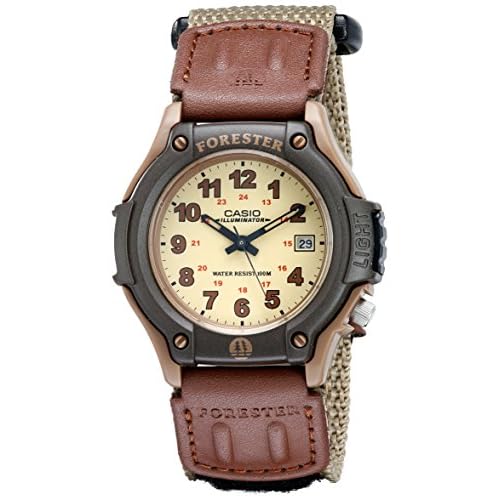
Casio FT500WC is a straightforward field watch built to stay out of the way during a busy cycling commute. Its three‑year battery and simple analog display remove the need for daily charging or fiddly menus, while bold Arabic numerals and high-contrast hands make time legible at a quick glance from the handlebars. Compact, low‑profile proportions and 100 m water resistance mean the case resists urban knocks and sudden rain. The stock Velcro strap holds securely under motion and can be swapped easily for a NATO or leather band to change comfort or style.
- Three-year battery — minimal maintenance
- High-contrast dial for instant legibility
- 100 m water resistance handles rain and washes
- Compact, low-profile case resists snags
- Secure Velcro strap stays put while riding
- No GPS, heart‑rate, or smart notifications
- Lume is basic — not a dive-grade glow
- Date-only complication; very minimal features
- Stock strap is functional but not premium
Casio FT500WC earns its place as the safest, lowest‑friction commuter choice. The long battery life and clear, high‑contrast dial reduce distractions; the compact case and 100 m water resistance shrug off knocks and weather. Feature limitations are intentional — this is an analog tool, not a multisensor device — and strap swaps are an easy, affordable way to refine comfort.
Fitness‑forward GPS commuter watch
Up to 2 weeks battery life for daily runs
Garmin Forerunner 55 is a GPS running smartwatch positioned for riders who want full training tools and reliable route data during a commute. It fits a commuter profile that values structured workouts, precise tracking, and smartphone integration more than absolute minimalism — suited to people who treat commuting miles as part of a training plan and who don’t mind a dedicated smartwatch on the wrist.
- Accurate GPS and route logging for ride mapping
- Daily suggested workouts and activity profiles for structured training
- Long battery life in watch mode (extends between charges)
- Integrates with Garmin Connect and Connect IQ custom apps
- Bulkier wrist presence than slim field watches
- Needs regular charging with frequent GPS use
- More tech maintenance than a simple analog watch
- Not as low‑profile or rugged-looking as purpose-built field models
Rugged budget beater for daily commutes
- Very low price (~$25)
- Rugged military-style design
- 12/24-hour dial with day/date
- 5ATM splash resistance
- Lightweight nylon strap for comfort and security at speedable ridesharing speeds? (typo?)
- Inconsistent finish and assembly
- Shorter longevity than higher-end watches
- Minimal manufacturer support or spare parts
- Basic accuracy compared with premium quartz movements
Strap and retention recommendations
Choose material to match climate and clothing
Select nylon/perlon or woven straps for hot, sweaty rides—breathable and quick‑dry. Prefer silicone or rubber for wet weather and heavy rain; they resist moisture and grip better under gloves. Use leather only for dry, cold commutes and when wearing jackets; it performs poorly when wet. Metal bracelets are durable but heavier and can pinch under layered cuffs.
Test fit, tuck, and clasp under ride conditions
Practical testing beats theory: wear cycling gloves and simulate a hard stop while seated and standing. Aim for less than a finger‑width of slippage. Try these retention checks:
- loop the tail back through keepers, or tuck it under the strap body; test both.
- use the keeper closest to the case to prevent tail lift.
- check clasp tightness with gloved hands and full braking force.
Quick‑release straps make sense for frequent swaps, multi‑bike setups, or devices shared across activities; prefer locking quick‑release designs to avoid accidental release. For deeper guidance on anti‑slip methods and quick‑release options, see related links below.


Daily care for commuter watches
A few low-effort habits prevent most commuter wear: sweat, salt, and repeated knocks cause the majority of long‑term damage. Short daily checks and small on‑bike changes preserve seals, straps, and readability.
Quick daily routine
- Wipe sweat and grime after each ride with a microfiber or soft cloth; for salty sweat, rinse briefly with fresh water and dry.
- Inspect strap and hardware for fraying or loose pins; tuck excess strap to avoid catching.
- Look for fog or water ingress around the crystal—early detection reduces service needs.
On‑bike habits that help
- Avoid resting the wrist or watch face under the handlebar; repeated pressure and trapped sweat wear seals faster.
- Keep the watch snug but not tight: a moving strap abrades, an overly tight strap traps moisture.
- For GPS models, top up charge regularly; frequent deep discharge shortens battery lifespan.
Leather straps dry and condition after rides; silicone or nylon are better for daily sweaty commuting.
Warning: Storing a wet watch face‑down against fabric or under handlebars traps moisture and accelerates corrosion—dry and air out immediately.
Final decision: pick by priority
- Pick one primary priority—legibility, battery life, or GPS—to avoid compromises between minimalism and sensors.
- Use a secure, quick‑tuck strap and check the clasp before each ride to prevent loss during a fall.
- Charge GPS watches weekly; keep an analogue beater on hand for wet rides or when charging isn’t convenient.
Choose by top priority: match the single most important commuting need to a model. If legibility and low maintenance matter most, pick the Casio FT500WC (high‑contrast dial, 100 m water resistance, long battery). If route logging and training are essential, pick the Garmin Forerunner 55 (accurate GPS, workout features). If lowest cost and a replaceable beater are the goal, pick the Infantry. After selection, confirm strap security and adopt basic on-bike habits. For fundamentals on field-watch design and tradeoffs, see the what is a field watch page.