
A single accidental dunk can mean heartbreak or a repair bill.
On vacation the owner hesitates at the pool edge: bring the field watch in, or leave it dry? Water damage—fogged crystal, rusty parts, surprise service—hurts more than missing a swim.
Decision depends on three things: rating, crown and case design (screw‑down crown, seals), and gasket age/condition.
- 30 m — splash and rain only.
- 50 m — casual swimming okay.
- 100 m — suitable for swimming and snorkeling.
When is swimming with a field watch okay?
When is it safe to swim with a field watch?
Swimming is reasonably safe when the watch is rated 100 meters or more, has a screw‑down crown, and has passed a recent pressure test. That combination generally handles surface swimming and light snorkeling; vigorous strokes still increase dynamic pressure and raise risk. Avoid diving beyond the stated rating.
What about 50m and 30m ratings?
A 50‑meter rating can be acceptable for gentle surface swimming if the crown is secured and seals are fresh, but it offers little margin for forceful movement. A 30‑meter rating is splash‑proof only and should never be used for swimming.
Which watch features matter most?
Important features are a screw‑down crown, screw‑in caseback, intact rubber or silicone gaskets, and no active pushers used underwater. Recent pressure testing or a service that replaced seals is essential; visible damage or loose crowns invalidate the rating.
Any practical thresholds and service advice?
Prefer 100m+ for lap swimming, accept 50m for casual surface use, and avoid water exposure with 30m models. Have seals inspected every 2–5 years or after impacts, and never operate crowns or pushers while submerged.
Common myths about depth ratings
Depth ratings are derived from static lab pressure tests, not from dynamic swimming conditions.
Motion, waves and sudden depth changes create pressure spikes; straps and cases flex, so real stress can exceed the lab test.
Manufacturers often intend 30m for splash resistance and hand‑washing, not immersion or swimming.
Low-pressure tests don’t represent prolonged submersion or the extra forces from arm strokes and waves.
Seals, gaskets and adhesives degrade with time and use, reducing water resistance.
Thermal cycling, salt, chlorine and mechanical wear shrink or crack seals; crowns and pushers wear, letting water in.
Testing methods and marketing labels vary; not every rating reflects the same test rigor.
Some makers follow stricter standards or add safety margins, while others use looser tests—numbers alone can mislead.
Assume less than the printed depth.
For casual swimming, prefer watches rated 100m or higher. Treat splashes and 30m ratings as non‑immersion. Get pressure‑tested every 1–3 years (sooner with salt/chlorine exposure).30–60‑Second Pre‑Swim Checklist
-
Confirm rating
Note the stamped water‑resistance (m or ATM); treat anything under 50m as non‑swim.
-
Crown & pushers
Ensure a screw‑down crown is fully locked and pushers are not pressed or operated when submerged.
-
Crystal & case condition
Scan for chips, deep scratches, loose bezels, or gaps at the case back—any breach raises leak risk.
-
Strap/bracelet security
Check spring bars and clasp; swap leather or fragile fabric for rubber or metal for swimming.
-
Service & battery history
Confirm a pressure test or service within 2–3 years and that the battery is recent or tested.
These quick checks prevent most avoidable water damage.
Fail any check? Don’t swim with it. After saltwater exposure, rinse with fresh water and dry. When in doubt about gasket age or a recent battery change, schedule a pressure test.
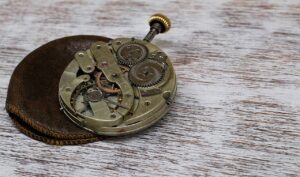
Using and caring for a field watch in water
Before and during water exposure
- Do confirm the crown is screwed down or pushed fully home. Do not operate crowns or pushers underwater unless the manufacturer explicitly permits it.
- Avoid hot tubs, saunas, and steam rooms; thermal shock and softened gaskets increase leak risk.
Immediate aftercare (salt or chlorinated water)
- Rinse thoroughly in fresh water as soon as possible. Use a gentle stream and a soft brush to dislodge salt from lugs, clasps and pushers.
- Open and close folding clasps a few times while rinsing to flush trapped salt.
- Pat dry with a lint‑free cloth, then air dry strap and case in the shade. Do not use high heat (hairdryers or radiators).
Strap choices and handling
- Best wet options: rubber/silicone, nylon NATO, or stainless bracelets. These resist salt and dry quickly.
- Avoid leather and untreated textile straps for swimming; they absorb moisture and degrade.
- With quick‑release straps, ensure pins and cutouts are free of sand and salt before reassembly.
When to schedule a pressure test
- Pressure-test after any case opening (battery change or service), after strong impacts, or if the watch is older than two years and used regularly in water. Frequent swimmers: test annually.
Quick post‑swim checklist: rinse in fresh water, pat dry, open clasp to dry, avoid heat, book a pressure test if seals are old or the watch took a hit.


When Not to Swim with a Field Watch
- Visible condensation under the crystal or persistent fogging after exposure.
- Non–screw-down crown, loose/wobbly crown stem, or a crown that won’t securely seal.
- Unknown or long-expired gasket/service history (battery changes without pressure-test count as a risk).
Do not swim if the watch shows condensation, a loose or non‑screw crown, a chipped/cracked crystal, a loose caseback, or an unknown/overdue seal service. Leather or untreated fabric straps and vintage pieces with original seals are also poor choices. Mechanical movement rattles or recent buckle‑side repairs without a pressure test raise failure risk.
Better options: choose a true diver rated for swimming, carry a cheap waterproof beater for water exposure, or have the field watch pressure‑tested and resealed by a competent service before any swim. When in doubt, err conservative: Rating + Condition + Activity → choose the safer end. For example, require ≥100 m rating for snorkeling, a fully serviced screw‑down crown for repeated swims, and always pressure‑test after seal work or battery changes.
Nice summary — I always wondered about the crown design bit. So if my field watch has a screw-down crown but is rated 50m, is that usually safe for light swimming or still risky?
Short and useful checklist. The 30–60 second pre-swim checklist is my new routine — just checking the crown and a visual gasket look has saved me once already. Thanks!
Question: the article mentions temperature changes affecting seals. Has anyone here had a watch leak after moving from a cold office into a hot shower or pool? Curious how big a factor that really is.
My experience: I once wore a 100m field watch into a warm tub after being outside in sub-40°F air, and it fogged up within minutes. I think the rapid temp shift stressed the gasket.
Good observation, David. Rapid temperature changes can cause air inside the case to expand quickly, stressing older or hard gaskets and allowing moisture in. That’s why the article recommends conservative use of ratings and regular gasket checks. If you expect big temp swings, rinse with room-temp water and avoid hot tubs or saunas regardless of the stated depth rating.
I liked the myth-busting section. People quoting 50m like it’s absolute are annoying 😅
One follow-up: the article advises pressure-testing after X years. For someone who only swims on vacation twice a year, is yearly testing overkill? Anyone do it less frequently?
I get mine pressure-tested every 2 years and that’s been fine for casual use. If you only swim a few times a year and you store the watch dry, 2–3 years seems reasonable unless you notice condensation or the crown feels loose.
Good question, JennyB. The recommended interval depends on usage and environment: annual testing is prudent for heavy or professional users, but for occasional swimmers 2–3 years is often acceptable. However, test sooner if you notice any of the ‘when not to swim’ signs in the article (gasket cracking, sticky crown, fogging). Also get it checked after any hard impact.
I wish the article had a clearer rule for straps. It says strap choice matters, but what’s the practical rule of thumb? Leather off, NATO ok, rubber best?
My take: leather never for water, canvas/NATO is okay for occasional swims if you rinse and dry, rubber or silicone is best for frequent exposure.
Spot on — leather should be avoided for water. Canvas/NATO will tolerate occasional water but can trap salt and take longer to dry, which can degrade both the strap and the spring bars over time. Rubber/silicone or metal bracelets are the most durable choices for regular swimming. Also consider quick-release straps or switching to a proper dive strap before longer swims.