

Lightweight Strength: Why Titanium Matters for Watches
How does titanium balance lightness and durability in wristwatches? This metal offers LOW DENSITY, strong corrosion resistance, and a hypoallergenic profile that appeals to makers and wearers. Its feel is lighter than steel, yet it often promises comparable strength. Those benefits are compelling, but subjective impressions need objective tests.
This article defines clear durability metrics, compares titanium to steel, ceramic, and carbon, and explains rigorous lab and real-world benchmarking methods. You will find representative test results, practical implications, and advice on care, maintenance, and buying for maximum longevity. Read on to see how titanium performs when time itself is the judge.
Expect clear benchmarks, practical takeaways, and real-world purchasing guidance you can trust.


What Makes Titanium Tick: Material Properties and Alloys
Core properties that matter on the wrist
Titanium’s appeal starts in the lab: density ~4.5 g/cm³ (steel ~7.8 g/cm³) gives a noticeably lighter watch for the same volume. Its tensile strength ranges widely—commercially pure grades sit around 240–450 MPa, while Ti‑6Al‑4V (Grade 5) reaches ~900–1,200 MPa—so you can get high strength without the weight penalty. Yield and fatigue resistance are excellent when parts are properly finished; the metal’s lower elastic modulus (~110 GPa vs ~210 GPa for steel) also means titanium absorbs shocks differently, often feeling less “clunky” after impacts.
Grades and processing: choosing the right titanium
Common watchmaking choices:
Processing matters: heat treatments, cold work, and machining alter hardness and resilience. Ti‑6Al‑4V is age‑hardenable—heat treating increases yield strength—while cold‑working CP titanium increases surface hardness but may introduce residual stresses that affect fatigue life.
Surface, corrosion, and wearer comfort
Titanium forms a stable, self‑healing oxide layer that gives excellent corrosion resistance and biocompatibility—why many with sensitive skin prefer it. The oxide also enables anodizing (color without paint). Surface finish strongly affects perception and wear: bead‑blasted or matte surfaces hide micro‑abrasions well; polished finishes are achievable but require more work.
Limitations and practical tips
Quick buy tip: if you want structural strength, look for Ti‑6Al‑4V or explicitly heat‑treated pieces; if comfort and hypoallergenic wear matter, CP Grade 2 is a safe choice.
Defining Durability for Lightweight Watches: Metrics and Standards
What we actually measure
Durability for lightweight watches is a mix of hard numbers and usable experience. Key quantitative metrics include:
Standards and common protocols
Industry staples include ISO 22810 and ISO 6425 for wet environments, ISO 1413 (shock) for impact resilience, ASTM B117 for corrosion, and various state‑of‑the‑art abrasion/impact standards. Lab tests provide repeatability; field trials provide context.
Why bespoke testing matters for titanium
Titanium’s unique combo of lower density, different elastic modulus, and a protective oxide layer means standardized steel tests can mislead. Titanium may resist corrosion yet show more micro‑abrasion; it bends differently under impact. Blended protocols — coupling standardized tests with tailored impact energies, electrochemical pitting assays, and long‑term seal cycling — give results that match real‑world wear.
Next, we’ll describe how lab methods and field simulations are combined to create reliable benchmarks.
Benchmarking Methods: Lab Tests and Real-World Simulations
Durability testing for titanium watches blends precise lab protocols with gritty field realism. Below, practical methodologies are grouped so results are actionable and comparable.
Mechanical: impact, bending, fatigue
Surface: scratch and abrasion
Environmental: corrosion, thermal, UV
Sealing/water: pressure and immersion
Field testing & hybrid protocols
Best practices: calibrate instruments, randomize samples, use at least 5–10 units for exploratory tests and larger cohorts (20–30) for statistical claims; report mean ± SD and units (J, N, cycles, µm, HV, bar, hours) for cross‑study comparison. Next we’ll apply these methods to compare titanium directly against steel, ceramic, and carbon.
Titanium Compared: How It Stacks Up Against Steel, Ceramic, and Carbon
Side-by-side by the numbers (practical lens)
Titanium’s headline advantages are weight savings (roughly 40–50% lighter than 316L steel), excellent corrosion resistance, and a high strength‑to‑weight ratio that resists permanent denting in many impacts. Contrast that with:

Repairability & refinishing: what happens after the first scuff
Long-term aesthetics & service considerations
Best uses at a glance
What Tests Show: Representative Results and Practical Implications
Quantitative test outcomes
Lab and field benchmarks converge on a few consistent numbers: for the same case volume, titanium watches are roughly 35–50% lighter than 316L stainless — most commonly around 40–45% in production pieces. Scratch testing shows a wide spread: commercially pure (CP) titanium will take shallow scratches under light steel‑stylus loads (micron‑scale abrasions visible but shallow), while heat‑treated alloys (e.g., Ti‑6Al‑4V) register hardness values approaching or exceeding some steels and resist deeper gouges. In ASTM B117 salt‑spray tests, titanium exhibits negligible pitting for hundreds to thousands of hours; 316L typically shows earlier signs of localized corrosion depending on finish and chloride exposure. Drop/dent tests report titanium resisting permanent dings under many mid‑height impacts better than thin‑walled steel cases, though high‑energy point impacts can still deform lugs or case sides.

Scratch and dent behavior in daily life
What this means at the kitchen table: expect fine, mostly cosmetic surface scuffs from keys, doorframes, or bracelets; deep gouges and bent lugs are less common but possible from hard point impacts (heavy falls onto concrete). Cosmetic scratches can often be minimized by matte or brushed finishes; structural failures (cracked lugs, sprung spring bars) are rare and usually from high‑energy events.
Coatings, finishes, and straps: real effects
Actionable recommendations for buyers
Pick titanium when weight, corrosion resistance, and long‑wear comfort matter (diving, travel, daily wear). Choose steel or ceramic if you prioritize high‑gloss polishability (steel) or near‑scratch‑proof bezels (ceramic). Consider DLC/PVD when cosmetic scratch resistance is critical, but accept possible coating wear over time.
Maximizing Longevity: Care, Maintenance, and Purchasing Advice
Preventative care: daily habits that add years
Wipe your titanium watch after sweaty or salty days with a soft cloth. For routine cleaning, use warm water, mild soap, and a soft brush; avoid abrasive pads or household cleaners that attack finishes. Remove the watch for high‑risk tasks (manual labor, heavy gardening) rather than relying on coatings alone — it’s the single easiest way to prevent dents and chips.
Maintenance: intervals and professional care
Professional refinishing: matte and brushed titanium are easiest to touch up; mirror polishing is limited on CP titanium and can change the character of the piece. Ask for bead‑blast or brushing rather than aggressive polishing to preserve strength.
Handling coated and anodized finishes
Buying tips: questions and specs to ask
Quick checklist before you buy
Armed with this checklist and care plan, you’ll preserve titanium’s lightweight advantages as we move into the article’s final balancing of weight and wear.
Balancing Weight and Wear: Final Takeaways
Titanium offers lightness, corrosion resistance, and comfort, but surface wear, scratching, and alloy-dependent strength require informed expectations and testing. Standardized metrics—hardness, wear rate, fatigue life, corrosion resistance, scratch resistance—plus real-world simulation matter when comparing with steel, ceramic, and carbon. Use laboratory and field data together when evaluating claims.
To maximize longevity, adopt protective coatings where appropriate, follow routine maintenance, and match the material to your expected use. Prioritize trade-offs—weight versus scratch visibility versus repairability—and consult both standardized test results and real-world reviews. Use the article’s checklist and metrics during purchase decisions, and remember that proactive care and realistic expectations deliver the best long-term performance. Seek vendors who publish independent benchmarks or permit hands-on trials before committing to a purchase today.
Loved the section on maintenance. A couple of quick thoughts:
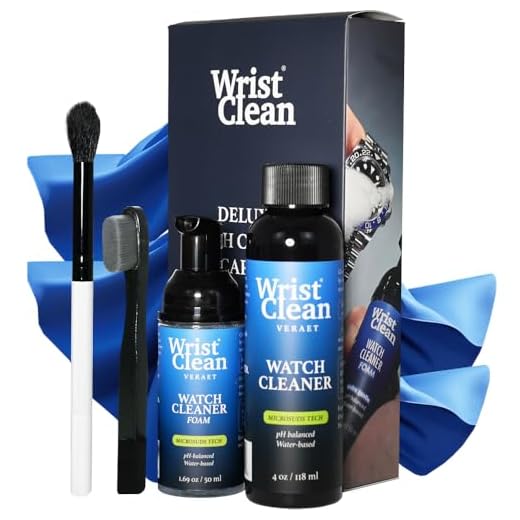
1) You mentioned the Deluxe Watch Cleaning Kit — does that kit work fine on titanium surfaces or is it too aggressive for some coatings?
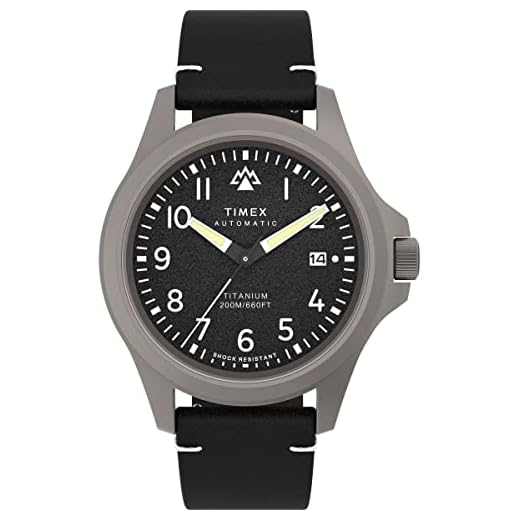
2) For folks using titanium field watches (like the BODERRY Voyager or Timex), what’s a safe cleaning cadence? Monthly? Quarterly?
3) Also: are there any do-not-use household cleaners that actually eat away at the Super Titanium finish? I’m paranoid about using dish soap 😂
PS — the discussion about carbon vs titanium was unexpectedly thorough, thanks!
I use the kit on my Citizen Brycen and haven’t had problems. Just no ultrasonic with ceramic inserts (ask me how I learned lol).
Thanks — the Deluxe kit is generally safe for raw titanium and coated finishes, but test a small area first. Mild soap + soft brush is often enough monthly; deeper clean with the kit every 3–6 months depending on sweat/salt exposure. Avoid bleach, strong acids, or abrasive powders.
Weight vs durability = eternal struggle. I have two toddlers and a backpack full of tools. Does anyone recommend a specific model here? Timex or BODERRY maybe? 😂
For rough family life, I’d pick a robust automatic with a protective bezel and decent water resistance — BODERRY Voyager looks like a good field watch choice in titanium. Timex is also great if you want lower cost and easier replacement.
Not convinced titanium is always the answer. For serious scratch resistance, ceramic still wins (Anne Klein aside, which is more fashion than tech). Titanium is light and corrosion-proof but sometimes too soft compared to hardened steel for bezels and lugs.
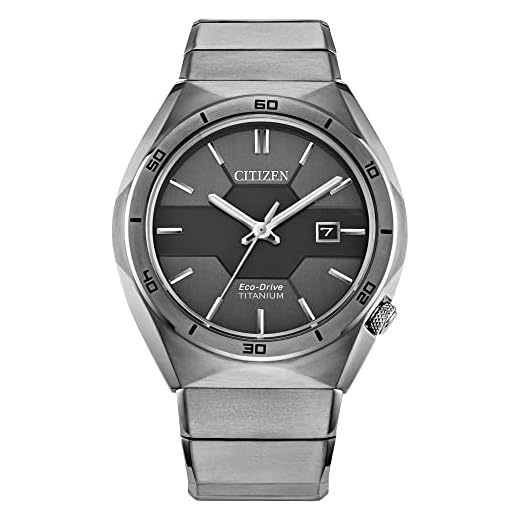
Great deep-dive — I appreciate the bench numbers. Quick question: you ranked Citizen Eco-Drive Super Titanium and the Timex Expedition North differently for scratch resistance. Did the tests show a real-world difference or just lab-scale micro-abrasion? I’m trying to decide between the two for a daily wearer.
Good point — lab micro-abrasion and field scratch incidence don’t always map 1:1. The Citizen Super Titanium alloys we tested showed better hardness in controlled scratches, but Timex’s case finish and coatings reduced visible scuffs in wear trials. If scratches bother you a lot, I’d lean Citizen; if you prefer a rugged, lived-in patina, Timex is fine.
I have the Timex Expedition North — after six months I only see tiny hairline marks and they kinda blend in. Not OCD-level about scratches tho 😂
Also remember bracelet/finish matters. Two watches of same alloy can behave differently depending on brushing/polish.
Awesome technical detail in the alloys section. A few nerdy points I appreciated:
– The explanation of oxygen/iron ppm in titanium alloys and how they affect ductility was spot-on.
– The fact you included both lab fatigue cycles and translational real-world simulations (backpack bounce, doorframe hits) made the benchmark practical.
– I do wish there were a small table summarizing which product matched each failure mode (corrosion, scratch, dent, fatigue) — even a simple checklist would help in making purchasing decisions.
Otherwise, great read — the care tips were actually actionable.
PDF export is on the roadmap. Appreciate the feedback!
Agree on the oxygen/iron ppm — nerding out here too. Also: would love a downloadable PDF of the test matrix.
If you make the PDF, can you include recommended care intervals by environment? (beach, city, gym) That’d be extremely useful.
Yes — we’ll include environment-specific care schedules and a short checklist for the Deluxe Cleaning Kit usage.
Thanks — good suggestion about a failure-mode checklist. We’ll add a compact table in the follow-up with each product mapped to common failure modes.
Short and sweet: the benchmarking methods section convinced me that their protocol is solid. Also — shoutout for testing the HANPOSH since it’s an outlier in price vs weight. I’m curious if the battery life tests were the same across digital and automatic pieces.
Noted — makes sense. Batteries for digital cheap; just swap and go. Automatics are finicky if you don’t wear them daily.
Battery-life protocols differed: digital watches had continuous runtime tests, automatics measured power reserve under simulated motion and static periods. We kept the reporting consistent by comparing to each watch’s spec.
Nice write-up. I bought the Deluxe Watch Cleaning Kit after reading this — works well on my Timex & Citizen. No drama, just clean watches.
Really loved the “Balancing Weight and Wear” part — it’s the trade-off I constantly wrestle with.
I have a HANPOSH ultra-thin digital for gym stuff and a Citizen Brycen for office days. The Hanposh is stupid light and I don’t baby it, but it doesn’t feel premium.
If someone wants a light everyday with decent durability, would you recommend Super Titanium over a coated steel? What’s the real downside here besides cost?
Also consider serviceability: steel cases are easier to re-polish for some finishes. Titanium polishing is a bit trickier.
I second that — Super Titanium is worth it if you hate heavy watches. Coated steel looked shiny for months and then chips started showing.
One more note: color/finish options are fewer with raw titanium; PVD or DLC coatings are available but change the wear behavior.
Good real-world combo. Super Titanium buys lighter weight and better corrosion; downside is cost and sometimes lower absolute hardness vs specialized hardened steels or ceramics. Coatings on steel can chip; titanium won’t rust through but can show different wear patterns.
Constructive note: the lab simulations were thorough, but I felt the article could emphasize environmental variance more (humidity, pH from sweat, urban pollutants). A few of us live in coastal cities vs dry mountains — that changes corrosion/dulling behavior.
Also: more on strap materials paired with titanium cases would be helpful (leather vs silicone vs titanium bracelet) — since the case might outlast the strap by years and straps change the user experience.
Overall great piece. The BODERRY vs Timex comparison helped me pick my next field watch.
Straps matter a ton. My leather strap disintegrated faster than the steel clasp corroded 😅
On it — upcoming update will include a recommended strap pairing chart (environment + activity based).
Exactly — would love a quick buy guide pairing cases with strap types.
Great feedback — we’ll expand the environmental matrix and add a strap-longevity subsection. Thanks for reading and glad the BODERRY/Timex comparison was useful.
Solid metrics section. I’d like to see more on standards like ASTM or ISO references — especially for dent and impact tests. For a buyer, knowing a watch passed a recognized standard helps a lot.
Agreed — we referenced ISO 1413 for shock and some ASTM standards for wear. Next update will include inline citations and a short glossary of the referenced standards.
We’ll add explanations (Knoop vs Vickers vs Rockwell) and why we chose each for different material comparisons.
Yes please on the glossary. Not everyone knows what a ‘Knoop hardness’ test implies for day-to-day wear.
OK so I read it on my lunch break and honestly, this line made me chuckle: “Titanium vs. Time” — suspenseful! 😂
But for real:
I’ve been wearing a Citizen Eco-Drive Brycen for heavy gardening days and a ceramic bracelet watch (not the Anne Klein, a nicer one) for dinners. The Brycen is shockingly tough and light, no regrets.
Also, pro tip: if you’re doing salty beach stuff, rinse that titanium immediately. Learned that the hard way — gave my watch a weird dullness for a week until I cleaned it.
PS: Typo on page 4? “fatigue-cyle” — just sayin’.
Also, if you rinse, dry thoroughly to avoid trapped moisture under bracelets — especially cloth or leather straps.
Thanks for the heads-up — we’ll fix the typo. And great tip about the rinse after beach days; salt accelerates surface dulling even if corrosion is minimal.
Haha the title got me too. Also, same experience with the Brycen — solid performer for outdoor days.
Gardeners unite! 😂 Rinsing is key. I use the Deluxe Cleaning Kit once a month when I’ve been outside a lot.
Good call on drying. Microfiber + fan = saved watch life. 😉
Appreciate the real-world anecdote — we’ll add a ‘post-salt exposure rinse’ note into the maintenance checklist.