

Why Real-Time Rhythm Alerts Matter
Instant rhythm alerts bring immediate attention to abnormal heartbeats that can signal danger. Detecting arrhythmias the moment they occur — instead of weeks later from retrospective data — can shorten time to treatment and save lives.
An arrhythmia is any irregular heartbeat, from brief palpitations to sustained ventricular tachycardia or atrial fibrillation that increases stroke risk. This article explores the technology, clinical relevance, implementation challenges, and practical use cases of real-time detection systems.
We focus on sensors, signal processing, alert design, clinical workflows, and user guidance so clinicians, engineers, and patients can understand how instant notifications change outcomes. Expect practical advice for deployment, testing, and emergency planning that supports faster, safer care, and real-world success stories included.



Understanding Ventricular Tachycardia on Cardiac Monitors
Understanding Abnormal Heart Rhythms and Their Risks
What counts as an abnormal heartbeat?
Abnormal heartbeats (arrhythmias) range from a single skipped beat to sustained, life‑threatening rhythms. Common types include:
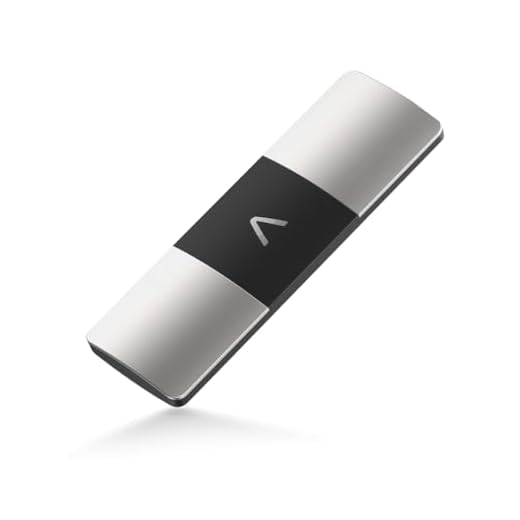
A practical tip: when palpitations are frequent or last more than a minute, capture a rhythm strip with a device (e.g., wearable or pocket EKG) and share it with your clinician.
Clinical risks of untreated arrhythmias
Untreated arrhythmias can lead to serious outcomes:
Early detection guides anticoagulation, rate/rhythm control, or urgent interventions (cardioversion, ICD placement).
Benign versus patterns that need urgent attention
Not every irregularity is dangerous. Single ectopic beats or brief sinus pauses in young, healthy people are often benign. Red flags requiring immediate evaluation include sustained VT, new persistent AF with rapid rate, recurrent syncope, or symptoms of heart failure.
Symptoms, silent episodes, and practical advice
Symptoms vary—palpitations, chest discomfort, dizzy spells, or nothing at all. Up to half of AF episodes are asymptomatic, so don’t rely solely on feelings. Best practices:
Next, we’ll look at how sensors and algorithms detect these patterns in real time and what that means for timely intervention.
How Real-Time Detection Works: Sensors, Signals, and Algorithms
Sensors: picking the right physiological input
Real‑time systems rely on one of several sensor types, each with pros/cons:
A practical tip: for vigorous activity or clinical-grade rhythm capture, a snug chest strap beats wrist PPG for noise resistance.
Signal acquisition challenges and preprocessing
Real signals are messy: motion artifact, poor electrode contact, ambient light (for PPG), and electromagnetic noise distort rhythms. Typical preprocessing steps:
Quick how‑to: ensure electrodes are clean, straps tight, and sampling rates adequate (ECG 250–1000 Hz; PPG 25–100 Hz) to reduce downstream errors.
Algorithms: heuristics to deep learning
Detection ranges from deterministic rule‑based heuristics (rate thresholds, pattern templates) to machine learning classifiers (SVMs, random forests) and deep learning (CNNs/LSTMs) that learn morphology and temporal patterns. Heuristics are interpretable and cheap; deep models typically offer higher sensitivity but need more data.
Continuous vs. event‑driven and edge vs. cloud
Continuous monitoring maximizes capture but stresses battery and compute. Event‑driven systems use lightweight on‑device detectors to wake higher‑cost analysis only when suspicious events occur. Edge processing (TinyML, DSP) minimizes latency and privacy exposure; cloud analysis enables heavier models and clinician review but adds network latency and data‑transfer power costs.
Design trade‑offs boil down to computation vs. power vs. latency: choose simpler on‑device models for real‑time alerts with cloud confirmation for complex classification. In the next section, we’ll examine how those detections are turned into actionable alerts that clinicians and users can trust.
Alert Design: Thresholds, Prioritization, and Reducing False Alarms
Thresholds & confidence metrics
Good alerts start with clear, actionable thresholds: heart‑rate cutoffs (e.g., >130 bpm for tachycardia, <40 bpm for bradycardia), rhythm‑irregularity scores (beat‑to‑beat variance, entropy), minimum episode duration (avoid single‑beat blips), and a composite confidence score. Practical tip: require a sustained pattern (for example, 20–30 seconds or 6–10 consecutive abnormal beats) plus a confidence threshold before notifying—this reduces chaff without missing clinically relevant events.
Prioritization and multi‑stage alerts
Not every abnormality needs the same response. Classify notifications into tiers:
Use multi‑stage delivery: subtle vibration → persistent on‑device notification → app notification with guidance → emergency escalation (call/contact) if unacknowledged within a clinician‑set timeout (commonly 60–120 seconds).
Context‑aware filtering
Context saves lives and patience. Incorporate accelerometer/activity, posture, and recent exercise to avoid flagging exertional tachycardia as pathological. Tailor thresholds to user age, medications (beta blockers), and known diagnoses; a 30‑year‑old athlete’s safe HR range differs from an 80‑year‑old on rate‑control therapy. Anecdote: runners commonly generate false AF alerts until devices learn activity patterns—adaptive filtering fixes that.
Minimizing false positives and alert fatigue
Apply ensemble models and corroborating signals (PPG+ECG, motion, SpO2). Use adaptive thresholds that learn baseline variability, smoothing windows, and clinician‑tunable settings for sensitivity and escalation preferences. Best practices:
These elements together make alerts timely, trustworthy, and actionable without drowning patients or providers in noise.
Practical Challenges: Accuracy, Latency, Battery Life, and Privacy
Accuracy and data quality
Real-world signals are messy. Motion, poor skin contact, sweat, and ambient light can turn a clean ECG/PPG trace into noise. Clinically useful systems therefore combine:
Practical tip: instruct users on proper contact and provide quick signal‑quality feedback in the app (e.g., “Lift wrist, hold still for 10s”). Clinically acceptable targets often aim for sensitivity >90% for major events and a positive predictive value high enough to avoid alarm fatigue (context dependent).
Latency vs reliability
Faster is tempting, but speed must not sacrifice precision. Edge processing (on‑device) can flag immediate emergencies; cloud models can run heavier analyses and confirm before escalation. Best practice: two‑stage alerts — rapid on‑device notice plus a confirmed notification after corroboration (motion, second modality) to reduce false alarms.

Battery life and device tradeoffs
Continuous high-fidelity monitoring drains batteries. Strategies that balance longevity:
Privacy, security, and consent
Encrypt data at rest and in transit (TLS, AES-256); use strong key management and audit logs. Comply with regional laws (HIPAA, GDPR) and obtain explicit, revocable consent for data uses. Provide clear ownership statements and export/delete options.
Interoperability and standards
Deploy using HL7 FHIR, IEEE 11073, and common BLE profiles for smoother EHR integration. Practical advice: map alerts to standard codes, support APIs and clinician review workflows to reduce friction in care escalation.
Next, we’ll look at how these practical constraints shape real clinical workflows and who does what when an alert fires.
Clinical Integration and Workflows: From Alert to Action
Triage protocols and escalation
Translate alerts into clear, auditable triage paths. Define at least three tiers (urgent — call 911, prompt — clinician review within hours, routine — next-day follow-up) and tie each to objective criteria: rhythm type (VF/VT vs AF), confidence score, hemodynamic proxy (rapid rate, syncope report). Practical tip: set a 15‑minute response window for life‑threatening flags and script the first patient question (“Are you short of breath, faint, or chest-paining?”).
Clinician dashboards and automated summaries
Design dashboards for rapid sense-making: a sortable queue (priority, age, comorbidity), one‑click raw strip playback, and an automated summary packet that includes:
Example: a nurse sees an AF alert with 95% confidence, views the 30s annotated clip, and initiates the AF triage checklist without opening the EHR.
Roles across care settings
Map responsibilities explicitly.
Documentation, medicolegal responsibilities, and reimbursement
Document every alert, clinician action, and patient communication in the EHR with timestamps. Clarify on‑call duty and expected response times to limit legal exposure; establish written policies. For reimbursement, use RPM and chronic care management codes (e.g., RPM CPT codes and visit-based billing where applicable), and capture monitoring time and decision-making granularity for audits.
Using ongoing monitoring to inform care
Turn longitudinal alerts into decisions: rising AF burden can trigger anticoagulation review; recurrent ventricular ectopy may prompt Holter/EP referral; sustained tachyarrhythmia can lead to medication titration or implantable loop recorder placement. Build feedback loops so intervention outcomes refine alert thresholds.
Next, we’ll translate these workflows into concrete use cases and patient-facing guidance to close the loop between detection and real-world response.
Use Cases, User Guidance, and Emergency Response Planning
Real-world use cases

Choosing and configuring devices
Interpreting alerts and creating an action plan
Caregivers and education
Next, we’ll bring these practical elements together to show how real‑time rhythm alerts can be adopted across everyday care pathways.
Bringing Real-Time Rhythm Alerts into Everyday Care
Instant rhythm alerts offer earlier detection, faster intervention, and continuous monitoring when devices are accurate, private, and integrated into clear clinical pathways with responsibilities and response plans.
Adopt thoughtfully: discuss options with clinicians, evaluate validated devices for accuracy, latency, and battery life, protect privacy, and establish who acts on alerts.
Tech nerd take: the most interesting part was the alert-design section. Prioritization + adaptive thresholds = less noise.
If you combine ANT+ chest strap inputs (moofit HR8) with wrist PPG you can cross-validate events and reduce false positives. Smart sensor fusion!
Nice point about sensor fusion, Marcus — we’ll add a short case study showing how multi-sensor setups reduce false alarms.
Good article. Quick Q: for workplace AED programs or community first responders, which device from the list makes the most sense to integrate into an emergency plan? Also—how do we avoid duplicating alarms across multiple devices?
This piece is super timely — thank you!
I liked the breakdown of sensors vs algorithms, especially the practical parts about latency and battery trade-offs.
I do worry about real-world false alarms though — had a friend panic from a Fitbit Sense 2 alert at 2am once 😂.
Would love to see more on how devices like KardiaMobile 6L and EMAY 6L fit into clinical workflows (are docs ready to trust them?).
Also—privacy. The line about on-device processing was the most important paragraph for me.
If they can flag low-priority stuff and only push urgent ones, that would help my elderly parents not freak out every time.
2am alerts are the worst. A few smart thresholds and prioritization rules can help, but it needs personalization.
Agreed on the privacy bit — on-device inference is huge. My worry: how many companies will actually ship that vs. cloud-first models?
Thanks for the thoughtful read, Sarah — glad you found it useful. We plan a follow-up piece diving deeper into clinician acceptance of consumer-grade EKGs like KardiaMobile and EMAY. Stay tuned!
Good overview, but I’m skeptical about the ‘real-time’ claims. If the algo errs on the side of caution you get alarm fatigue; err the other way and you miss events. How do we find the sweet spot? Also curious if a chest strap like CYCPLUS H2Pro is actually better than wrist devices for arrhythmia detection.
Great point, Jason. The article tries to show trade-offs — thresholds and prioritization aim to hit that sweet spot. Chest straps (CYCPLUS etc.) often have better signal quality but are less wearable daily than wrist devices like the Fitbit Sense 2.
Interesting read. 🧐
TL;DR: Tech is getting there but humans are still messy. My take: give me a good chest strap (moofit HR8?) for runs and a KardiaMobile 6L for when I’m worried. The rest is marketing fluff.
This hit home. My dad had intermittent palpitations and one of the first useful tools we used was KardiaMobile 6L — it helped get a diagnosis faster.
Reading about ’emergency response planning’ made me think: we had no plan when that alert came through. The article’s checklist ideas are brilliant and could save lives if distributed more widely.
Also, thanks for calling out battery life and latency — those were our real pain points when monitoring at home.
Emotional but grateful ❤️
Thank you for sharing, Hannah — stories like yours remind us why this topic matters. We’re planning to publish a printable emergency checklist soon.
If you ever want, share the checklist with your clinic — many practices will adapt it.
So glad the 6L helped your dad. Having a clear family/EMS plan ahead of time is underrated.
If readers want, I can DM a sample workflow my clinic uses to triage device alerts.
Loved the section on clinical integration. A few real-world points from my clinic:
– Alerts need clear ‘next-step’ instructions for triage nurses.
– Integrating KardiaMobile 6L/EMAY 6L readings into the EHR without manual upload saves minutes that matter.
– Legal/regulatory clarity on device-driven alerts is still gray in many places.
If the article had a flowchart for ‘Alert → Triage → Action’ that would be gold.
Excellent suggestions, Priya — adding a triage flowchart is on our TODO list. Appreciate the clinic perspective!
Totally — the EHR integration bit is a huge blocker. Many clinics I know still print PDFs from phone apps 😂
Standards like FHIR can help bridge that gap if device vendors support them properly.
Great read, but privacy alarm bells for me 🔔
– Who owns the EKG data?
– Are these raw signals shareable with researchers?
– Fitbit Sense 2 and Fitbit Sense 2 Lunar White sound different — why is the same model listed twice? 🤔
Also: a lot of people will assume these devices replace professional diagnosis, which is dangerous. The article did well to warn about that, but maybe shout it louder.
On-device aggregation + user-controlled uploads is the best privacy compromise, imo.
In my country, consenting patients often allow deidentified uploads for research — but transparency is key.
Some apps let you export raw ECGs (.pdf/.csv). Check vendor policies before you assume data portability.
I was also confused by the duplicate model names at first. Good catch!
Thanks, Olivia. Ownership and sharing are messy; it varies by vendor and region. We’ll clarify model variants (Lunar White is a color/edition of the Sense 2) and emphasize that these are screening/alert tools, not definitive diagnostics.
Real-world anecdote: I got a weird alert during a 10K from my CYCPLUS H2Pro — turned out to be motion artifact. Thankfully it didn’t send EMS.
That made me realize: user guidance (how to position sensors, what triggers false alarms) is almost as important as the algorithm.
Exactly. Most false alarms I’ve seen are from loose contact or sweat. Manufacturers should include better on-device checks for artifact.
Love that example, Ethan — the article does highlight user guidance but maybe underplays it. We’ll expand on practical tips for reducing artifacts.
Battery life vs. accuracy is honestly the headline for me.
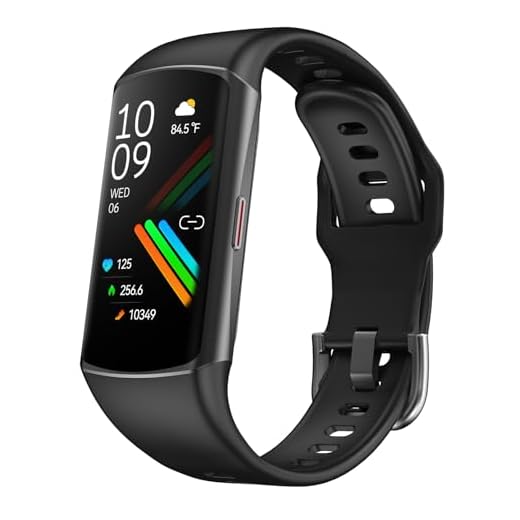
I’m wearing a 1.58” Smart Fitness Watch with 120 Modes and it dies fast if I max sensors.
Would love concrete numbers: continuous ECG monitoring on Fitbit Sense 2 Lunar White? How long before you need a charge?
Also—latency tolerance for arrhythmias: milliseconds, seconds, minutes? That changes the whole design.
Nice article, but more hard data pls 😊
Latency: for ventricular tachycardia you want near real-time (seconds). For AFib detection, minutes may be acceptable for screening. Depends on use case.
Also depends on alert pathway — if it’s notifying a caregiver vs. triggering EMS, the acceptable delay changes.
If they do on-device inference and only upload events, you save battery and privacy. Pretty standard edge-ML approach now.
From my experience: a chest strap like moofit HR8 lasts longer during workouts; wrist watches are more about convenience. But continuous 6-lead usage (like KardiaMobile 6L) is a battery killer if used non-stop.
Thanks, Maya. The article intentionally stayed high-level, but we plan to add a table of device runtimes in the next update — including consumer watches vs. chest straps vs. 6-lead dongles.
Totally — and don’t forget user behavior. A watch that’s heavy on features but dies midday will be ignored.