

Why a Ring Can Tell Your Heart’s Story
A tiny ring on your finger can become a continuous window into your physiology. Smart rings use optical sensors to track heart rate and HRV minute-by-minute, turning everyday wear into actionable health data for sleep, recovery, stress, and early warning of illness.
This article explains how that happens. We’ll look at the hardware and the limits of a ring, how PPG converts light to heartbeat signals, the algorithms that extract HR and HRV, how motion and noise are handled, power and storage trade-offs, and what accuracy and privacy mean for real-world interpretation.
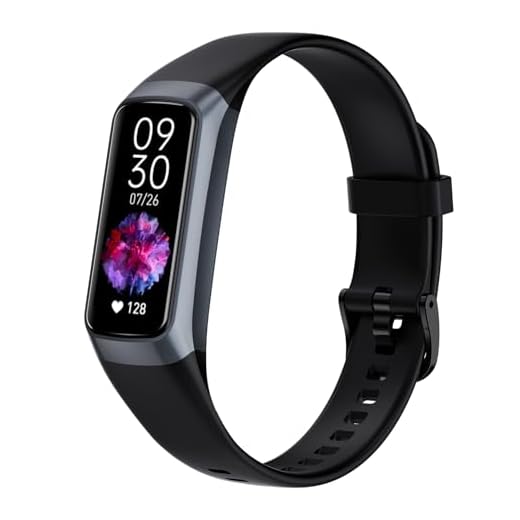

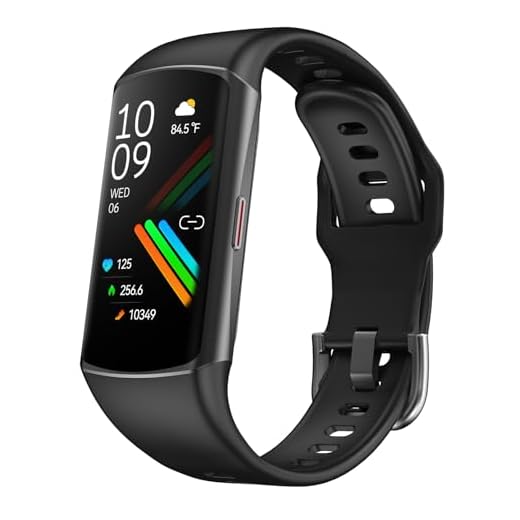
Check and Measure HRV with RingConn Gen 2: View Heart Rate Variability Data
The Hardware Inside: Sensors, Optics, and the Constraints of a Ring
Core sensors: the essentials for continuous HR and HRV
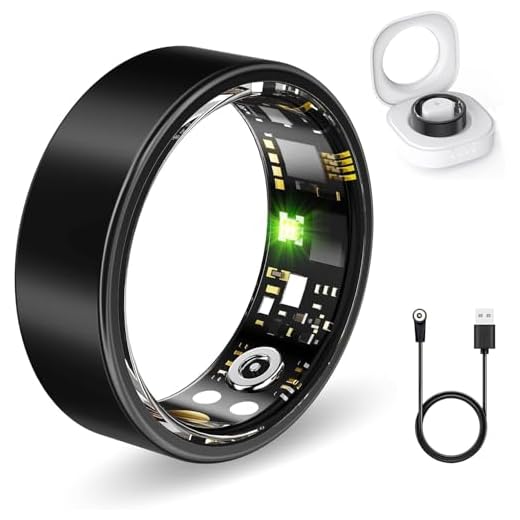
A ring packs surprisingly sophisticated hardware into a tiny bezel. Core elements include:
These components work together: the LEDs illuminate blood under the skin, the photodiode senses reflected light changes with each heartbeat, and motion sensors flag artifacts so algorithms can decide which beats are trustworthy.
Optical design and skin contact: wavelengths, geometry, and materials
Wavelength choice matters. Green LEDs are common in wrist devices because hemoglobin absorbs green light strongly, but many rings use near‑infrared (NIR) LEDs—NIR penetrates deeper and is less affected by pigmentation and surface motion in the thin tissue of the finger. Emitter-detector geometry (distance and angle between LED and photodiode) is tuned to maximize signal while minimizing crosstalk. A polished sapphire or ceramic inner window improves optical coupling and resists scratches; a smooth, snug inner surface maintains consistent contact.
Inertial and secondary sensors: context is everything
Accelerometers and gyros let the firmware tag periods of walking, gripping, or typing—common sources of PPG noise. Skin-contact sensors prevent recording when the ring is loose or off. Temperature sensors help separate physiological changes (fever) from environment-driven signal shifts.
Form-factor constraints and design trade-offs
Rings must balance miniaturization, battery life, waterproofing, and heat. Smaller batteries limit continuous sampling, forcing duty-cycling or on‑chip preprocessing. Waterproof seals and metal housings improve durability but constrain antenna placement and thermal dissipation. Designers often accept slightly lower sensor fidelity to keep a comfortable, long‑wear device people will actually use.
Practical tips for better hardware performance
Next up: we’ll dive into how those flashes of light become a heartbeat signal in the PPG pipeline.
How PPG Works: Turning Reflected Light into a Heartbeat Signal
The basic optical principle
Photoplethysmography (PPG) is deceptively simple: an LED shines light into the skin, and a photodiode measures how much light comes back. With each heartbeat the volume of blood in the microvasculature rises and falls, subtly changing how much light is absorbed versus reflected. Those tiny fluctuations—converted from photons to an electrical current—are what form the PPG waveform.
Pulse waveforms and beat detection
A typical PPG pulse has a steep upstroke (systolic rise), a peak, and a slower diastolic decay; sometimes a secondary “dicrotic” notch appears. Algorithms detect beats by finding peaks or the sharp rising edges. Common features used:
For example, the sharp rise is the most reliable anchor when motion is minimal; during activity, slope and amplitude consistency help reject false peaks.
Sampling rate, wavelength choice, and optical noise
Sampling rate sets timing accuracy: 25–50 Hz can suffice for basic HR, but HRV and precise beat timing benefit from 100–200+ Hz. LED wavelength matters because blood and tissue absorb differently—green light is strongly absorbed by hemoglobin near the skin surface (common on wrist devices), while near‑infrared (NIR) penetrates deeper and works well for fingers and darker skin. Optical noise comes from motion artifacts, ambient light leaks, probe pressure, and skin pigmentation; hardware (optical shielding, matched emitters/receivers) and firmware (adaptive filtering) both fight noise.
PPG vs ECG: an important distinction
PPG measures volumetric blood changes indirectly tied to cardiac timing; ECG records the heart’s electrical depolarization directly. That means PPG-derived pulse timing lags the ECG R‑wave by a pulse transit interval and is more sensitive to vascular changes. In practice, PPG is a compact, low‑power, and practical proxy for continuous HR and many HRV use cases—if sampling, optics, and motion handling are done well.
From Raw Signal to HR and HRV: Signal Processing and Algorithms
Preprocessing: clean the waveform first
Raw PPG must be stabilized before any beats are found. Typical preprocessing steps:
Quick tip: higher sampling (100–200 Hz) improves edge timing for HRV; with lower rates, prioritize robust filtering and beat‑confidence scoring.
Beat detection and extracting inter‑beat intervals (IBIs)
Beat timing is typically derived from PPG peaks or steep rising edges. Common techniques:
Once beat timestamps are found, IBIs are the time differences between successive beats. Post‑processing removes improbable IBIs (e.g., >20% change) and corrects ectopic or missed beats using interpolation or local median filters.
Standard HRV metrics
Wearables usually compute:
For spectral HRV, IBIs must be converted to an evenly sampled series (cubic spline or interpolation) or analyzed with uneven‑sampling methods (Lomb–Scargle) to avoid bias.
Handling artifacts, windows, and processing placement
Mark and exclude artifact windows (motion, low signal quality). Common rules: reject windows with >10–30% bad beats; re‑compute metrics only on clean segments.
On‑device processing gives low latency, privacy, and power benefits for real‑time HR and RMSSD but limits complex cleaning and spectral analysis. Cloud processing enables heavy filtering, ML, and batch PSD computations at the cost of latency and data transfer. Choose algorithms to balance responsiveness, battery life, and the reliability users expect.
Next, we’ll dig into the practical challenge everyone notices first: how motion and ambient noise break PPG—and what engineers do to keep metrics trustworthy.
Battling Motion and Noise: Robustness, Sensors Fusion, and Quality Metrics
Why noise matters in everyday use
Take a jog: the ring shifts a millimeter, your stride adds vibration, and suddenly the pulse waveform looks nothing like the calm waveform from a sleep recording. Motion artifacts, poor skin contact, ambient light leakage (think bright sunlight or camera flashes), and natural physiological variability (vasoconstriction, skin tone, perfusion) are the main enemies of continuous ring PPG.

Practical mitigation strategies
Engineers blend hardware and software to rescue usable beats:
Tips you can use right now
Trade-offs and transparency
Choosing to discard noisy segments yields cleaner HRV but gaps in continuity; aggressive correction keeps continuity but can bias variability metrics. That’s why transparent quality indices and confidence scores matter: clinicians and users should know when a value is trustworthy versus imputed. Real-world products (e.g., Oura, WHOOP, Garmin) expose some form of quality tagging—look for per-night summary flags rather than single aggregated numbers.
Next, we’ll examine how these noise‑handling choices interact with device constraints like battery, memory, and on‑device vs. cloud processing.
Power, Storage, and Continuous Tracking: Practical Engineering Trade-offs
Energy-saving tactics that keep a ring alive
Continuous PPG is hungry. In a coin‑sized device engineers squeeze months of design into milliamp-hours. Common tricks:
Real-world: Oura’s rings trade off multi‑wavelength bursts for extended battery life; many wearables cut raw sampling outside sleep to save hours.

On-device compute vs. streaming: where to draw the line
Transferring raw PPG is a bandwidth and power sink. Best practice: compute beats and IBIs on-device, then store or send only timestamps, beat confidence, and summary metrics (minute-by-minute HR, nightly HRV). This reduces BLE duty cycles and phone wakeups.
Quick tips:
Storage, compression, and sync strategies
Efficient devices store:
Use lossless timestamp compression and thresholded logging (skip low-quality windows) to save space.
Firmware, personalization, and long-term efficiency
Firmware updates can enable smarter duty-cycling, adaptive filters, and personalized thresholds (skin perfusion, activity habits) that cut false wakeups and reduce power draw. Practical user steps: enable night-only continuous mode, schedule syncs, and accept occasional higher‑resolution recordings when needed (e.g., after a hard workout) rather than 24/7 high-rate tracking.
Accuracy, Validation, Privacy, and Interpreting HRV for Everyday Use
How accurate are rings vs. ECG?
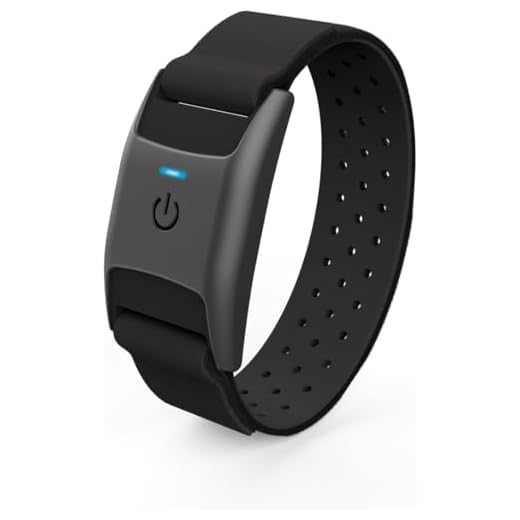
Rings using PPG can track heart rate very well at rest (often within 1–3 bpm of an ECG or a chest strap like the Polar H10). HRV is trickier: interbeat-interval (IBI) fidelity matters, and small timing errors amplify HRV differences. In practice, rings tend to be most accurate during quiet sleep and less so during intense motion or poor perfusion (cold fingers).
How devices are validated
Common validation steps:
Look for published studies or white papers that disclose sample rate, IBI accuracy, and metrics like RMSSD bias, rather than vague “accurate” claims.
What to scrutinize in accuracy claims
Privacy, data security, and regulation
Biometric heart data is sensitive. Good practices:
Interpreting HRV day-to-day
Seek medical advice if you see persistent, large deviations accompanied by symptoms, or if your device flags possible arrhythmias—these are signals, not diagnoses.
Next, we synthesize these pieces to weigh what continuous ring tracking can and can’t do.
Putting It All Together: What Continuous Ring Tracking Can and Can’t Do
Smart rings use tiny optical sensors and algorithms to extract pulse waveforms, compute heart rate and HRV, and mitigate motion with sensor fusion and quality metrics. Engineering trade-offs — power, size, and on-device processing — shape continuous tracking reliability and granularity.
Treat HR/HRV as trend indicators, not diagnostics. Prefer rings reporting data quality and artifact handling. Use continuous data contextually and validate against clinical measures when needed.
Not a tech person but appreciated the privacy section. So if my ring uploads HRV data to the cloud, how worried should I be? Does the article say if companies anonymize or aggregate?
Also check where servers are located — different countries have different privacy laws that affect your data.
Most smaller brands (not naming names) push cloud analytics for features. If privacy matters, look for ‘on-device processing’ or end-to-end encryption mentions.
Good question. The article explains common practices: many vendors pseudonymize data and use aggregations, but policies vary. Always check the product’s privacy policy; some allow opt-out of cloud sync. Local processing is a plus if privacy is a concern.
Skeptical take: HRV hype is getting to wearable brands. The article was fair, but everyday users will still over-interpret minor HRV swings. Be careful with stress/HRV apps that gamify tiny changes.
This is why I track weekly medians, not daily fluctuations. Less drama, more signal.
Also remember individual baselines vary — comparisons to population norms can be misleading.
Agreed. We emphasized interpretation limits and the need to consider context (sleep, caffeine, illness). HRV trends over time are more meaningful than single-night changes.
This part about signal processing was gold. I work in signal processing and appreciate that you didn’t oversimplify HRV derivation. Two notes:
1) People often confuse time-domain vs frequency-domain HRV measures.
2) Artifact removal choices really change RMSSD numbers — good you highlighted that.
Also, any thoughts on whether compact rings can reliably capture high-frequency HRV (respiratory-linked) during exercise?
Totally — removing artifacts changes RMSSD and spectral features a lot. For exercise, rings struggle more with HF-HRV because motion overwhelms the respiratory band; some devices try sensor fusion to recover parts, but chest straps still outperform.
Nice to see someone who gets the difference. I tracked RMSSD with a ring vs ECG and saw consistent bias, but trends were preserved.
The CHILEAF Armband mention made me nostalgic — I still use a chest strap for cycling because watches/rings get messed up by sweaty motion. Anybody compared armband/strap data to ring HRV? Curious about consistency.
I compared CHILEAF vs ring during intervals: strap was clean, ring had dropouts during sprints. Rings shine for passive monitoring.
Chest straps/armbands with ANT+ are typically more robust for beat detection during intense exercise. Rings are more consistent at rest/sleep. If you want reliable exercise HRV, straps win; for overnight HRV, rings are convenient.
Don’t forget chest straps can also be annoying for long wear; comfort trade-off.
Does anyone know if the Lemolf Smart Ring with Gesture Controls affects HR readings because of gestures (like moving fingers a lot)? I do a lot of hand-heavy work.
I used a gesture ring briefly — during heavy gesturing my HRV data was pretty bad. I switched to wearing it on the non-dominant hand, helped a bit.
Good point — gesture rings introduce extra motion. The ‘Battling Motion and Noise’ section talks about sensor fusion and quality metrics; gesture-heavy use will increase motion artifacts, so expect lower confidence in those periods.
Random question: can a Smart Ring with HRV and Sports Modes detect overtraining before you feel it? Or is that still hopeful marketing?
I got a notification once after a week of bad sleep — pulled back from training and avoided a likely injury. So they can be helpful if you trust the trends.
Rings can flag changes in resting HR and HRV that are associated with stress or insufficient recovery. They can’t definitively diagnose overtraining but can act as an early warning system if you look at consistent trends (elevated resting HR, reduced HRV, poor sleep).
Anyone tried pairing a Compact Smart Ring with an AMOLED Fitness Smartwatch? Wondering if having both helps cross-validate HR/HRV during workouts.
Some users pair rings with watches for redundancy. In practice, the watch can provide continuous movement data and additional PPG/ECG streams (if available) to help validate or cross-check. But syncing two biometric streams requires careful timestamp alignment.
I use a watch + ring setup. Watch for workouts, ring for sleep and baseline HRV. Works well for me.
Great deep dive — finally something that explains why a tiny ring can do what a fancy watch does. Loved the hardware breakdown. Quick question: do these rings generally use the same PPG wavelength as watches, or do form-factor constraints change that?
I read that some rings mix wavelengths to improve HRV estimates — feels like a clever workaround for the small sensor area.
Thanks, Liam — glad it helped. Most rings use green or infrared LEDs like watches, but they may favor IR for deeper tissue penetration given the limited contact area. The article mentions optics choices under ‘The Hardware Inside.’
Love the practical engineering trade-offs — as an engineer I cringed at ‘just use smaller components’ lol. Also curious: how do rings manage storage when offline? Do they buffer raw PPG or only processed HR/HRV?
Makes sense. Raw PPG would fill up fast on such tiny storage.
Most rings buffer processed beats or short compressed intervals rather than raw PPG to save storage and power. A few high-end devices allow raw PPG download but at the cost of battery and storage.
I recently got the Rose Gold Smart Ring for Sleep and Health and noticed my resting HR looks a bit noisy during naps. Is that motion artifact or is the algorithm just smoothing weirdly?
If you’re comparing to a chest strap (CHILEAF Armband Heart Rate Monitor with ANT+), chest straps are still king for raw beat-to-beat accuracy. Rings are great for trends though.
Short answer: probably motion artifact + contact issues. Rings can pick up micro-movement during naps. Check fit and see if ‘quality’ metrics flag low-confidence segments (we covered that in the ‘Battling Motion and Noise’ section).
I had the same on my ring. Tightened it slightly and the nap readings improved. Also make sure the sleep mode isn’t set to ‘loose’ or similar.
LOL at the bit where they said a ring can’t replace an ECG during arrhythmia diagnosis. I still get DMs from folks asking if their ring can replace a medical test 😂
Rings are awesome for lifestyle and trends, not for emergency diagnostics. People need to chill and read the fine print.
Totally — we wanted to be clear about capabilities vs limits. Rings are great screening/triage tools sometimes, but not a formal medical instrument unless specifically certified.
Agree — and the article’s last section ‘What it can and can’t do’ nails this nuance.
True. A ring telling you ‘possible AFib’ should just prompt a professional consult, not a panic attack.
I appreciated the ‘How PPG Works’ section — visuals could help though. For laypeople: does PPG still work on darker skin tones? I worry about bias in the tech.
Yes — some companies publish calibration/validation across skin tones. If they don’t, be cautious.
Important concern. The article notes that wavelength choice and algorithm training are critical. IR tends to be less affected by pigmentation than green light, and manufacturers should validate across diverse skin tones — but not all do. Look for validation studies in product specs.
I found the validation section a bit light — would love to see more reference to peer-reviewed studies comparing Compact Smart Ring with Advanced Health Sensors vs medical-grade ECGs. Any recommendations?
Fair point. We summarized industry validation practices but didn’t list papers. For peer-reviewed comparisons, look up validation studies by journals like NPJ Digital Medicine and IEEE on specific ring models — some vendors publish their own validation papers too.
Try searching for ‘ring PPG validation ECG comparison NPJ Digital Medicine’ — a few solid hits show up.
I like the engineering trade-offs section. Battery life vs continuous tracking is always a pain. Can someone summarize: better sampling = worse battery, right? Any tricks to get both?
Some rings let you schedule high-res periods (e.g., during workouts) and low-res rest — very handy.
Exactly. Higher sampling, more LEDs, and heavier processing drain the battery. Tricks: adaptive sampling (higher when important), local processing to avoid heavy uploads, and sensor fusion to avoid redundant sampling. Ring makers often use intermittent high-rate bursts instead of constant high sampling.
Also: disable extra features (gestures, constant Bluetooth streaming) when not needed — saves a surprising amount.