

Can a ring speed up your recovery? Tiny tech, big results — pick the one that actually knows your body.
You can’t out-train poor recovery. Missed sleep, stress, and nagging fatigue add up fast. Your workouts stop improving. Your focus slips. Recovery matters more than another gym session.
HRV rings make that invisible stuff visible. They track HRV, sleep stages, and readiness with a device you barely notice. Expect clearer recovery signals, smarter rest decisions, and fewer guesswork days. Short setup. Nightly insights. Better mornings.
Top Picks
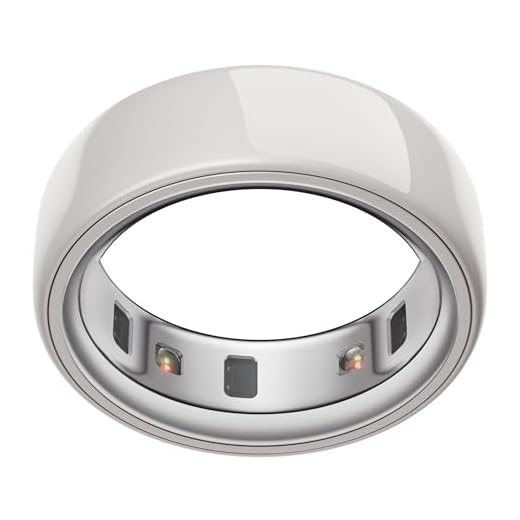


Oura Ring 4 Ceramic — Cloud Finish
Marries top-tier sensing with a refined ceramic exterior designed for durability and style. Well-suited for users who want the Oura 4 sensor suite but prefer a colorful, ceramic finish that resists scratches and looks distinct.
Premium materials meet advanced sensing
The Oura Ring 4 Ceramic brings the full capabilities of Oura’s Smart Sensing into a zirconia ceramic shell that’s both attractive and resilient. It offers the same deep analytics as the titanium Oura 4 but adds a distinct aesthetic and surface hardness.
Feature highlights and practical benefits
Users who prefer a statement piece often pick the ceramic option for its colorways and scratch resistance. Real-world advantages include fewer surface scratches and a premium look appropriate for both casual and formal wear.
Maintenance and purchase considerations
Ceramic is very hard and can collect grey metal-transfer marks from softer metals; Oura provides a polishing pad to restore the finish. Given the higher price, this model is best for buyers who want both the top sensor suite and a durable, stylish exterior.
Oura Ring 4 — Titanium, Advanced Sensing
A mature, highly accurate smart ring with an expanded metric set and polished app experience for serious recovery tracking. The updated hardware and Smart Sensing platform deliver more consistent readings and refined readiness guidance.
Why it stands out
Oura Ring 4 represents a clear step up in sensing and analytics compared with earlier generations. It’s built around a Smart Sensing platform that adapts to the wearer for improved metric stability and richer insights across sleep, readiness and health.
Notable capabilities
Practically, this ring is ideal for users who want a reliable, research-backed wearable that can inform training loads, sleep interventions and longer-term health monitoring. For example, athletes and biohackers often use the readiness scores to adjust workouts and avoid overtraining.
Considerations before buying
The premium hardware and software experience come with a higher price and optional membership costs for the most advanced programs. If you prioritize clinical-level accuracy and deep trend insights, this is among the best consumer options available.
Oura Ring Gen3 Heritage — Black
A dependable, discreet wearable that consistently captures sleep and HRV trends for actionable recovery guidance. The black finish offers a low-profile look while delivering the same sensors and battery longevity as other Gen3 options.
Overview and intended use
This Gen3 variant focuses on the same core mission: continuous recovery monitoring with a refined, understated appearance. It's a strong pick for anyone who wants reliable health signals with a stealthy aesthetic.
Standout features
In practice, owners report clear patterns in sleep and recovery; the app provides specific recommendations (e.g., rest days or sleep hygiene suggestions) that help translate numbers into changes you can act on.
Trade-offs and tips
Sizing is essential — Oura's Gen3 sizing kit matters because accuracy declines with poor fit. Also, while baseline metrics are visible without a membership, the most useful trend tools and guided programs live behind the subscription.
Final takeaways
Choose this model if you want the proven Oura sensor suite in a darker finish and you plan to use the companion app to guide training and recovery decisions.
Oura Ring Gen3 Heritage — Silver
A premium, comfortable ring that delivers detailed sleep, HRV and readiness metrics with minimal fuss. Battery life and the Oura membership ecosystem make it easy to track trends and act on recovery guidance.
What it does and who it's for
Oura's Gen3 Heritage ring is designed for people who want continuous recovery-focused biometrics without wearing a watch. It emphasizes sleep staging, HRV-driven readiness scores, resting heart rate, and respiratory signals to give daily and long-term recovery guidance.
Key features and practical benefits
Users will appreciate the near-invisible form factor: once sized correctly it’s comfortable overnight and during everyday activities. The app turns raw metrics into clear advice — for example, suggesting lighter training on low readiness days or offering targeted sleep tips after poor nights.
Limitations and practical notes
Despite its strengths, the Gen3 requires correct sizing (Oura's Gen3 sizing kit) to ensure sensor accuracy and comfort. Many users also subscribe to Oura Membership to unlock the deeper analytics; the first month is included for new members but the ongoing fee applies. If you want raw data only, the membership model may feel like an added cost.
Who should consider it
RingConn Gen 2 Air — Ultra‑Thin Smart Ring
A competitively priced ring that delivers strong sleep, HRV and stress-tracking features without a subscription for standard metrics. Battery life and comfort are standout strengths for day-to-day recovery monitoring.
What makes it notable
RingConn Gen 2 Air is positioned as a feature-rich, affordable smart ring that emphasizes accessibility: many core features are available without a paid subscription. It pairs HRV and sleep analytics with an AI layer to provide personalized tips.
Key practical features
Users often praise the absence of a paywall for basic insights and the ring’s balance of comfort, accuracy and price. Typical use cases include monitoring night-to-night recovery, spotting the start of an illness via HRV drops, and adjusting training intensity based on readiness.
Known trade-offs
Some reviews mention the app could be more polished and occasional firmware updates are needed to stabilize features. As with most rings, fit and finger placement matter for reliable readings — ordering a sizing kit is recommended.
Who should buy this
Venlan S925 LX5 Starry Smart Ring
Combines jewelry-grade materials with a capable sensor stack for sleep, HR, HRV and SpO2. The design elevates aesthetics without completely sacrificing accuracy, making it a good option for users who want wearable tech that looks like fine jewelry.
Design-first smart ring
The Venlan LX5 (Starry) positions itself at the intersection of luxury jewelry and health tech. Constructed from S925 sterling silver and set with dozens of stones, it’s intended for users who want an elegant ring that also provides wellness data.
Features and everyday benefits
For fashion-forward users, the LX5’s appearance is its primary appeal — the ring looks like fine jewelry and can be worn to social occasions where a bulkier tracker would stand out. The companion app surfaces the usual sleep and activity summaries so you can monitor recovery trends over weeks.
Limitations and user guidance
Sensor performance and algorithm maturity typically lag the leading specialist companies, so expect somewhat less refined readiness scores and occasional measurement variance. If you need clinician-grade or sports-science–level accuracy, established brands may be preferable.
Who this fits best
FKGZJF Budget Smart Ring — Black 6#
Delivers a compact set of metrics — heart rate, HRV, SpO2, sleep and steps — at a very low price point and with no subscription. Good for casual users who want entry-level insights without the cost of premium ecosystems.
Who it’s for
This compact, low-cost smart ring is aimed at people who want a low-friction introduction to ring-based health tracking. It covers the fundamentals — sleep, heart rate, HRV, SpO2 and steps — without ongoing fees.
What to expect day-to-day
For many buyers the biggest win is the affordability: you can determine if ring-form tracking suits your lifestyle without a large investment. Example: a new user who’s curious about sleep patterns can wear this model for several weeks and decide if they want to upgrade to a higher-fidelity product.
Limitations and buying tips
Expect less consistent sensor precision compared with higher-end rings — don’t use it as a medical device. Always size carefully with a sizing kit to reduce noise in measurements. If you require advanced analytics or clinical-grade accuracy, a premium model is a better fit.
FKGZJF Budget Smart Ring — Silver 6#
A very inexpensive entry-point into ring-based health tracking that covers basics like heart rate, SpO2, HRV and sleep. Suitable for curious users but expect limited analytics and occasional measurement noise compared with higher-end rings.
Entry-level tracking in ring form
This budget smart ring provides fundamentals — sleep, heart rate, HRV and SpO2 readings — at a fraction of the cost of premium alternatives. It’s intended for users who want to test the convenience of ring-based monitoring before committing to a higher-end ecosystem.
Daily use and expectations
Practical example: someone curious about whether their sleep is improving after an intervention (earlier bedtime, reduced caffeine) can use this ring to detect directionally useful changes without spending hundreds of dollars.
Limitations and buyer guidance
Accuracy and algorithm sophistication are limited compared with the market leaders; don’t rely on this device for clinical decisions. If you find the form factor helpful and want better data, plan to upgrade to a more established platform after evaluating the convenience of ring-worn tracking.
Final Thoughts
Best overall: Oura Ring 4 — Titanium, Advanced Sensing (9.6)
Best value for recovery tracking: RingConn Gen 2 Air — Ultra‑Thin Smart Ring (8.8)
Quick question: how reliable are the ‘readiness’ scores across brands? I use Oura and it seems consistent but are the others close?
Oura’s readiness algorithm is more mature and integrates more sensors and user history. RingConn and others offer readiness-like metrics, but they can be less refined — still useful, just not identical.
Correct — Oura’s readiness score is generally more actionable due to years of data and algorithm tuning. Other brands provide comparable signals (sleep, HRV, stress) but may interpret them differently. Use trends and personal response rather than comparing absolute scores across devices.
I’m torn between Venlan S925 (because it looks gorgeous) and a cheap no-name smart ring for basic tracking. Does the Venlan actually offer reliable HR and SpO2? Or is it just pretty jewelry with sensors slapped on?
If you want both looks and accuracy, consider the ceramic Oura — still stylish but with top-tier sensing. Costlier though.
Venlan sits in the middle — jewelry-grade materials with a capable sensor stack. Expect decent sleep and HR metrics; SpO2 can be useful but may not match medical-grade devices. If aesthetics are important and you want reasonable tracking, it’s a fine pick. If you need strict accuracy, lean toward Oura or high-end options.
Venlan got compliments every time I wore it. Accuracy-wise, it’s ‘good enough’ for personal trends.
I tried a Venlan-style ring from a boutique seller. The SpO2 was spotty but heart rate was okay for resting measures. It’s definitely more of a style statement with decent sensors, not a lab-grade tool.
Anyone compared Oura Gen3 vs Oura Ring 4 for HRV accuracy? I have a Gen3 and it seems fine but the new 4 keeps popping up in ads. Is it worth upgrading for better recovery insights?
I upgraded from Gen3 to Ring 4 (silver). The readings feel a bit more consistent and the readiness guidance seems smarter. Not a night-and-day difference, but if you use it daily for training decisions it helps.
Short version: Gen4 improves sensing and the Smart Sensing platform — more consistent readings across activities. If your Gen3 is working fine, you could keep it. If you rely heavily on HRV for training or have the budget, Gen4 is a meaningful step up.
I appreciate that the roundup included both high-end and budget options. One thing that wasn’t clear to me: which rings give you raw HRV data vs only processed readiness scores? Anyone clarify?
Good question. Oura provides HRV and readiness metrics via the app and also allows access to nightly HRV (RMSSD) in some data exports for deeper analysis. RingConn and some other vendors provide HRV trend data too, though availability of raw exports varies by brand. The cheapest rings often show HRV in-app but may not export raw RR interval files.
I exported HRV from Oura for my own analysis — it’s there if you want it. Cheap rings rarely offer that flexibility.
Really enjoyed this roundup — thanks! I’ve been eyeing the Oura Ring 4 Ceramic for months because I want something that looks less like tech and more like jewelry. Does anyone know if ceramic chips up easily if you wear it daily? Also: sizing advice? The ‘size first’ note makes me nervous. 😬
I’ve had the ceramic Oura for 3 months — no chipping so far. I do take it off for heavy lifting and yard work though. Sizing kit saved me from a return. Tip: measure at night when your fingers might be slightly larger.
I scratched mine a tiny bit after I bumped it on a metal railing, but it’s barely noticeable. If style matters, ceramic is worth it. If you work in rough conditions maybe go for a sturdier finish.
Glad you liked the guide, Maya — great question. The ceramic finish on the Oura Ring 4 is designed to be scratch-resistant and durable, but like any material it can show wear if you ding it against hard surfaces repeatedly. For sizing: definitely use Oura’s sizing kit (or the Gen3 kit) before ordering — Oura’s sizes run differently from standard US ring sizes, and they recommend measuring at different times of day for the best fit.
Small FYI: Oura membership—do you need it to see decent metrics? I hate subscriptions 😅
I skipped the membership for a while and it was fine. Later I subscribed for a month and the trend analysis was actually helpful for training decisions. Not strictly necessary but nice-to-have.
Good point. Oura offers core metrics without a paid membership, but the membership unlocks deeper insights, historical trend tools, and guided programs. If you just want core HR, sleep, and readiness scores, you can get useful info without subscribing, but power users benefit from the membership.
I bought the Oura Gen3 Heritage (black) last year and have been very happy. Comfortable, discreet, battery is fine. Only gripe: I wish the sizing kit included more flexible instructions — I messed up my first measurement and had to exchange. 🙂
Same here — followed the instructions once and it was off. Took two tries and the second was perfect.
Thanks for sharing, Natalie. Good to know the exchange process is manageable even if the first measurement is tricky — that’s common. Oura does recommend measuring multiple times to avoid mistakes.
Do you find the black finish shows fingerprints? I like matte finishes for that reason.
Long comment incoming — been using wearables since 2016 and rings since 2020. Here’s my two cents:
1) If you want the best HRV & readiness: Oura (Ring 4 > Gen3). The ecosystem and algorithm refinement matter.
2) If battery life and price matter: RingConn Gen2 Air is the sweet spot.
3) For style-first: Venlan or Oura Ceramic.
4) Cheap smart rings = good for curiosity, not for training decisions.
Hope that helps anyone on the fence. Also: sizing tips — fingers swell with weather, so don’t pick one that’s too tight!
Thanks — this clarified a lot for me. The ‘what to use the data for’ distinction is super helpful.
Agree on swelling. I keep one size up for summer and it stays comfortable.
Fantastic summary, Aisha — appreciate the long, experience-based breakdown. The sizing tip is gold.
Funny one: I bought a cheap ring to ‘test’ HRV and then found myself comparing every morning to my partner’s Oura scores like a nerd. 😂 Is there a community best practice for calibrating expectations when switching devices?
This. I stopped device-hopping and my decisions got a lot clearer.
Hah — welcome to the comparison rabbit hole. Best practice: pick one device and use it consistently for at least a month to establish your personal baseline. Don’t compare absolute values across devices — look at trends and how your body responds to sleep, stress, and training.
Does anyone know how long Oura Ring 4 battery lasts in real-world use with continuous sensing? The spec says up to 8 days, but is that achievable?
Manufacturer says up to 8 days; real-world varies by features used and how often you sync. Many users report 5-7 days in everyday use, so plan conservatively around 5-7 days for typical setups.
I get about 6 days with push notifications off and regular nightly use. If you use a lot of continuous tracking features it drains a bit faster.
RingConn Gen 2 Air looks like a great value — 10 day battery and no app fee? That’s tempting. But can anyone vouch for its HRV accuracy compared to Oura? I’m on a budget but want reliable recovery data.
RingConn offers impressive specs for the price and long battery life. Expect solid trend tracking but some occasional measurement noise vs Oura’s top-tier sensors. If you want accurate, actionable HRV for performance decisions, Oura still leads; for everyday tracking on a budget, RingConn is an excellent choice.
Also check for sizing and comfort — RingConn is lightweight and thin, I can sleep with it no problem.
I use RingConn and it’s been reliable for 90% of my needs. Battery life is the real win. If you want pro-level consistency go Oura, otherwise save the $$.
I own a RingConn gen2. For basic trends it’s solid — sleep, rest HR, and HRV trends are usable. But when I compare a morning HRV reading to my Oura friend’s device, RingConn sometimes shows more noise. Great for the price though.
+1 to battery life being the selling point. I travel a lot and not charging every other day is amazing.
Do the cheap Amazon rings (the two listed at the bottom) actually stay waterproof and accurate? IP68 sounds great but I’m skeptical about durability and data quality.
I had one for ~6 months and it worked fine until the charging connector started acting up. So buyer beware on longevity.
If you’re curious but don’t want to spend much, they’re perfect. Just don’t expect clinical accuracy.
I bought one of the generic black rings. It survived showering and light swimming, so the IP68 claim held up for me. Data: it’s basic and noisy, but if you want a low-cost entry it’s fine.
The low-cost rings provide a low barrier to entry and typically have basic HR/HRV/SpO2 functions with no subscription. Expect occasional measurement noise and limited analytics. Waterproofing can be real, but long-term durability varies by manufacturer.