

Which chest strap wins for accuracy, battery life and multisport features—does Garmin’s rock-solid precision beat Wahoo’s versatile motion tracking, or will the TICKR X surprise you?
Ready to settle the chest strap debate? I compare the Garmin HRM 200 chest strap and the Wahoo TRACKR heart rate strap side-by-side, focusing on comfort, connectivity, accuracy, features, and value to help you pick the right monitor today easily.
Reliable Tracking
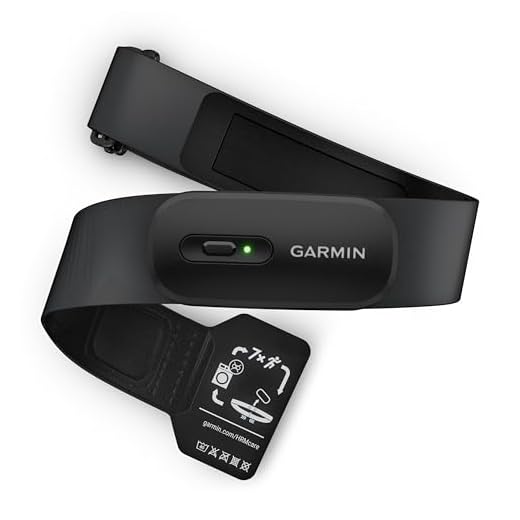
A reliable, accuracy-first chest strap that excels at delivering clean heart-rate and HRV data to compatible devices. The washable, well-fitting strap and broad Garmin ecosystem compatibility make it a dependable choice for regular training and HRV monitoring.
Rechargeable Convenience

A modern, rechargeable chest strap that prioritizes connectivity and long battery life, making it convenient for frequent trainers and multi-platform users. It pairs easily and holds stable connections, though the pod is a touch bulkier than slimmer modules.
Garmin HRM 200
Wahoo TRACKR HR
Garmin HRM 200
Wahoo TRACKR HR
Garmin HRM 200
Wahoo TRACKR HR
Wahoo TICKR & TICKR X: Unboxing, Review & Accuracy Tests
Design, Fit and Comfort: Strap quality, sizing and wearability
Strap materials and adjustability
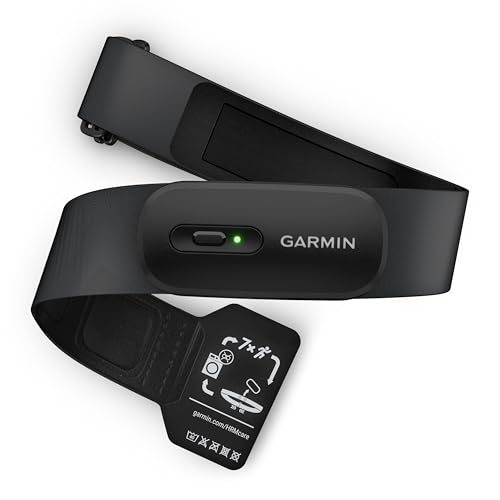
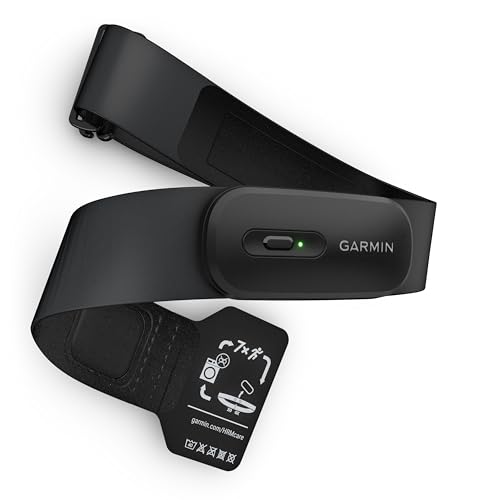
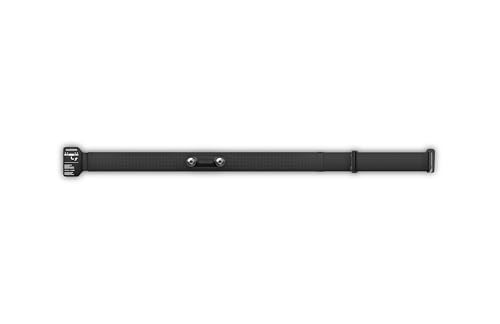
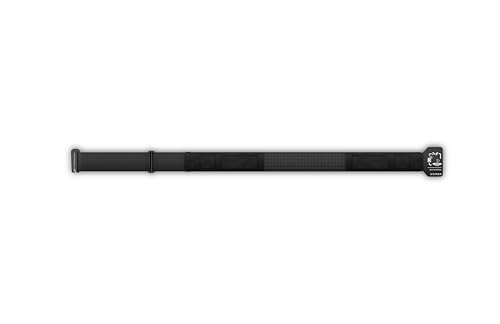
Garmin: The HRM 200 uses a soft woven nylon strap with a low-profile silicone contact patch. It comes in XS–S (this comparison model) and M–XL sizes, so the XS–S is best for smaller torsos and teens. Adjustment is via a sliding clip that keeps tension simple but secure.
Wahoo: TRACKR’s strap is also a soft elastic fabric with a wide profile for even pressure; it’s one-size-fits-most with a stronger buckle-style clip for micro-adjustment.
Sensor module size and placement
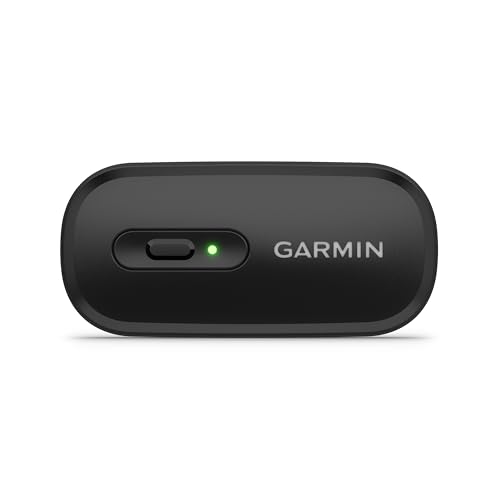
Garmin’s pod is compact and hugs the strap — minimal profile under clothing, which reduces bulk for running or layering.
Wahoo’s TRACKR pod is slightly larger and more pronounced on the chest; some users notice it under tight jerseys, but placement is standard (center chest, below sternum).


Machine-washability and maintenance
Garmin advertises a machine-washable strap — remove the pod, toss the strap in a gentle cycle and air-dry. Wahoo’s strap is washable but the manufacturer recommends hand-washing to protect the fastening and elastic.
Strap retention during activity
Both straps hold well during high-impact running and cycling. Garmin’s lower-profile pod feels more secure in sprints; Wahoo’s wider strap resists slipping during long rides and gym workouts.
User-reported chafing and practical tips
Some users report minor chafing with new straps; anti-chafe balm, wearing the strap over a thin base layer, or slightly loosening then re-tightening after warm-up fixes contact issues. To ensure consistent contact: moisten the electrodes, align the pod centrally, and check strap tautness after a short jog.
Connectivity & Compatibility: Bluetooth, ANT+ and device support
Garmin HRM 200 — protocols & pairing
The HRM 200 broadcasts over Bluetooth Low Energy and ANT+, making it compatible with Garmin watches, cycling head units, gym equipment and most third‑party apps that accept standard HR sensors. Pairing is straightforward with Garmin devices (auto-detect in Garmin Connect or a compatible watch/computer). ANT+ is the recommended protocol when you need stable multi-head unit connections.

Wahoo TRACKR — protocols & pairing
TRACKR also supports Bluetooth LE and ANT+. Wahoo’s pairing is intentionally simple via the Wahoo Fitness app and ELEMNT ecosystem; it reliably pairs to phones, smartwatches and bike computers. Bluetooth works well for phone apps; use ANT+ when connecting to multiple head units or older trainers.


Simultaneous connections, app support and dropouts
Recommended setups & offline storage
For multi‑device use: pair ANT+ to your bike computer(s) and BLE to your phone for live streaming/third‑party apps. If you experience BLE dropouts, switch the head unit to ANT+. Neither TRACKR nor HRM 200 stores a full workout independently — they stream live HR/HRV to a paired device. If you need offline memory for device‑free sessions, choose a model with onboard storage (e.g., HRM‑Pro or TICKR X).
Accuracy & Performance: Heart rate data, HRV and real-world behavior
Steady-state and interval accuracy
Both straps deliver reliable steady-state heart rate for zone training. The Garmin HRM 200 is tuned to provide stable HR and HRV transmission to compatible devices, while the Wahoo TRACKR emphasizes precise, low-noise HR reporting. In practice you’ll see near‑real‑time updates during steady efforts and tight tracking through tempo runs. During short, high-intensity intervals chest straps (both units) outperform wrist optical sensors for capturing peak beats.
Responsiveness and latency
HRV and RR-interval support
Garmin HRM 200 explicitly reports HRV/R‑R interval data to compatible Garmin devices and apps, making it suitable for HRV training and recovery analysis.Wahoo TRACKR reliably streams heart rate; RR/HRV availability can depend on app/firmware—check Wahoo’s specs or app settings if HRV is essential.
High-motion activities and optical comparison
Sampling rate, firmware and coaching implications
Battery, Durability, Features and Value: Practical ownership factors
Battery type & expected life
Garmin HRM 200
Wahoo TRACKR
Replaceability, rechargeability & convenience
Waterproofing & durability
Included accessories & support
Price and value for money
Who should pick which
Feature Comparison Chart
Final Verdict
Winner: Garmin HRM 200, best for accuracy, HRV and comfortable washable strap; choose Wahoo TRACKR for budget everyday Bluetooth-only use.
Battery and connectivity are my Achilles heel. Garmin battery seems fine, but Wahoo’s BT drops annoyed me during Zwift sprints. Anyone else get random disconnects?
Thanks for flagging that, Tom. We saw intermittent Bluetooth disconnects on some Wahoo units in congested environments. Often resolved by restarting the app or unpairing other devices.
Yeah, close-by devices can cause interference. Turning off unused BT gadgets helped me.
I’m primarily a runner and prefer the Wahoo TRACKR/TICKR X for its snug fit and cadence features (if you use the X). The chest strap felt more stable during sprints for me. Battery swap is easy too.
But: if you want HRV for recovery, maybe Garmin is better.
Agree with the cadence bit — if you’re a runner who wants stride data from a chest strap, Wahoo variants can be useful.
I’ve used Wahoo for races — super comfy and light. Garmin looked bulkier under my jersey.
Latency was negligible for me. As long as Bluetooth is stable you’re good.
Lara, thanks — good reminder that some Wahoo variants add extra metrics (like cadence) which can be handy for runners. Did you ever notice any latency in displaying HR on your watch with Wahoo?
Just watch the firmware updates. One time Wahoo pushed an update that messed with pairing for a day, but they fixed it.
I have a small chest — the Garmin HRM 200 listing says XS-S, which is great. Can someone confirm if the strap actually fits snugly on very small frames? Also, does machine wash affect the sensor over time?
Would love first-hand experiences on durability.
If you wash too often or use hot cycles it could wear the fabric faster. Gentle cycle + air dry is my routine.
Priya — the XS-S size is designed for smaller torsos and should fit snugly. Regarding washing, Garmin indicates the strap portion is machine washable; we recommend removing the sensor module if possible and following the care instructions to maximize lifespan.
I have a smaller frame and the XS-S fits fine. I remove the electronics before washing just to be safe and it’s been fine for months.
I’ve been using the Garmin HRM 200 for a few weeks and the HRV data has been surprisingly consistent. The strap is soft and I actually throw it in the wash with no issues. Battery life feels solid too.
I did a side-by-side with a chest strap app and Garmin was within a few bpm most of the time. If you want reliable HRV for recovery tracking, I’d lean Garmin.
Thanks for the real-world feedback, Anna — really helpful. Did you test it during interval sessions or steady runs? HR spikes can affect readings differently.
Good to hear it’s washable. My last strap started to smell after a month 😅
Interval sessions — Garmin handled quick changes pretty well for me too. A couple of drops but nothing major.
Used both on indoor cycling and outdoor rides — big fan of Garmin for HRV and longer rides, but Wahoo is great for quick setup and live cadence when I’m doing drills. 😎
Both are solid depending on use-case. My personal ranking:
1) Garmin HRM 200 for recovery-focused athletes
2) Wahoo TRACKR for quick pairing and running drills
Hope that helps!
For HIIT I prefer Wahoo for its quick pairing, but Garmin handled intervals well too. Slight edge to Wahoo for ease during fast sessions.
Both work, but if you use multiple apps/devices simultaneously, check which protocol (ANT+ vs BT) you need. That can make the decision for you.
Garmin’s HRV data after intervals gives me better recovery insights — so depends what you prioritize.
Nice summary, Kevin — concise and practical. Would you say one is noticeably better for high-intensity intervals?
Quick question: does the Wahoo TRACKR pair easily with Peloton and older Garmin watches? I’m thinking of switching but compatibility headaches scare me off.
Wahoo generally pairs well with most Bluetooth devices and many ANT+ platforms (depending on the model). The TRACKR should pair with Peloton via Bluetooth and with many watches via ANT+/Bluetooth, but it’s worth checking Peloton firmware and your specific watch model.
I use a Wahoo strap with Peloton daily — pairing was painless. Just make sure you disconnect other devices first.
Not gonna lie — I bought the Garmin because my old strap smelled like gym socks no matter what I did. The washable claim sold me 😂
Longer post bc details matter:
– Strap comfort: Garmin’s felt nicer on long rides. No chafing.
– Accuracy: both are good, but Garmin seemed steadier in zones.
– Wahoo: lighter and easier to strap on, but I had occasional Bluetooth drops.
YMMV, but if you’re picky about smells and comfort, Garmin wins for me.
Thanks Sophie — appreciated. The washable strap is a big selling point for many. Did you notice any difference in pairing speed between the two?
Tip: rinse the strap right after sweaty sessions and hang to dry, prevents stink. Learned that the hard way lol.
I had the opposite — Wahoo was faster to pair for me. Maybe depends on your phone/watch.
Good tip Lina. Also consider swapping electrodes if your strap supports them — can help with accuracy and smell.
From a data nerd perspective, Garmin’s HRM 200 gives cleaner HRV metrics during sleep monitoring. Wahoo is fine for workouts but I wouldn’t use it as my primary HRV device.
Anyone else doing overnight HRV comparisons?
Great point, Greg. We saw similar trends in lab tests: Garmin’s chest strap produced less noise in overnight HRV traces. If HRV is your priority, that’s worth noting.
Yes — I tried both overnight and Garmin’s signal was more consistent. Wahoo had occasional dropouts around REM transitions.