

Why ECG Rings Matter for Irregular Heartbeat Screening
Wearable ECG rings put cardiac sensing into a compact, everyday device that can flag irregular heart rhythms without bulky equipment. Screening is about identifying possible arrhythmias for follow-up, not making a medical diagnosis. Early detection — especially of atrial fibrillation — can prevent strokes and change treatment timelines.
This article explains how ring sensors capture ECG signals and process them on-device, what screening tests should detect and why it’s challenging, and how to read accuracy claims and validation studies. We’ll compare practical features — sensor placement, sampling, algorithms, and usability — and offer a simple framework to choose the best ring for screening needs and real‑world limitations for users and clinicians alike.


Which Smart Ring Should You Buy? Oura Ring 4 vs Ringconn Gen 2 vs Ultrahuman Ring Air
Inside ECG Rings: Sensors, Signal Capture, and On‑Device Processing
How rings actually sense the heart
ECG rings use metal electrodes built into the band to measure tiny voltage differences across two contact points—typically across adjacent fingers or between finger and palm when the wearer touches the opposite hand. Most use dry metal electrodes (stainless steel, titanium, or gold-plated) rather than gel electrodes. The bipolar electrode layout makes a single‑lead ECG: great for rhythm and R‑wave timing, but unlike 12‑lead clinical systems it can’t map spatial electrical vectors or localize ischemia.
Sampling, resolution, and why they matter
Good rhythm detection needs clean temporal detail. Practical targets are sampling rates of 200–500 Hz and analog‑to‑digital resolution of 12 bits or higher; lower specs can miss narrow QRS complexes or distort beat intervals. Commercial rings trade off higher sampling against battery life and storage—many preprocess on the ring to avoid streaming raw data constantly.
Contact quality, placement, and motion artifact
Signal quality hinges on snug fit and consistent skin contact—dry cuticles, lotion, or loose fit create baseline drift and loss of amplitude. Motion introduces large artifacts; users often get best results during brief, seated spot‑checks (20–60 seconds). Practical tip: clean the contact area, wear slightly higher on the finger for stable skin, and pause vigorous activity during measurements.
On‑device preprocessing and algorithms
Rings perform baseline wander removal, bandpass/notch filtering, and QRS detection locally. Modern devices add signal quality indices (SQI) to reject noisy segments and accelerometer‑assisted adaptive filtering to suppress motion-corrupted epochs. Edge algorithms can flag probable atrial fibrillation by irregular R‑R timing and absence of consistent P‑waves, then upload short clips for clinician review.
Complementary sensors to improve context
Accelerometers detect motion (helping discard noisy data); some rings add PPG to cross‑check heart rate trends or SpO2 for context. Together they reduce false positives and guide when a clean ECG sample is actually available.
Next, we’ll examine what kinds of irregular heartbeats screening should reliably detect—and why some arrhythmias are much harder to catch than others.
Understanding Irregular Heartbeats: What Screening Should Detect and Why It’s Tricky
What screening aims to find
Screening for arrhythmias focuses on rhythms that change management or risk:
Each has different clinical consequences: a short, isolated PVC is usually benign; undiagnosed AF can lead to stroke months later. Practical screening therefore concentrates on rhythms with actionable follow‑up.
Persistent versus paroxysmal — why timing matters
Persistent (continuous) arrhythmias are straightforward to catch: a single clean strip shows the abnormality. Paroxysmal arrhythmias come and go — sometimes lasting seconds — and are much harder to detect with spot checks. Many people with paroxysmal AF have totally normal traces between episodes, so detection depends on luck, continuous wear, or event-triggered capture.
Symptom-driven detection vs asymptomatic screening
Devices fall into two practical camps: symptom-capture and opportunistic/asymptomatic screening. Symptom-capture (trigger a recording when you feel palpitations) often succeeds for symptomatic SVT but misses silent AF. Continuous or frequent background checks improve odds for asymptomatic AF, but only if the device records frequently enough or flags irregularity reliably.
Key practical tips:
Next, we’ll unpack how accuracy is measured and what validation numbers actually tell you about a ring’s real‑world performance.
Interpreting Accuracy: Validation, Metrics, and What the Numbers Mean
Key metrics explained
Understanding published accuracy starts with four numbers:
Prevalence matters: a device with the same sensitivity/specificity will have much lower PPV when tested in a low‑risk, general population than in a clinic of patients already suspected of AF. That’s why a ring that “detects 95% of AF in a study” might still generate many false positives when used by millions of healthy people.
Validation: gold standards and study design
Best practice is validation against a gold standard: simultaneous 12‑lead ECG or multi‑day Holter/patch monitoring. Clinical studies done in a controlled lab (quiet, supervised) often overestimate real-world performance because they minimize motion artifact and focus on symptomatic patients.
Sample size and the population tested are critical: small studies or ones that enroll mainly hospitalized, older, or symptomatic subjects will not generalize to younger, asymptomatic screening cohorts. Look for confusion matrices, confidence intervals, and whether results report PPV/NPV at realistic prevalence.
Common pitfalls and what to watch for
Regulatory and evidence cues
Prioritize independent, peer‑reviewed studies and clearances (FDA 510(k) or CE) but read what was actually proven. For screening, higher sensitivity reduces missed cases but increases false alarms and downstream testing; for symptom‑triggered use, higher specificity may be preferred. When reading a paper, ask: who was tested, against what gold standard, and what would the PPV be in my patient group?
Features That Affect Screening Performance: Practical Specs and Usability
Continuous vs spot‑check ECG
Continuous monitoring catches intermittent arrhythmias missed by once‑daily spot checks. Think of a brief paroxysm of atrial fibrillation that a 30‑second manual ECG would miss — continuous capture increases sensitivity but demands more power and data handling. For symptom‑triggered users, reliable spot checks with easy initiation may be sufficient.
Battery life and charging cycles
Longer battery life = more uninterrupted wear time and fewer blind spots. Frequent charges create gaps (people take rings off to charge) and reduce practical screening. Look for real‑world battery figures (days of continuous ECG) rather than lab estimates.
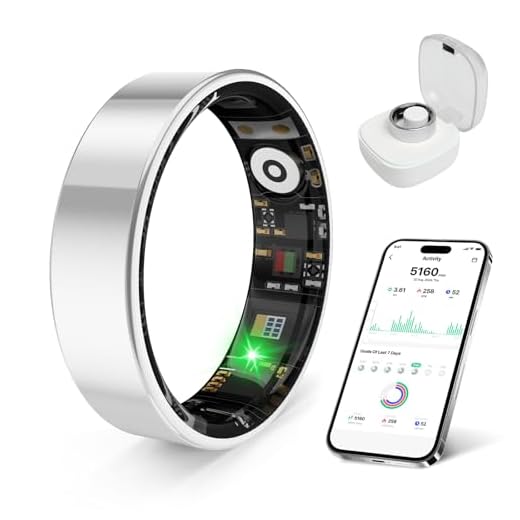
Sensor coverage and electrode design
Larger contact area and multiple electrodes reduce motion artifact and improve signal quality during daily activities. Rings with poor contact or single tiny electrodes will drop beats during hand movement, lowering effective sensitivity.
Data sampling frequency
Higher sampling rates capture sharper waveforms and better detect rapid arrhythmias; low sampling can blur QRS complexes and hide subtle irregularities. Aim for devices that report sampling specs and FDA/clinical validation at that rate.
On‑device vs cloud‑based processing
On‑device algorithms offer faster alerts and privacy benefits; cloud models can use heavier AI and improve over time but need reliable connectivity and introduce latency and potential GDPR/HIPAA issues. Both approaches can work — transparency about where the inference runs matters.
Notification behavior and clinician export
Customizable thresholds and smart alert batching reduce false alarms. Crucially, the ability to export raw ECG (or full‑resolution clips) in standard formats (PDF, XML) lets clinicians verify findings and speeds follow‑up.
Integration, comfort, and data privacy
EHR/clinic integration and export APIs fit screening into workflows; without them, alerts can create extra work. Comfortable fit and water resistance boost continuous wear and data completeness — a ring that’s left in a drawer won’t screen anyone. Finally, strong encryption, clear data‑use policies, and local data controls preserve user trust and compliance.
Next we’ll look at how these technical and usability realities play out in everyday scenarios and the limits users should expect.
Real-World Use Cases and Limitations: What Users Should Expect
Common real-world scenarios
ECG rings shine in everyday, pragmatic roles:
Typical limitations and failure modes
Be prepared for real‑world imperfections:
Handling false alarms and anxiety — practical steps
If you get an alert:
When to escalate to formal testing
Seek urgent care for chest pain, fainting, severe breathlessness, or very rapid rates. Contact your clinician for:
Next, we’ll translate these practical realities into a simple comparison framework to choose the best ring for your screening goals.
A Practical Framework to Compare Rings and Choose the Best One for Screening
1) Define your screening goal
Decide who and why you’re screening: routine opportunistic checks for older adults, spot checks for palpitations, or continuous monitoring after diagnosis. A trialing nurse once told me, “If you want to catch rare, short AF episodes, you need near‑continuous wear — not a ring you take off nightly.”
2) Check the evidence
Look for peer‑reviewed validation studies, real‑world user data, and any regulatory status. Prefer rings with independent evaluations (not just manufacturer claims). Note study population: older cardiac patients vs healthy volunteers yields different performance.
3) Compare performance metrics in context
Compare sensitivity/specificity, positive predictive value, and test conditions (resting vs motion). A ring that reports 95% sensitivity in still‑hand tests may drop substantially during activity — that matters for symptomatic users.
4) Evaluate practical features
Assess continuous monitoring ability, ECG capture method, data export (PDF/HL7), battery life, charging routine, and comfort/fit. Comfort drives adherence — a ring that stays on is more valuable than a theoretically more accurate but uncomfortable one.

5) Consider ecosystem and clinician integration
Can you export clinician‑readable ECGs? Does the vendor support direct clinician portals or secure PDF exports? Easy sharing reduces friction during follow‑up.
6) Review privacy, support, and risk management
Check data encryption, storage location, and customer support responsiveness. Fast support matters when an alert causes anxiety.
7) Factor cost, warranty, and trial policies
Account for device price, subscription fees, return windows, and warranty. Many vendors offer 30‑day trials — use them.
Quick checklist
Discuss and trial
Bring your shortlist to your clinician, share study links, and trial the ring for a week to check wearability and false alert rates. The next section will tie these choices to making a final, evidence‑based decision.
Making an Informed Choice: Balance Evidence, Features, and Clinical Advice
ECG rings can offer convenient, repeated screening for irregular heartbeats, but their value hinges on hardware, validated algorithms, and real-world wearability. Prioritize devices with peer‑reviewed validation, transparent sensitivity/specificity data, clear description of what rhythms they detect, and practical battery and comfort characteristics. Remember signal quality varies by fit and activity; no ring replaces diagnostic testing.
Treat ring findings as screening prompts, not definitive diagnoses: share alerts with clinicians, pursue confirmatory ECG/monitoring when advised, and weigh benefits of early detection against false alarms. Use published evidence and clinical guidance to choose the ring that best matches your risk profile and follow-up plan. When in doubt, consult a healthcare professional to interpret results and design appropriate next steps tailored to your health.
Going to keep this short: funny how we went from ‘will a ring show my heart?’ to ‘do I need a 6-channel ECG in my backpack’ 😂
I actually bought an EMAY Portable Lead I after reading a bit, and it’s been great for handing a trace to my doc when the ring flags something. The ring (I tried prxxhri) is neat for continuous monitoring but it misses short events.
Also — shoutout for the article pointing out that sensitivity numbers without context are meaningless. Some manufacturers throw a single % and expect you to be impressed; you need to know false positive rate too.
Same — I wouldn’t trust a ring alone. Good to hear the EMAY worked well for you.
Exactly — rings are a screening layer, not standalone diagnostics. Glad the article helped you frame that.
I appreciated the practical framework section — helped me choose between the Oura Ring 4 Titanium and other options. I ended up buying Oura because of its overall ecosystem and validation papers.
Two quick notes:
1) If you’re tracking palpitations, log symptoms in a separate app/time-stamp them when the ring alerts you — it makes clinic visits way more productive.
2) The article was honest about limitations — that’s rare, so kudos.
Minor gripe: one paragraph on ‘making an informed choice’ felt repetitive of the earlier framework, could be consolidated.
Oura flagged the episodes but I used an EMAY Lead I before my appointment to give the doc a proper trace. The combo felt reassuring.
Curious — did Oura’s app give you enough ECG-like detail or did you pair with a separate ECG monitor for follow-up?
Thanks Olivia — excellent practical tip about time-stamping symptoms. We’ll look at tightening that redundancy in the next revision.
Time-stamping is golden. I screenshot ring alerts and add a one-line note to my phone — saved a lot of back-and-forth with my cardiologist.
Nice read! I’m comparing Oura Ring 4 Titanium vs prxxhri and SARUNN because I’m cheap but paranoid about palpitations 😂
The article’s section on sensors and signal capture cleared up why those cheap rings sometimes miss irregular beats: motion artifacts and fewer leads. Also the bit about validation metrics (sensitivity vs specificity) was eye-opening — I had basically been assuming % accuracy = always good.
Small nit: there’s a tiny typo in the ‘Real-World Use Cases’ paragraph. Also, would love user-reported comfort notes — does anyone find Oura bulky for sleep? 😅
I wear Oura every night — very comfortable for me, even with long fingers. But I had to re-size once after weight change. prxxhri felt chunkier and less polished.
Good points — we’ll flag workout artifacts as a major limitation for most rings.
SARUNN felt OK but the heart-detection felt inconsistent during workouts. For palpitations I’d rather have a proper ECG trace (EMAY) than rely only on ring algorithms.
Haha same on the paranoia front. Pro tip: track a week with a ring and then cross-check episodes with a portable ECG if you get flagged.
Thanks, Lily — we fixed the typo. Regarding comfort: Oura’s titanium version is slimmer than many smart rings; some users report it’s fine for sleep but can feel tight if you size down. We’ll add a short comfort/user experience subsection.
Short and practical question: are EMAY 6L and EMAY Portable Lead I considered equivalent for screening AFib, or is the 6-channel approach significantly better? I know more leads = more info but for a quick screening at home, is the Lead I enough?
Great question. For screening brief episodes of AFib, a good-quality Lead I (single-lead) can be sufficient to catch irregular rhythms. The EMAY 6L gives more spatial info and can help with morphology assessment, which is useful for ambiguous cases or if you want a closer diagnostic look. In short: Lead I is usually fine for screening; 6-channel is better for follow-up/clarity.
Agree with admin — for most people who just want a flag to see a doc, Lead I is fine. I used it after my ring pinged me and the cardiologist appreciated the trace.
Loved the explanation on sensitivity vs specificity — that was the clearest I’ve seen. I’d add one more real-world tip: false positives can come from cold fingers, poor contact, and nail polish (I learned that the hard way).
Also, wondering if the cheaper rings like Tiantianka or Smart Health Ring are worth it purely for general wellness (not screening). Any thoughts?
Good reminder — we’ll add an app/usability note to the Features section.
Thanks Priya — great practical tip about contact quality. Regarding cheaper rings: they’re often fine for basic metrics (sleep, resting HR) but their irregular-beat detection and validation are typically weak or undocumented. If screening for arrhythmias is the main goal, we recommend validated devices or a confirmatory ECG.
Also the app ecosystem matters — some cheaper brands have flaky apps, which makes data export a pain.
Yep — cheaper rings are OK for step-sleep-habit tracking. But don’t rely on them for anything clinical without a backup.
Great roundup — finally a side-by-side that actually dives into validation and signal capture instead of just glossy pics. I liked the framework for comparing rings (super useful when you’re torn between Oura Ring 4 Titanium and cheaper options).
A few thoughts:
– The article’s points about on-device processing vs. raw ECG export were spot on — if you care about clinical follow-up, having a device like the EMAY 6L or the portable Lead I that can output clearer traces matters.
– Would have loved a tiny table showing battery life vs. continuous monitoring tradeoffs.
– Also worth mentioning: for people with existing AFib, the difference between screening and diagnostic certainty matters — the ring can flag, but a 12-lead ECG or a doctor’s Holter is still gold.
Overall helpful and pragmatic. Thanks!
If you don’t mind me asking — which EMAY model did you use for follow-up? Curious about ease of upload to patient portals.
Thanks James — glad the validation focus helped. Good call on a quick battery-vs-monitoring table; we’ll add that in the next edit. For clinical follow-up we linked to guidance on when to see a clinician, but we can make the action steps clearer.
Totally agree about exportable ECGs — my grandma’s cardiologist asked for actual traces, and the smart ring alone wasn’t enough. EMAY helped when we had the monitor on hand.