Bluetooth vs ANT+: Best Chest-Strap Heart Monitors Compared
Choosing the Right Chest-Strap Heart Monitor for Your Training
Chest-strap heart monitors remain the GOLD STANDARD for accurate, beat-to-beat heart-rate tracking during training. Unlike wrist sensors, straps sit at the chest where electrical signals are strongest, giving clean data for intervals, zones, and recovery.
Choosing between Bluetooth and ANT+ affects compatibility, battery life, and how many devices can connect at once. This guide explains how each wireless standard works, the practical trade-offs athletes face, and which straps fit common devices and apps. Read on to learn how to compare models, verify compatibility, and pick a chest strap that delivers reliable heart-rate data for your specific training needs goals.
Polar H10 vs Garmin HRM Pro+ — Which Heart Rate Monitor Reigns Supreme?
1
Why Chest-Strap Monitors Still Lead: Accuracy, Use Cases, and Benefits
Direct, ECG-like measurement
Chest straps read the electrical signals your heart produces (similar to a single-lead ECG). That direct measurement yields low-latency, beat-to-beat R-R intervals and cleaner data than optical wrist sensors, especially during abrupt pace changes or when your wrist is loose or flexing. In practice that means more accurate zone training and repeatable interval sessions.
Editor's Choice
Polar H10 Waterproof ANT+ Bluetooth Chest Monitor
Top accuracy; multi-connection support
A highly accurate, waterproof chest sensor known for industry-leading heart rate precision and versatile connectivity. Supports simultaneous Bluetooth and ANT+ connections and stores data reliably for rigorous training sessions.
Typical use cases where straps outperform wrist-worn devices:
Competitive runners and cyclists doing high-intensity intervals or sprints.
Triathletes who need reliable swim and bike data plus easy multi-device pairing.
Coaches and sports scientists tracking HRV, recovery scores, or precise R-R intervals for training load decisions.
Anyone calibrating lactate threshold or FTP tests who needs consistent, repeatable heart-rate traces.
Benefits you can feel (and use)
Superior accuracy for interval training, short sprints, and non-steady efforts.
Lower latency: near-instant heart-rate updates for live pacing or cadence-based efforts.
Rich data export: raw R-R intervals for HRV analysis and advanced metrics in platforms like TrainingPeaks and GoldenCheetah.
Multi-device compatibility: ANT+ can feed a bike head unit while Bluetooth sends data to your phone/app simultaneously (model-dependent).
Quick practical tips
Wet electrode areas before strapping for best contact.
Position the strap just below the sternum and keep it snug but comfortable.
Check firmware updates and dual-mode pairing options (Bluetooth + ANT+) when buying.
For swimming, confirm the model’s water rating and post-swim data-sync behavior.
Next we’ll unpack how Bluetooth and ANT+ differ in practice and what those differences mean when you pair straps with watches, phones, and bike head units.
2
Bluetooth vs ANT+: How the Two Standards Work and What That Means for You
How each protocol transmits heart-rate data
Bluetooth (specifically Bluetooth Low Energy, BLE) exposes a Heart Rate Service that apps and devices connect to using a paired connection. Once connected, the strap pushes heart-rate notifications (beat-to-beat or averaged) over that single connection. ANT+ takes a different approach: it broadcasts sensor data on an open channel that any compatible receiver can listen to without a traditional “pairing” handshake.
Pairing, broadcasting, and real-world behaviors
Bluetooth: typically requires pairing with a phone or watch first. Most phones and many apps expect one active BLE connection at a time to a strap; some modern straps support two simultaneous Bluetooth connections, but that’s device-dependent.
ANT+: works like a radio broadcast—multiple devices (bike head unit, watch, phone, coach’s receiver) can receive the same stream simultaneously with no connection conflicts.
Reliable Choice
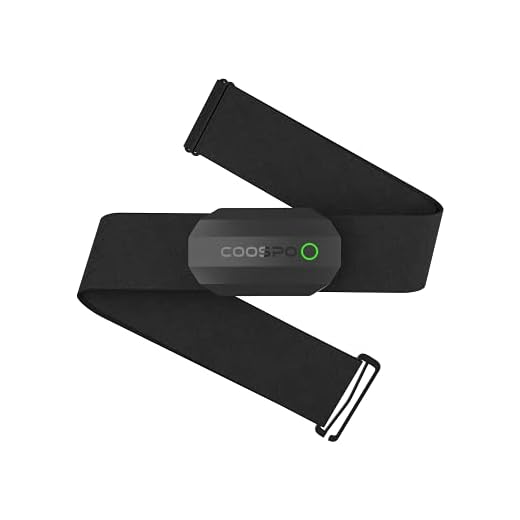
COOSPO H808S Dual ANT+ Bluetooth HR Monitor
Accurate readings, LED alerts, 300-hour battery
A dual-mode chest strap that delivers ±1 BPM accuracy with Bluetooth and ANT+ connectivity for running, cycling, and gym use. IP67-rated with an LED indicator and a long-lasting replaceable battery for extended training.
Range: both protocols usually perform well within ~10 meters (30 feet) in open air; walls, bodies, and device placement can reduce that. No meaningful “superior” range for normal workouts.
Power: BLE was designed for low-energy peripheral use; ANT+ was built specifically for sensor networks and is comparably efficient. In practice, battery life differences are minor—strap design, electronics, and duty cycle matter more.
Interference: modern BLE uses adaptive techniques; ANT+ uses frequency agility. Interference issues are rare; signal dropouts are more often caused by loose contact, firmware, or app behavior than the radio standard.
Practical pros and cons
Bluetooth pros: seamless with phones/tablets (especially iOS), native OS integrations, easy for casual users.
Bluetooth cons: limited simultaneous receivers, occasional app conflicts if multiple apps try to connect.
ANT+ pros: ideal for multi-device setups (bike computer + watch + phone), favored by cycling ecosystems (Garmin, Wahoo head units), no pairing headaches.
ANT+ cons: not natively supported on iPhones (requires adapter/workaround); some Android phones lack ANT+ hardware.
Quick tips for choosing
If you train with a Garmin bike computer or want coach/peer monitoring simultaneously, prioritize ANT+ or dual-protocol straps.
If you primarily use an iPhone and a single training app, BLE-only will be simplest.
For flexibility, look for dual-mode straps (BLE + ANT+) so you don’t have to compromise.
Next up: we’ll walk through compatibility and pairing—how to get straps talking to phones, watches, and bike head units without frustration.
3
Compatibility and Pairing: Which Devices, Apps, and Ecosystems Work with Your Strap
Who talks to chest straps: platforms and devices
Most modern straps speak Bluetooth Low Energy (BLE), ANT+, or both. iPhones are BLE-first—ANT+ won’t work unless you add a dedicated ANT+ adapter. Android varies: some phones have built-in ANT+ chips (older Samsungs) but most rely on BLE or an external ANT+ USB dongle via OTG. Bike computers (Garmin Edge, Wahoo Elemnt/Bolt) and multisport watches (Garmin, Suunto, Coros) commonly support ANT+ and/or BLE—check the spec sheet.
Must-Have
COOSPO H808S Chest Strap Heart Rate Sensor
Wide app compatibility; LED and buzzer
The H808S offers real-time heart rate data with broad compatibility across apps and devices, plus LED and buzzer status indicators. Comfortable adjustable strap and 300-hour battery life make it practical for everyday training.
BLE typically requires pairing: your phone/watch connects directly and becomes the “owner” of that stream. ANT+ broadcasts: multiple devices can listen simultaneously (ideal for a bike computer + coach’s receiver). Some straps offer a BLE “broadcast” or dual-connection mode—useful for running with a watch and phone together.
For BLE to a phone: enable Bluetooth, open your training app, choose “add sensor,” and follow prompts. If pairing fails, try the strap manufacturer’s app first.
For ANT+ to a bike computer: enable ANT+ search on the head unit; sit close to the strap and start a search.
For PC apps (Zwift/TrainerRoad): use a USB ANT+ dongle or pair via Bluetooth if your laptop supports BLE.
Managing multiple connections & common fixes
If two devices can’t both read BLE at once, switch one to ANT+ or use a dual-mode strap.
Troubleshooting tips: moisten the electrodes, tighten the strap, restart devices, uninstall lingering pairings, grant location permissions on Android, update firmware and apps.
When you need an adapter: buy an ANT+ USB stick for desktops/laptops or an ANT+ OTG dongle for Android; there’s no reliable native ANT+ option for iPhone without external hardware or a dual-mode strap.
Knowing device compatibility up front saves frustration—next we’ll dig into how accuracy and data quality vary between models and real workouts.
4
Accuracy, Reliability, and Data Quality: What to Expect from Modern Chest Straps
Sensors and fit: the physical basics
Electrode design and strap fit matter more than the wireless protocol. Wider, textured electrodes and snug contact reduce motion artifact; a loose strap creates dropouts no matter how “advanced” the radio is. Think of the strap as the microphone — placement and skin contact determine how clean the signal is before any processing.
Data features that matter
Look beyond HR and check for:
R-R (beat-to-beat) interval access — essential for true HRV and advanced analysis.
HRV support or explicit compatibility with HRV apps (Kubios, Elite HRV).
Manufacturer-stated sample rate and millisecond resolution — higher/resolution specs usually mean cleaner interval timing.
Endurance Pick
moofit HR8 Bluetooth 5.0 ANT+ Chest Monitor
500-hour battery; ±1 bpm accuracy
A Bluetooth 5.0 and ANT+ chest monitor providing highly accurate heart rate data and extended 500-hour battery life. Lightweight, IP67-rated design with improved electrodes and adjustable strap for reliable use across activities.
Memory logging or on-board storage is a big practical win: if your watch or phone drops connection during a ride, a strap that logs sessions (Garmin HRM‑Pro, Wahoo TICKR X-style) will upload the missing data afterward, avoiding gaps in R‑R streams.
Durability, power, and firmware
Prioritize straps with good sweat resistance (salt corrodes contacts) and at least IPX7 rating for rain and swims. Decide battery preference:
Replaceable (CR2032): low cost, easy mid-race swap, predictable life.
Rechargeable: no battery purchases, but needs charging cycles and can fail mid-event if you forget.Firmware updates matter — vendors push improvements that reduce dropouts, tweak filters, and add features. Check the app update history before buying.
Quick in-store and field tests
Run these to vet claims:
Short-interval sprint test: compare strap to a trusted chest strap or a bike computer; watch for lag/drops.
Multi-device test: stream to two receivers (if possible) to check broadcast stability.
Long steady-state test: 90+ minutes to expose drift or contact irritation.
Export R‑R data and eyeball variability in an HRV tool.
These checks reveal the real-world accuracy and reliability you’ll experience in training and racing.
5
Practical Shopping Guide: Features, Fit, and Value When Buying a Chest Strap
Quick buyer’s checklist (priorities mapped to choices)
Connectivity: Bluetooth-only, ANT+-only, or dual-band — choose dual if you pair to phones, bike computers, and gym gear.
Battery: replaceable CR2032 (easy swap, long shelf life) vs rechargeable (no cell buys, but charge management).
Comfort: soft, wide straps with textured electrodes reduce chafe and movement.
Size & adjustability: adjustable buckles and extra-length straps for large frames or layering.
Waterproof rating: IPX7 or better for rain/swim; look for “swim-capable” if you’ll pool-lap.
On-board memory: essential for long rides where phone/watch might disconnect.
Compatibility: explicit support for HRV export and third‑party apps (Strava, TrainingPeaks, Elite HRV).
Warranty & support: at least 1 year and responsive firmware updates.
Price/value: factor long-term battery costs, replacement straps, and ecosystem advantages.
Trade-offs to weigh
Light detachable pods (Wahoo TICKR-style): lighter and easy to replace, but you lose the pod if it falls off and some are less water-sealed. Integrated modules (Garmin HRM‑Pro style): bulkier but often more durable, swim-ready, and keep contacts sealed into the strap.
Reliable Performance
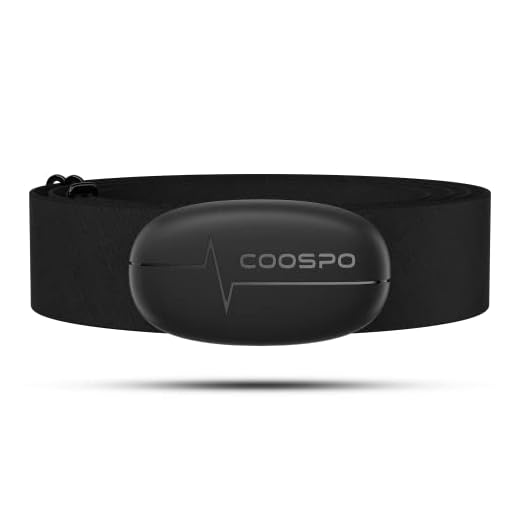
COOSPO H6 Bluetooth ANT+ Chest Heart Monitor
Peloton compatible; dual-mode connectivity
A dual-mode heart rate sensor that pairs with Peloton, GPS bike computers, and popular fitness apps to deliver precise real-time data. IP67 sweat resistance and a replaceable battery make it durable for regular workouts.
How to evaluate policies, fit guarantees, and when to pick dual-protocol
Ask retailers about 30-day returns and “no-sweat” fit trials; test a long steady-state and a few sprints. Prioritize dual-protocol if you’re a coach juggling multiple athlete receivers, an endurance athlete using a bike computer + phone, or if your gym equipment uses ANT+. Single-protocol is fine for phone-only runners or budget shoppers.
Next up: practical steps to compare models and build a shortlist in-store or online.
6
Comparing Options and Making a Shortlist: How to Evaluate Models in Store and Online
Create a shortlist quickly
Start with three to five candidates that meet your absolute requirements: protocol support (Bluetooth, ANT+, or dual), R‑R/raw‑interval access for HRV, battery type preference, and swim/water rating. For example: Polar H10 (accuracy reputation), Wahoo TICKR (pod style, light), Garmin HRM‑Pro (swim/on‑board memory), COOSPO H6 (budget dual‑band).
Compare specs side‑by‑side
Make a one‑page comparison you can scan fast:
Protocol support: Bluetooth / ANT+ / dual
R‑R/raw data: yes / no
Battery: replaceable CR2032 / rechargeable
Waterproof/swim rating: IPX7 / swim‑capable
Weight and pod vs integrated module
On‑board memory, HRV export, cadence sensors
A quick side‑by‑side will reveal tradeoffs at a glance (e.g., rechargeable pods often weigh less; integrated modules tend to be swim‑ready).
Read tests, reviews, and pairing notes
Look for independent accuracy tests and long-form user reports (search “Polar H10 accuracy study” or “HRM‑Pro swim test”). Verify product pages explicitly list pairing with your phone, bike computer, and training apps. Community forums often surface quirks — like a strap that won’t broadcast R‑R on certain watches.
In‑store checks and policy verification
When handling a strap:
Inspect strap material, electrode texture, and clasp quality.
Snap the pod in/out to test fit and seal.
Ask about return/exchange windows and “fit trial” length.
Confirm included accessories: charging cable, spare strap, ANT+ dongle.
Also check the manufacturer’s support pages for firmware update cadence — frequent updates mean active support.
Buying scenarios and priorities
Runners who own one phone: Bluetooth, lightweight, replaceable battery.
Budget buyers: CR2032 models with good electrode design.
With a short, checked shortlist in hand and these tests complete, you’re ready to move on and pick the best strap for your needs in the Conclusion.
Choosing the Best Chest-Strap Monitor for Your Needs
Chest straps remain the gold standard for heart-rate accuracy and consistency, especially for interval, high-intensity, and precise training. Bluetooth offers seamless phone and smartwatch pairing; ANT+ is ideal for broadcasting to multiple devices and bike computers. Dual-protocol straps give the best of both worlds.
Use the shopping checklist: confirm protocol compatibility, prioritize snug fit and replaceable electrodes, check battery life and app support, and consider price versus durability. Choose compatibility and comfort over features you won’t use, and you’ll get reliable data that improves training and peace of mind. Train smarter today.
Picked up a Powr Labs Dual the other month because it was cheap and advertised dual-mode. Battery life seems OK but the strap itself feels flimsy after sweat-heavy rides. Anyone tried the moofit HR8? Thinking of swapping if the strap wears out.
Priya Sharma
on September 26, 2025
I switched from a Powr Labs clone to a COOSPO H6 — same sensor performance, but the strap was noticeably better. Worth checking if the seller offers spare straps.
Thanks for the honest take, Mark. Strap quality varies a lot — many budget dual sensors use similar modules but skimp on the textile strap. moofit HR8 has better reviews for the strap material and Bluetooth 5.0 helps with connection stability; still, consider buying a replacement strap option separately if long-term durability matters.
Zoe Carter
on October 16, 2025
Can we talk about how chest straps are the least romantic piece of gear but somehow the most reliable? 😂
I tried wrist HR for two months and it was trash during intervals. Got a COOSPO H808S and holy moly, the HR spikes are gone. It’s dual mode and cheap.
Not the prettiest accessory but accurate as heck when you actually need precise zones.
Totally — chest straps are awkward but still the gold standard for accuracy in high-efforts. COOSPO models often give great value. Glad the H808S worked for you!
Jake Foster
on October 16, 2025
COOSPO H808S vs H6 — anyone notice a consistent difference in data dropout? I see mixed reports.
Tom Liu
on October 16, 2025
Haha yup — looks dumb but works. Pro tip: wet the electrodes a bit to get better contact for the first few seconds.
Emma Brooks
on October 17, 2025
I wear mine under a tight shirt and pretend it’s a fitness fashion statement. No one believes me. 😂
Jake Foster
on October 22, 2025
Looking for a shortlist for an upcoming triathlon — I need something that works for swimming, cycling (ANT+ to my bike headunit), and runs (Bluetooth to phone apps).
From the article and these comments, Polar H10 seems like the safe choice for swim + multi-connection, but are COOSPO H6 or Powr Labs actually viable alternatives if I want to save cash?
Zoe Carter
on October 22, 2025
Backup strap tip is gold. Also bring safety pins and a shirt you’ll keep on between legs so the strap doesn’t slip while transitioning.
For triathlon use, Polar H10 is the most reliable pick — clear swim credentials and proven multi-connection behavior. COOSPO H6 and Powr Labs can work, and are good budget options, but test them thoroughly before race day (especially in swim conditions).
Priya Sharma
on October 23, 2025
If you can afford Polar H10, do it — saves stress on race morning. Otherwise, buy a cheap backup strap to bring to the event in case the main one fails.
Daniel Ortiz
on October 24, 2025
Quick technical question: the article says ANT+ can broadcast to multiple receivers at once while Bluetooth is more one-to-one. But modern Bluetooth LE supports multiple connections — how does that affect live gym setups where you might want your watch + a trainer screen + a phone to all read the strap simultaneously?
Would I be better off with a Powr Labs/COOSPO dual or stick with Polar H10?
Good question. ANT+ was designed for broadcasting to many receivers with low hassle, so older gym tech often expects that. Bluetooth LE newer profiles do allow multi-connections but implementations vary. For a gym setup (watch + trainer + phone) I’d recommend a proven dual-mode strap (Powr Labs, COOSPO H808S/H6) or Polar H10 — but confirm the devices’ connection limits first.
Sarah Kim
on October 25, 2025
I’ve used a COOSPO with my phone + bike headunit simultaneously without issues, but YMMV depending on firmware and the trainer’s Bluetooth stack.
Emma Brooks
on October 26, 2025
moofit HR8 here — Bluetooth 5.0 and it’s been flawless for runs and Zwift rides. Super lightweight and the strap is comfy.
I commute with it sometimes and forget it’s there. Good battery life too. If you want bang for buck and smooth Bluetooth, consider it.
Priya Sharma
on October 27, 2025
Do you ever use it for swimming, Emma? Wondering about the waterproof claims.
Lucas Chen
on October 27, 2025
Interesting — I read mixed reviews on moofit but maybe they fixed earlier firmware bugs. Which app do you use most with it?
moofit HR8 advertises splash resistance rather than full swim-proofing, so for serious open-water swim sessions I’d lean toward Polar H10 or check specific model IP ratings before trusting it in long swims.
Thanks for sharing, Emma — useful to hear real-world Bluetooth 5.0 behavior. moofit seems to be hitting the sweet spot for casual users.
Emma Brooks
on October 28, 2025
I mostly use Strava and Zwift. No issues so far. 🤞
Priya Sharma
on November 3, 2025
Price-wise, I found the Polar H10 a little pricier but worth it because of reliability and build. Waterproofing is actually useful for me (open-water swims), and H10’s swim performance was solid.
If you’re on a budget, COOSPO or Powr Labs are perfectly fine for running/cycling though. Just be realistic about warranty/support for cheaper brands.
Great point — Polar’s higher price often buys better firmware updates, support, and accessory compatibility. For swim triathlons, Polar H10 or another manufacturer explicitly claiming waterproof/swim use is a safer bet.
Mark Reynolds
on November 4, 2025
Agreed. I splurged for Polar and haven’t regretted it for open water. The difference in reliability during swims is noticeable.
Tom Liu
on November 4, 2025
If you go budget, at least buy from a seller with easy returns — you might need to swap if straps arrive faulty.
Sarah Kim
on November 29, 2025
Great read — cleared up a lot for me about ANT+ vs Bluetooth.
I’ve been using a Polar H10 for a couple years and it’s stupidly accurate for interval sessions, but pairing it with my Peloton sometimes acts up (Peloton wants Bluetooth only, my old watch prefers ANT+). The article’s compatibility section helped, but any tips on juggling multiple devices without re-pairing every time?
Also, does anyone here use the Powr Labs dual and can confirm it pairs seamlessly with Apple Watch + Garmin at the same time?
Thanks, Sarah — glad the article helped. For juggling devices, look for straps that explicitly list ‘dual ANT+ & Bluetooth’ and support multiple simultaneous connections (some list ‘dual-connection’ in specs). Polar H10 supports multiple Bluetooth connections now but behavior depends on the receiving device. Powr Labs usually handles two connections fine, but check your Peloton firmware — they’ve tightened Bluetooth recently.
Mark Reynolds
on November 30, 2025
I use a Polar H10 + a Garmin bike headunit. Garmin sticks to ANT+ and my phone apps use Bluetooth. Polar H10 connects to both if you clear old pairings first — a little annoying but works. Also try disabling Bluetooth on devices you’re not actively using to avoid conflicts.
Zoe Carter
on November 30, 2025
Peloton + chest strap = drama. 😂 If you want zero drama, get a strap that names both ecosystems right on the box. Otherwise expect the occasional ‘wtf’ pairing moment.
Tom Liu
on December 10, 2025
Heads up: I bought a COOSPO H808S and Bluetooth kept dropping mid-ride. Not sure if it was interference from gym equipment or a firmware issue. Ended up using ANT+ instead most of the time. 😤
Anyone else experience random disconnects with COOSPO? If so, what solved it?
Disconnects can be maddening. First steps: update the strap firmware if possible, update the phone/app/firmware of receiving devices, and try toggling between BLE modes (some straps have legacy vs BLE options). If problems persist, contact the seller for a replacement — sometimes a faulty unit is the culprit.
Emily Grant
on December 11, 2025
Had the same on mine — switching the app to use native Bluetooth stack (instead of ANT bridge apps) fixed it for me. Also moved my phone away from heavy Wi‑Fi routers while riding.






Picked up a Powr Labs Dual the other month because it was cheap and advertised dual-mode. Battery life seems OK but the strap itself feels flimsy after sweat-heavy rides. Anyone tried the moofit HR8? Thinking of swapping if the strap wears out.
I switched from a Powr Labs clone to a COOSPO H6 — same sensor performance, but the strap was noticeably better. Worth checking if the seller offers spare straps.
Thanks for the honest take, Mark. Strap quality varies a lot — many budget dual sensors use similar modules but skimp on the textile strap. moofit HR8 has better reviews for the strap material and Bluetooth 5.0 helps with connection stability; still, consider buying a replacement strap option separately if long-term durability matters.
Can we talk about how chest straps are the least romantic piece of gear but somehow the most reliable? 😂
I tried wrist HR for two months and it was trash during intervals. Got a COOSPO H808S and holy moly, the HR spikes are gone. It’s dual mode and cheap.
Not the prettiest accessory but accurate as heck when you actually need precise zones.
Totally — chest straps are awkward but still the gold standard for accuracy in high-efforts. COOSPO models often give great value. Glad the H808S worked for you!
COOSPO H808S vs H6 — anyone notice a consistent difference in data dropout? I see mixed reports.
Haha yup — looks dumb but works. Pro tip: wet the electrodes a bit to get better contact for the first few seconds.
I wear mine under a tight shirt and pretend it’s a fitness fashion statement. No one believes me. 😂
Looking for a shortlist for an upcoming triathlon — I need something that works for swimming, cycling (ANT+ to my bike headunit), and runs (Bluetooth to phone apps).
From the article and these comments, Polar H10 seems like the safe choice for swim + multi-connection, but are COOSPO H6 or Powr Labs actually viable alternatives if I want to save cash?
Backup strap tip is gold. Also bring safety pins and a shirt you’ll keep on between legs so the strap doesn’t slip while transitioning.
For triathlon use, Polar H10 is the most reliable pick — clear swim credentials and proven multi-connection behavior. COOSPO H6 and Powr Labs can work, and are good budget options, but test them thoroughly before race day (especially in swim conditions).
If you can afford Polar H10, do it — saves stress on race morning. Otherwise, buy a cheap backup strap to bring to the event in case the main one fails.
Quick technical question: the article says ANT+ can broadcast to multiple receivers at once while Bluetooth is more one-to-one. But modern Bluetooth LE supports multiple connections — how does that affect live gym setups where you might want your watch + a trainer screen + a phone to all read the strap simultaneously?
Would I be better off with a Powr Labs/COOSPO dual or stick with Polar H10?
Good question. ANT+ was designed for broadcasting to many receivers with low hassle, so older gym tech often expects that. Bluetooth LE newer profiles do allow multi-connections but implementations vary. For a gym setup (watch + trainer + phone) I’d recommend a proven dual-mode strap (Powr Labs, COOSPO H808S/H6) or Polar H10 — but confirm the devices’ connection limits first.
I’ve used a COOSPO with my phone + bike headunit simultaneously without issues, but YMMV depending on firmware and the trainer’s Bluetooth stack.
moofit HR8 here — Bluetooth 5.0 and it’s been flawless for runs and Zwift rides. Super lightweight and the strap is comfy.
I commute with it sometimes and forget it’s there. Good battery life too. If you want bang for buck and smooth Bluetooth, consider it.
Do you ever use it for swimming, Emma? Wondering about the waterproof claims.
Interesting — I read mixed reviews on moofit but maybe they fixed earlier firmware bugs. Which app do you use most with it?
moofit HR8 advertises splash resistance rather than full swim-proofing, so for serious open-water swim sessions I’d lean toward Polar H10 or check specific model IP ratings before trusting it in long swims.
Thanks for sharing, Emma — useful to hear real-world Bluetooth 5.0 behavior. moofit seems to be hitting the sweet spot for casual users.
I mostly use Strava and Zwift. No issues so far. 🤞
Price-wise, I found the Polar H10 a little pricier but worth it because of reliability and build. Waterproofing is actually useful for me (open-water swims), and H10’s swim performance was solid.
If you’re on a budget, COOSPO or Powr Labs are perfectly fine for running/cycling though. Just be realistic about warranty/support for cheaper brands.
Great point — Polar’s higher price often buys better firmware updates, support, and accessory compatibility. For swim triathlons, Polar H10 or another manufacturer explicitly claiming waterproof/swim use is a safer bet.
Agreed. I splurged for Polar and haven’t regretted it for open water. The difference in reliability during swims is noticeable.
If you go budget, at least buy from a seller with easy returns — you might need to swap if straps arrive faulty.
Great read — cleared up a lot for me about ANT+ vs Bluetooth.
I’ve been using a Polar H10 for a couple years and it’s stupidly accurate for interval sessions, but pairing it with my Peloton sometimes acts up (Peloton wants Bluetooth only, my old watch prefers ANT+). The article’s compatibility section helped, but any tips on juggling multiple devices without re-pairing every time?
Also, does anyone here use the Powr Labs dual and can confirm it pairs seamlessly with Apple Watch + Garmin at the same time?
Thanks, Sarah — glad the article helped. For juggling devices, look for straps that explicitly list ‘dual ANT+ & Bluetooth’ and support multiple simultaneous connections (some list ‘dual-connection’ in specs). Polar H10 supports multiple Bluetooth connections now but behavior depends on the receiving device. Powr Labs usually handles two connections fine, but check your Peloton firmware — they’ve tightened Bluetooth recently.
I use a Polar H10 + a Garmin bike headunit. Garmin sticks to ANT+ and my phone apps use Bluetooth. Polar H10 connects to both if you clear old pairings first — a little annoying but works. Also try disabling Bluetooth on devices you’re not actively using to avoid conflicts.
Peloton + chest strap = drama. 😂 If you want zero drama, get a strap that names both ecosystems right on the box. Otherwise expect the occasional ‘wtf’ pairing moment.
Heads up: I bought a COOSPO H808S and Bluetooth kept dropping mid-ride. Not sure if it was interference from gym equipment or a firmware issue. Ended up using ANT+ instead most of the time. 😤
Anyone else experience random disconnects with COOSPO? If so, what solved it?
Disconnects can be maddening. First steps: update the strap firmware if possible, update the phone/app/firmware of receiving devices, and try toggling between BLE modes (some straps have legacy vs BLE options). If problems persist, contact the seller for a replacement — sometimes a faulty unit is the culprit.
Had the same on mine — switching the app to use native Bluetooth stack (instead of ANT bridge apps) fixed it for me. Also moved my phone away from heavy Wi‑Fi routers while riding.