
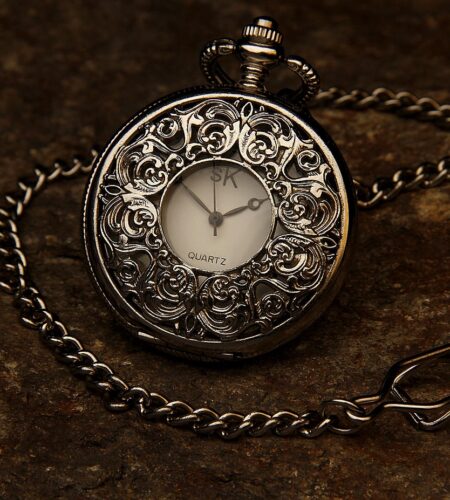
Packing a prized watch? Tiny magnets merit a quick plan.
Earbuds pulled from a case, a magnetic phone mount, or a luggage clasp — these tiny contacts feel precarious when the watch is an expensive vintage rather than a daily driver. A magnet can disturb a mechanical movement’s regulation.
This is a practical risk-management choice, not panic. Simple steps — box the vintage or wear a quartz travel watch — cut exposure and keep worries manageable.
- Demagnetization at a watch shop is quick and often costs ~$20–50.
- Compass deflection or sudden timing errors indicate magnetization.
Quick bottom line: which watches are at risk and why
- Bottom line Only mechanical watches with unprotected steel hairsprings and some vintage movements face meaningful risk; quartz and modern anti‑magnetic designs are usually unaffected. Routine travel encounters are rarely catastrophic.
- Who’s vulnerable Most vulnerable are vintage pocket watches, early wristwatches, and inexpensive mechanicals that lack anti‑magnetic materials or inner shields. Precision or high‑beat escapements show the clearest timing errors when magnetized.
- Why it matters Magnetism makes the hairspring stick or deform its effective length, changing the balance’s rate or stopping it. Small fields cause timing shifts; stronger fields produce more obvious problems.
- Fixability Demagnetization (degaussing) is fast and inexpensive at most watchmakers and often fixes the issue without parts replacement. That makes most travel-related magnetization a reversible annoyance, not a disaster.
How magnetism interacts with watch movements
What the magnetic field actually does
Magnetism exerts forces on ferrous (iron-containing) parts and on tiny metal springs. In mechanical and automatic watches the hairspring—the thin spiral that controls the balance wheel—is the most critical vulnerable element. If its coils become magnetized they can cling together or stick to nearby parts, changing the effective length of the spring and producing a persistent timing error or erratic beat.
Other components that matter
- Hairspring: coils can attract or cling, causing the watch to run fast or irregularly.
- Balance wheel and staff: ferrous screws or staff magnetization introduces magnetic torque, shifting the equilibrium and rate.
- Escapement and pallet fork: magnetic forces can alter impulse geometry, producing amplitude loss or stopping the train.
Why mechanical/automatic movements are most at risk
Mechanical movements rely on small moving metal parts whose precise geometry and interaction set the rate. The hairspring’s tiny dimensions mean even weak fields can change behavior. Many traditional hairsprings are steel alloys and easily affected; modern watches mitigate this with non‑magnetic materials like silicon or special alloys, but older or cheaper mechanicals remain vulnerable.
Quartz and smartwatches: different failure modes
The quartz crystal oscillator itself is not affected by magnetism, so timekeeping in quartz movements is largely immune. However, quartz watches use tiny stepper motors and ferrous gearing that strong fields can stall or perturb. Smartwatches are least affected timing-wise but can have malfunctioning compasses, magnetometers, wireless charging alignment, or sensor readings when exposed to magnets.
Common magnetic sources while traveling
Mechanical watches are most at risk from strong, close-range magnets. The list below gives typical field strengths (rough, surface values) and a practical flag for whether the item is usually safe or potentially problematic if pressed against a watch.
- Walk‑through metal detectors / X‑ray baggage scanners / conveyor belts — negligible field. Safe: these devices do not magnetize watches.
- Handheld security wands — negligible to a few µT. Safe: designed for ferrous detection, not magnetization.
- Fridge or souvenir magnets — ~5–20 mT at surface. Generally safe unless the magnet is pressed directly against the case back and hairspring.
- Phone speakers, small speakers, headphones — a few mT to ~50 mT at close range. Usually safe at normal separation; problematic if the speaker grill is pressed against the watch.
- Magnetic bag clasps and wallet closures — ~5–30 mT. Low risk unless in direct, prolonged contact.
- Magnetic phone mounts / neodymium magnets (small discs) — ~100–400 mT (can be higher). Potentially problematic: can magnetize hairsprings within millimeters.
Practical rule: avoid direct contact between a mechanical watch and strong magnets (neodymium mounts, speaker magnets). Airport security equipment and X‑rays pose no risk.
Field checklist to spot magnetization
-
Watch symptoms
Look for sudden timing errors: running fast/slow, stopping, second hand hopping, or irregular beat; mechanical watches usually show these when magnetized.
-
Compare with a control
Compare behavior to a known good watch or a quartz — if only the mechanical misbehaves, magnetism is more likely.
-
Simple detector checks
Hold a compass next to the case; a deflecting or stuck needle indicates a field. A smartphone magnetometer app can confirm spikes, but keep the phone steady.
-
Paperclip attraction test
A small paperclip might be slightly pulled by a magnetized case—if it clings strongly, suspect magnetization. Do not open the case.
-
Immediate isolation
Remove the watch from magnetic sources, place on a non-metal surface, and avoid storing near electronics or magnetic clasps. Seek professional demagnetization if symptoms persist.
Do not tap or bang the watch to “shake loose” magnetism.
Do not test by bringing strong magnets close; that increases magnetization.
Avoid DIY demagnetizers; incorrect use can worsen issues.
Practical packing and wearing precautions
Priority checklist for packing and wearing
- Carry-on, not checked. Put mechanical watches in carry‑on luggage whenever possible — checked bags are more likely to be jostled and exposed to unknown magnetic items. Quartz and smartwatches are lower risk but still benefit from carry‑on protection.
- Use a padded watch roll or hard case. A soft watch roll keeps watches separated; a small hard case adds impact protection and reduces the chance of close contact with strong magnets in other items.
- Choose an anti‑magnetic pouch for at‑risk watches. For vintage mechanicals or high-value pieces, an anti‑magnetic pouch (mu‑metal lined) is an easy, compact layer of defence and costs little.
- Keep distance from phone magnets and earbuds. Maintain at least 1–2 inches from MagSafe chargers, magnetic wallet mounts, or earbud charging cases; for small neodymium magnets, avoid direct contact and try to keep several inches of separation.
- Separate multiple watches. Store each watch in its own compartment or wrap to avoid stacked magnets or metal parts touching and creating stronger local fields.
- Behavior while wearing. Avoid placing the wrist against laptop speakers, portable Bluetooth speakers, or heavy‑duty magnetic clasps for long periods. If a wearable shows timing errors after exposure, stop wearing it and check for magnetization.
- Quick recovery plan. If magnetization is suspected, note symptoms, isolate the watch, and seek demagnetization from a watchmaker — it is usually quick and inexpensive.
These steps are ordered by ease and effectiveness: follow the first three for immediate, practical protection.
Fixes and When to Seek Help
Rarely—magnetization is usually reversible.
Hairsprings pick up magnetism that alters timing; a demagnetizer removes residual fields and restores function.
They can work but require correct technique; misuse can leave residual magnetism or affect electronics.
Effective demag needs a slow, steady withdrawal from the coil; strong magnets or rapid motions can worsen issues.
Seek a professional when errors persist or the watch is valuable or complicated.
Watchmakers can measure magnetism, perform proper demag, diagnose damage, and regulate the movement.
Bench demag is quick and inexpensive; full servicing costs more.
A simple demag takes minutes and is often low-fee; overhauls or repairs take hours to days and cost more.
Carry a small compass or magnet-check app. If magnetization is suspected:
Avoid strong magnets and speakers. Try a cautious DIY demag only with experience. Otherwise, bring the watch to a shop.Technical protections and special cases
Design protections that matter
Modern watches use several engineering approaches that greatly reduce magnetism trouble. A soft-iron inner case (or similar ferromagnetic shielding) channels magnetic fields around the movement, much like a lightweight cage. Silicon hairsprings and other non‑ferrous balance-spring materials remove the single most vulnerable component from the equation, so the balance spring no longer sticks or shortens when exposed to a field. Watches built to ISO 764 antimagnetic criteria are tested to resist a specified magnetic field and are commonly marketed as “antimagnetic.” Together these features make everyday travel magnets unlikely to cause lasting problems.
Who remains at risk
Older and unprotected movements are still the most sensitive; even small neodymium magnets or close speaker magnets can magnetize steel hairsprings. Owners of older pieces should consult guidance on magnet risks for vintage watches. Most magnetization in such watches is reversible, but professional demagnetization is sometimes needed.
Smartwatches and electronics
Smartwatches don’t suffer hairspring problems but can fail differently: magnetometers, compasses, sensors, and stepper motors may give wrong readings or freeze. These faults typically require recalibration, rebooting, or electronic repair rather than demagnetization.
Quick Pre‑Travel Checklist & Rubric
- Magnet‑check and photograph watches pre‑travel.
- Carry‑on mechanicals; use anti‑magnetic pouch for valuables.
- Record times/photos/compass readings; seek a watchmaker if problems persist.
Three‑point pre‑travel checklist: test each watch with a compass or magnet‑check app; keep mechanicals ≥15 cm from speakers/phone magnets and pack in carry‑on with a soft case or anti‑magnetic pouch; photograph dial and serial for reference.
Decision rubric: modern silicon‑spring/ISO‑rated watches — wear; everyday quartz/smartwatches — wear but avoid strong speakers; vintage steel‑hairspring or high‑value mechanicals — carry‑on in padded case or anti‑magnetic pouch. If gain/loss or compass attraction appears, document times and symptoms (photos, readings) and consult a watchmaker for demagnetization.
I like the compass/app check tip — simple and quick. Also agree: don’t try DIY demag if you don’t know what you’re doing, you can make things worse! 🙂
If I put a mechanical watch in checked luggage, how much extra risk is there compared to carry‑on? I get the advice to keep watches in carry‑on, but I’m traveling with a padded roll and worried about other passengers tossing their bags around.
Also: how far is ‘safe distance’ from common items like phone mags and speakers? A specific meter/centimeter rule would help.