

Can the Charge 5’s advanced sensors beat the Band 7’s two-week battery and budget-friendly comfort—or does your lifestyle decide the winner?
Two bands. One wrist. Who wins? A concise comparison of the Fitbit Charge 5 and the Amazfit Band 7 to help you choose the best fitness tracker for your needs, budget, and lifestyle, with real-world pros, cons, and quick recommendations.
Health Leader

A well-rounded fitness tracker that prioritizes advanced health monitoring and on-device GPS in a compact package. Best for users who want deep health insights and seamless integration with a mature app ecosystem, but expect shorter battery life and potential subscription costs.
Budget Battery
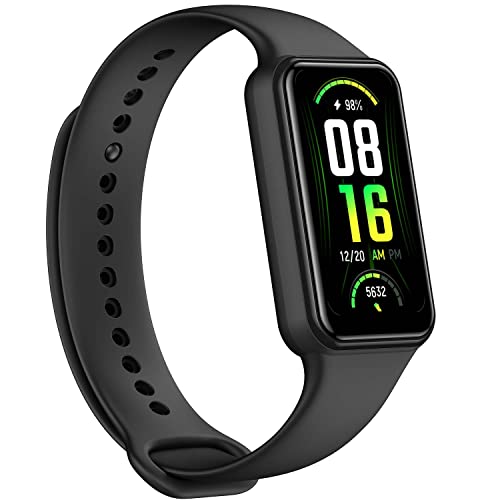
An impressive value-oriented fitness band that excels at battery life and display quality while covering core health metrics. Ideal for users seeking long runtime and a large screen on a budget, though it sacrifices some advanced medical-grade sensors and standalone GPS.
Fitbit Charge
Amazfit Band
Fitbit Charge
Amazfit Band
Fitbit Charge
Amazfit Band
Fitbit Charge 5 vs Mi Band 7: The Complete, Tested Comparison
Design, Fit and Display: Comfort Meets Usability
Build, materials and comfort
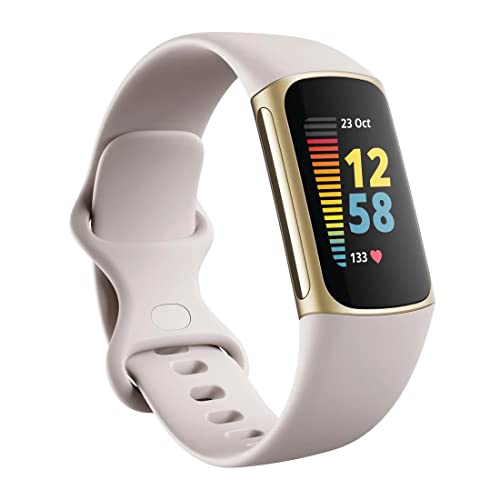
Fitbit Charge 5 follows the classic “Charge” stick form: a narrow rectangular touchscreen on a slim, low-profile case with soft interchangeable silicone bands. Fitbit ships S and L bands in the box, so you can dial in a snug fit for smaller or larger wrists; the listed weight (~29 g) keeps it comfortable for all-day wear.


Amazfit Band 7 is built explicitly as a lightweight band: slim body, integrated quick-release silicone strap and a lower overall weight (~27 g). The renewed Black unit favors minimalism and unobtrusive comfort — great if you prefer an almost invisible tracker.


Display size, brightness and always‑on options
Both devices use bright color AMOLED panels, but with different design priorities:
Both support adjustable brightness and always‑on display modes (configurable to save battery), making them usable outdoors and during quick checks without waking the wrist excessively.
Water resistance and day/night wearability
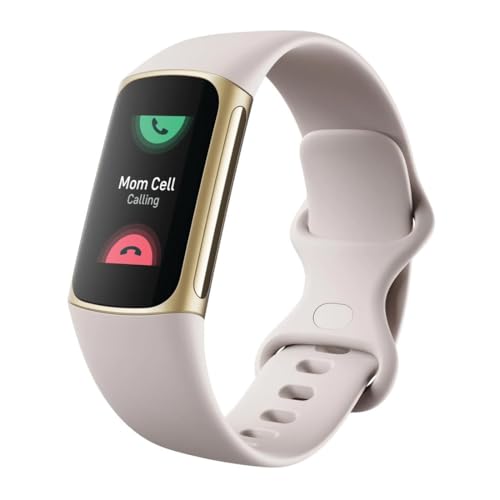
Both are rated to 5 ATM (swimproof), so you can shower, swim or track pool workouts without removing them. Their slim profiles and soft bands make either suitable for round‑the‑clock wear — including sleep tracking — but Fitbit’s included S & L band options and the Lunar White/Soft Gold colorway give a slightly more premium, style-conscious option versus the utilitarian renewed black of the Band 7.
Health and Fitness Tracking: Sensors, Accuracy and Features
Fitbit Charge 5 — sensors and advanced health tools
Fitbit Charge 5 packs a fuller clinical-style sensor set: continuous 24/7 heart-rate monitoring, SpO₂, ECG capability, an EDA sensor for stress response, and built‑in GPS for standalone outdoor workout tracking. Sleep staging, a Sleep Score and advanced sleep tools (plus Daily Readiness and stress scores) are baked into Fitbit’s ecosystem — some deeper insights require the included trial or paid Fitbit Premium.

Amazfit Band 7 — core sensors and broad sports support
Amazfit Band 7 offers continuous heart‑rate tracking and SpO₂ monitoring, plus 120 sports modes, basic automatic activity detection for a few sports, and Alexa built in. It focuses on long battery life and breadth of modes rather than clinical sensors — there’s no ECG or EDA, and the unit lacks onboard GPS.


Accuracy, workout recording and GPS dependence
Who benefits from each
Battery, Performance and Reliability: Real-World Longevity
Battery life & charging — advertised vs realistic
Amazfit advertises up to 18 days; Fitbit Charge 5 targets a shorter multi‑day span because it runs more power-hungry sensors. In practice expect the Band 7 to deliver multi‑week use under light-to-moderate settings, while the Charge 5 typically lasts several days between charges and needs more frequent top-ups when advanced features are used. Fast, contact‑style magnetic chargers are supplied for both; charge times are comparable (roughly a couple hours from empty).
Fitbit Charge 5 — practical runtimes
With frequent notifications, continuous HR and occasional GPS workouts, the Charge 5 commonly runs about 4–7 days. Enabling built‑in GPS, continuous SpO₂ scanning or always‑on display shortens that to hours or a couple of days depending on intensity. The Fitbit charger and app make daily charging painless when needed.

Amazfit Band 7 — practical runtimes
Amazfit’s Band 7 is engineered for longevity: many users see 10–18 days depending on watch face, notifications and Alexa use. Because it lacks onboard GPS, the biggest drains are screen brightness, frequent SpO₂ sampling and voice assistant activity — otherwise it sustains multi‑week stretches.


What eats battery life
Performance, sync and firmware
Fitbit’s app and cloud sync are generally consistent and timely; firmware updates arrive regularly and focus on stability and health features. Amazfit (Zepp) sync works well for core data but can lag or show occasional delays after large updates; Amazfit updates are less frequent but often target battery and sensors.
Renewed condition notes (Amazfit)
A renewed Band 7 can save money but battery capacity may be lower than new. Check the seller’s Renewed warranty/return policy, ask about included charger and inspection procedures, and expect some variance in cycle count and cosmetic wear.
Smart Features, App Ecosystem and Value for Money
Voice assistants & on-device smarts
The Amazfit Band 7 includes Alexa built‑in for quick voice queries, timers, and smart‑home commands without a phone app step — a clear convenience for day‑to‑day tasks. The Fitbit Charge 5 lacks a full voice assistant on the band itself but delivers robust notification handling, on‑device replies (on some phones), and richer health prompts. Fitbit leans on software-driven insights (Daily Readiness, Stress Management) that require Fitbit Premium for the deepest analysis.
Companion apps & ecosystem
Fitbit app: polished dashboard, large user community, guided workouts, leaderboards and deeper health insights with Premium (the Charge 5 bundle includes a limited Premium window). This ecosystem integrates well into social/coach features and long‑term health tracking.
Zepp/Amazfit app: lightweight, straightforward activity dashboards, detailed sleep and SpO₂ logs, and easy device setup. It’s improving but has fewer community features and third‑party partnerships than Fitbit.
Compatibility & third‑party integrations
Warranty, renewed trade‑offs and price/value
Value summary: if you want advanced health tools, built‑in GPS and a richer app community, the Charge 5 justifies its price. If battery life, Alexa and sheer bang‑for‑buck matter, the renewed Band 7 is the economical choice — but expect potential battery/cosmetic trade‑offs and check the Renewed warranty.
Feature Comparison Chart
Final Verdict: Which Fits Better?
The clear winner for fitness accuracy and premium features is the Fitbit Charge 5 — choose it if you want built‑in GPS, advanced stress and sleep tools, reliable heart monitoring, and a polished app ecosystem.
Pick the Amazfit Band 7 if you’re budget‑conscious and prioritize 18‑day battery life, a large 1.47″ AMOLED, Alexa integration and basic tracking. Quick scenarios: runner — Fitbit; casual user — Band 7; budget seeker — Band 7. So, ready to decide?
Anyone else annoyed that the Band 7 is listed as ‘renewed’ in the article? That should be highlighted more — some people assume renewed = broken. I appreciate the battery and Alexa though. Voice assistant on a cheap band is wild.
Good call — we did mention ‘renewed’ in the product list, but we could emphasize what that entails (certified refurb, return policy, etc.). I’ll add a quick note to clarify the difference between renewed vs used.
Renewed isn’t always bad — I bought renewed earbuds last year and they’re fine. Just check seller ratings and return policy.
Price-performance showdown: Band 7 wins for battery, display, Alexa, and price. Fitbit wins for sensors, GPS, and established health features.
If you use the device as a fashion piece and for all-day wear, Charge 5 feels nicer. If you use it mainly for workouts and want minimal fuss, Band 7.
Nice summary, Daniel. That’s a fair way to frame it for shoppers deciding on priorities.
Exactly — decide what you use most (sleep data vs battery vs GPS) and pick accordingly.
I love the Band 7 battery but the notifications are a bit laggy sometimes. Also, Alexa works but it’s not as reliable as my Echo.
Pros: screen, battery, price.
Cons: app UX and notification delays.
Still, for $60-$80 (renewed) it’s hard to complain. Anyone else noticed random HR spikes during strength training?
Good observation — wrist-based optical sensors can be thrown off by wrist movement, grip changes, and poor fit. For high-intensity or precise HR, a chest strap is still the gold standard.
Thanks all — will try a tighter fit next time.
Yep HR spikes appear on wrist trackers during heavy lifts. Chest strap or manual checks are more reliable for short intense intervals.
Also try wearing the watch a bit higher on the wrist during workouts. That helped me.
I found tightening the band a notch during lifting helps a lot. Not ideal but reduces spikes.
Question: Does the Charge 5 notify you of irregular heart rhythm (AFib) or is that only for the Sense? Thinking of health features for older parents.
Charge 5 has ECG app but availability depends on region and regulatory approvals. For AFib notifications, Fitbit uses a combination of PPG irregular rhythm notifications and ECG. Sense had broader approvals earlier. Always best to check product specs for your country and consult a doctor for medical concerns.
Really helpful roundup — thanks! I’ve been torn between the Charge 5 and the Band 7. A few things that pushed me:
– Battery life: the Band 7’s 18 days is wild compared to Fitbit’s 7-ish days (depending on usage).
– GPS: built-in GPS on the Charge 5 matters if I want accurate outdoor runs without my phone.
– Sleep and stress tracking: Fitbit seems more polished there.
Still thinking: do I value accuracy and nicer app UX over battery and price?
Glad it helped, Emma — that’s the tradeoff most people hit. If you run a lot without your phone, Charge 5’s GPS is huge. If you hate charging devices, Band 7 wins. Consider how often you run vs how often you mind a charger 🙂
I have the Band 7 and I charge it like once every 2 weeks. For casual runners it’s fine with connected GPS (phone), but if you’re serious on accuracy, go Fitbit.
Also, Fitbit’s sleep score felt more actionable to me. Band 7 shows data but not as much context.
Had Fitbit Charge 4, upgraded to Charge 5. Pros: GPS, better screen and stress tools. Cons: battery life dip and it’s pricier.
If you mostly want battery and display, Band 7 is the no-brainer. If you want more accurate HR and built-in GPS, Charge 5.
Also: Amazfit’s app keeps getting better — don’t sleep on it 😉
Lucy — I thought the strap was okay; not premium but perfectly usable. If you sweat a lot, silicone is better though.
Great tip, Mason. Strap swaps are an easy way to personalize and upgrade feel without buying a whole new band.
Thanks Maya — how’s the fit? Band 7 straps feel flimsy in pics but maybe fine in real life.
I got a cheap metal mesh strap for my Band 7 — looks nicer and feels sturdy. $12 on Amazon.
I have a weird take: buy whichever one you hate less. 😂
But seriously, I went with Charge 5 because I like the Fitbit app and I wanted GPS. My partner bought Band 7 and never charges it. We’re both happy in our little fitness gadget marriages.
PS — if you want long-term firmware support, Fitbit has been more consistent in my experience.
Firmware updates can be hit or miss. Check update history for each brand if that matters to you.
Also, community-made watch faces and customizations are better for some Amazfit models — if you like tinkering, Band 7 might be fun.
Love the ‘hate less’ strategy — very realistic decision-making. Good tip about firmware support; that’s often overlooked until a major update breaks (or improves) features.
Cost vs features debate got me laughing — tech bros argue about steps like it’s politics 😂
But seriously, couple of practical notes:
1) The Charge 5 is heavier and looks more like a mini smartwatch. If you prefer subtle, that could be a con.
2) Band 7 being renewed saved me $40 and the screen is gorgeous for notifications.
3) Heart rate + SpO2: both do it, but Fitbit’s continuous HR felt smoother (less jumpy).
Any tips on switching from Fitbit ecosystem to Amazfit? Worried about losing historic data.
I moved from Fitbit to Amazfit last year. I kept my Fitbit account for old records and started fresh on Amazfit — annoying but manageable.
When I switched I used a site to pull steps into Google Fit then to Amazfit — took time but worth the battery life for me.
Thanks for chiming in, Lucy. Good workaround for people who want a combined timeline.
Haha, fair point! About ecosystem: there’s no easy one-click migration for historical Fitbit data to Amazfit. You can export data from Fitbit (CSV) but importing into Zepp/Amazfit app isn’t supported officially. Third-party tools exist but can be clunky. If your old sleep/fitness history matters a lot, stick with Fitbit.
Totally — ecosystem lock-in is underrated. I stayed with Fitbit because my partner and I used leaderboards and it mattered to us. Otherwise I’d have switched for battery too.
Also remember renewed devices can have shorter remaining lifespan — but if it’s sold with a return window and price is right, it’s a solid gamble.
Short and sweet: if you want reliability and nicer app analytics — Charge 5.
If you want battery and a big AMOLED display for cheap (especially renewed), go Band 7. I bought the Band 7 and it exceeded my expectations for the price.