
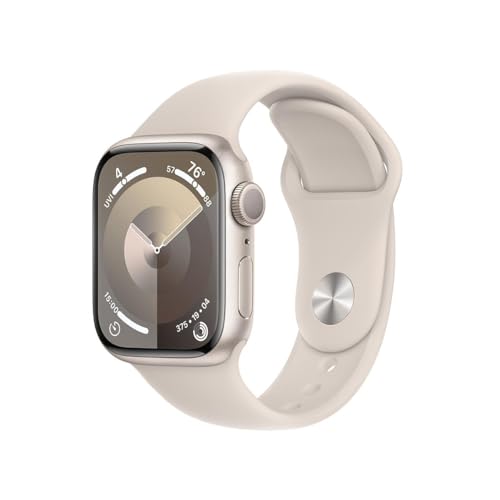
Ready to stop guessing your heart rate? Find the wrist tracker that actually knows the beat.
Your wrist can tell the truth. It just needs the right sensor. Short, accurate heart-rate readings make workouts smarter and health checks easier.
Imagine finishing a run and seeing data you can trust. These eight picks focus on accuracy, battery life, comfort, and real-world performance — not just shiny features. Simple, reliable, useful.
Top Picks
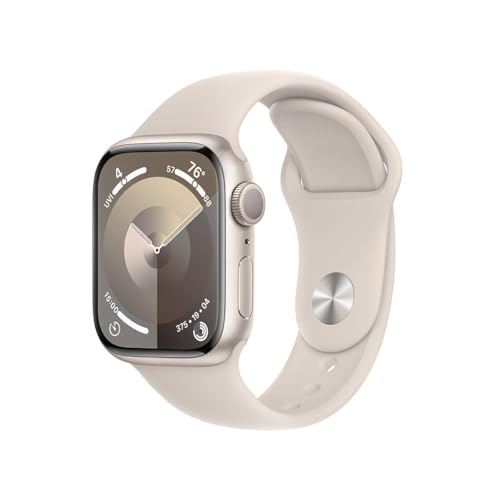



Apple Watch Series 9 GPS 41mm
Seamlessly blends advanced health sensors with best-in-class iPhone integration and a very bright display. Strong all-around health features and fast performance, though battery life is good but not class-leading compared with some competitors.
Overview
The Apple Watch Series 9 packs Apple's latest S9 chip and improved display into a compact 41mm aluminum case. It focuses on daily wellness and safety with continuous optical heart rate monitoring, ECG, SpO2 estimation, sleep tracking, and temperature sensing — plus features like Fall Detection and Crash Detection that are useful for everyday safety.
Key features and real-world benefits
Practical insights and usage scenarios
This watch is an excellent fit for iPhone owners who want a daily wearable that doubles as a health monitor and smartwatch. Runners and gym users will appreciate accurate heart-rate tracking during workouts and the wide app ecosystem. Users report the touchless gestures and faster performance feel noticeably smoother than previous generations.
Limitations and considerations
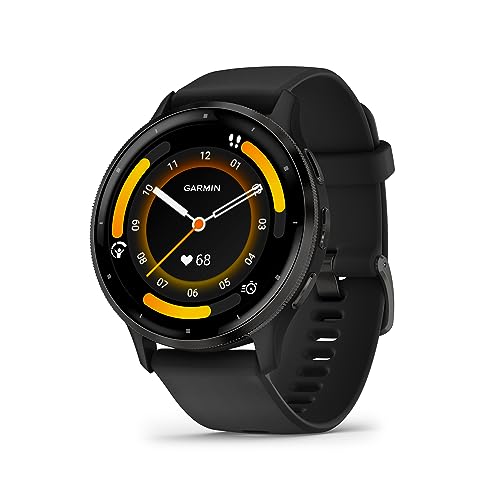
Garmin Venu 3 AMOLED 45mm Watch
Outstanding combination of accurate wrist-based metrics and multi-day battery life makes it ideal for serious fitness tracking and everyday wear. Strong health insights, animated workouts, and reliable GPS deliver consistent performance across activities.
Overview
The Garmin Venu 3 is positioned as a premium GPS smartwatch with an emphasis on accurate biometric tracking and extended battery life. It offers a bright 1.4-inch AMOLED display, Body Battery energy monitoring, detailed sleep coaching, and built-in sports apps suitable for a wide range of users.
Key strengths and features
Practical examples and benefits
If you’re training for weight loss, a marathon, or simply want precise daily calorie tracking, the Venu 3’s accuracy in calories and steps is especially valuable. Users report that its calorie estimates align closely with clinical-grade monitors in many cases, which helps with precise nutrition planning.
Limitations and real-world notes
Fitbit Sense 2 Advanced Health Watch
Comprehensive stress management tools and a strong set of health sensors make it a good choice for users focused on wellbeing. The platform ties in sleep coaching and ECG, though some advanced features tie to a paid subscription.
Overview
The Fitbit Sense 2 is designed for users who want deeper wellness monitoring beyond step counts. It adds advanced stress detection, ECG capability, continuous heart-rate tracking, and rich sleep insights — all presented in a clean, wearable package.
Key features and how they help
Practical insights and examples
Athletes or high-stress professionals who want actionable feedback on recovery and sleep will appreciate the Sense 2. For example, the Stress Management Score combined with guided breathing can help users decide whether to push a hard workout or prioritize recovery that day.
Limitations and considerations
Samsung Galaxy Watch6 Classic 47mm
Combines a traditional rotating bezel interface with modern fitness and health tracking, making it intuitive and stylish. Offers tailored heart-rate zones and advanced sleep coaching, though battery life is moderate and may vary on renewed units.
Overview
The Samsung Galaxy Watch6 Classic blends a classic watch aesthetic — including a tactile rotating bezel — with a modern fitness and health feature set. It’s a strong option for users who want both style and substance in one device.
Notable features and benefits
Practical insights and use cases
If you own a Samsung phone (or Android in general) and want a smartwatch that looks and behaves like a traditional timepiece, this Classic model is very appealing. The rotating bezel is especially useful while running or cycling when you want to avoid touching the screen.
Considerations
Fitbit Charge 6 Fitness Tracker
Strong mix of sensors, long battery life, and Google app access makes it a practical daily tracker. It balances accuracy and comfort at a price point that undercuts most full-featured smartwatches.
Overview
The Fitbit Charge 6 is a slim fitness tracker that brings Google services to a wrist-mounted tracker while keeping solid fitness and heart-rate monitoring. It’s aimed at users who want accurate daily health metrics and helpful Google conveniences without the bulk or battery drain of a full smartwatch.
Notable features
Practical usage and benefits
For someone who values battery life and a lightweight device for 24/7 wear, this tracker is ideal — it’s comfortable to sleep and exercise in and delivers useful health insights. The inclusion of Google functionality makes it more useful for navigation and payments on the go compared with older Charge models.
Limitations and real-world notes
Samsung Galaxy Watch5 Pro 45mm Bluetooth
Built for outdoor use with a tougher build and enhanced GPS — a smart choice for long hikes and multi-day adventures. Excellent sensors and battery performance for a Samsung wearable, but some features are best with a Galaxy phone.
Overview
The Galaxy Watch5 Pro is aimed at users who need a rugged smartwatch for outdoor activities. Its durable construction, enhanced sensors, and improved GPS make it suited to hiking, long bike rides, and general adventure use.
Feature highlights
Practical use and tips
For long-distance hikers and cyclists, the Pro’s battery and GPS performance are valuable; pairing it with Samsung’s ecosystem unlocks the smoothest experience. Users should invest in a reliable charger for quicker top-ups between activities.
Caveats
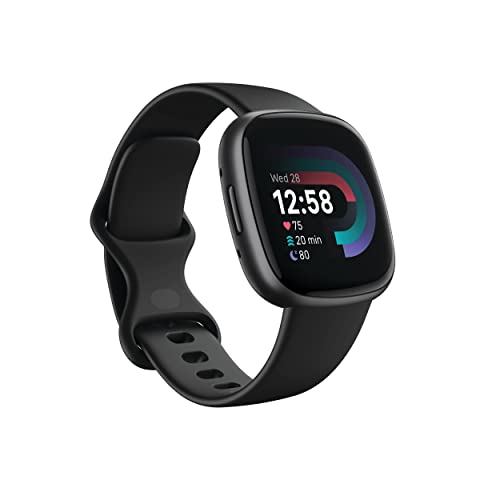
Fitbit Versa 4 Fitness Smartwatch
A balanced smartwatch for everyday fitness with Daily Readiness Scores and a broad range of exercise modes. It’s a solid pick if you want consistent heart-rate monitoring and easy-to-read workout stats without a heavy price tag.
Overview
The Fitbit Versa 4 focuses on helping users get better training results by combining daily readiness feedback, built-in GPS, and many exercise modes. It’s targeted at people who want a straightforward fitness watch that’s comfortable to wear all day and night.
Features and real-world use
Practical benefits and limitations
If you want a fitness-first device without the bulk or complexity of a full smartwatch platform, the Versa 4 is a sensible option. It handles daily tracking well and helps users plan training load. However, those who value extensive third-party apps, LTE connectivity, or the highest sensor precision may prefer a more expensive smartwatch.
Final note
As with other Fitbits, some of the deeper analytics and coaching are tied to a subscription service — useful but an added cost for long-term power users.
Amazfit Bip 5 Unity 46mm Tracker
A strong budget option that prioritizes battery life and core fitness tracking rather than premium smartwatch bells and whistles. Good for users who need reliable heart-rate monitoring and long runtimes at a very low price.
Overview
The Amazfit Bip 5 Unity targets buyers who want straightforward fitness tracking and exceptional battery life without spending a lot. It uses Zepp OS and offers many sports modes, optical heart-rate monitoring, and a durable stainless steel frame at an economical price.
What you get for the price
Practical considerations
This watch is ideal for casual exercisers, commuters, and budget-conscious buyers who want accurate-enough heart-rate tracking and a long runtime. It’s less suited to athletes who need lab-grade HR accuracy, advanced recovery metrics, or a large app ecosystem.
Limitations
Final Thoughts
Pick the Apple Watch Series 9 (9.6/10) if you own an iPhone and want the most polished, all-around smart-watch experience. Strengths: top-tier health sensors, seamless iPhone integration, very bright display, fast performance. Ideal for: iPhone users who want best-in-class apps, notifications, and a feature-rich health stack.
Choose the Garmin Venu 3 (9.3/10) if accuracy and multi-day battery life matter most. Strengths: highly accurate wrist-based metrics, reliable GPS, long runtime, strong fitness insights and animated workouts. Ideal for: serious athletes and long-duration tracking where battery and measurement consistency are priorities.
If you need a lower-cost alternative with great runtime, consider the Fitbit Charge 6 as a practical backup — but for the clearest split between smart features and pure fitness performance, Apple Watch Series 9 and Garmin Venu 3 are the top two picks.
I’m tempted by the Fitbit Sense 2 for stress and sleep features — the guided tools and ECG sound perfect for someone who’s been trying to manage anxiety. BUT I keep hearing about the paid subscription for advanced insights.
Is Fitbit Premium absolutely necessary to make Sense 2 worth it, or do the built-in features give good value without paying monthly?
I used Sense 2 without Premium for 6 months and liked the core features. Ended up subscribing because I wanted the sleep coaching — the tips actually helped me normalize my sleep schedule.
Also worth checking for promo trials — sometimes Fitbit includes trial Premium periods with new device purchases.
If you’re mainly after ECG and stress detection, you’ll be fine without Premium. Premium just makes the data prettier and more actionable imo.
The Sense 2’s hardware provides ECG, SpO2, and basic stress tracking out of the box. Fitbit Premium unlocks deeper trend analysis, sleep coaching, and some advanced metrics. You can get good value without Premium, but if you want coaching and long-term trends, the subscription adds a lot.
Fitbit Charge 6 for value seems tempting — 6 months Premium included is a nice bonus. I’m mostly using it for runs and strength training and want decent GPS and heart rate during gym equipment sessions.
Does Charge 6 reliably read HR on ellipticals/treadmills where the watch isn’t moving much? And how does it compare to Versa 4 for daily readiness?
Charge 6 generally performs well on steady-state cardio and gym equipment; it also has the feature “Heart Rate on Exercise Equipment” which streams HR to compatible machines. For Daily Readiness, Versa 4 and Charge 6 are similar, but Versa 4 gives a slightly fuller smartwatch experience (notifications, apps).
If streaming HR to gym equipment is critical, double-check compatibility of your gym machines with Fitbit — some brands integrate better than others.
Don’t forget battery — Charge 6 lasts longer between charges than Versa 4 in my experience.
I use Charge 6 on the treadmill and it’s been stable. The strap fit matters — snug but not choking. Also the Charge is slimmer so it’s less awkward during lifts.
If you want the best mix of value and features, Charge 6 is hard to beat. Versa 4 is better if you want that smartwatch feel and more on-wrist control.
Amazfit Bip 5 seems like a steal for battery life (11 days!). I’m not looking for a fancy smartwatch, just reliable HR and decent GPS for weekend runs.
Has anyone tracked distance with Bip 5 for 10k runs? How accurate is the HR and GPS compared to phone + chest strap? I’m cool with budget accuracy, just curious.
One tip: update firmware right away — GPS and HR accuracy improved for me after an update.
I used Bip 3 for several 10k runs and it was within ~100-200m vs my phone GPS in most cases. For budget gear, that’s acceptable. HR was good for zone training but not perfect on sprints.
Amazfit Bip 5 is solid for the price. GPS is decent for casual runs but can wander a bit in wooded or urban canyon areas. HR is fine for steady runs; for max-effort intervals, chest straps remain more accurate. For weekend runs and multi-day battery, it’s an excellent low-cost pick.
If you want long battery and don’t obsess over 1–2% accuracy, the Bip line is perfect. Also, customizable faces are a nice bonus 😄
I’m training for triathlons and trying to pick one device to rule them all. Looking at Garmin Venu 3 for accuracy and the Samsung/Apple options for features. Any recs for triathlon use — tri-friendly, durable, and great GPS?
For triathlon I’d favor Garmin (especially models focused on multisport), and while the Venu 3 is great, some triathletes prefer Garmin’s Forerunner or Fenix/Enduro lines for multisport features and mapping. Samsung and Apple are fine but are less triathlon-focused in terms of transitions and multisport recording.
Agreed — Garmin Forerunner/Fenix are the go-to for tri. Venu 3 works if you want a nicer display and battery, but Forerunner 955/265 or Fenix for ruggedness are tops.
Garmin Venu 3 sounds like the accuracy + battery combo I need. Anyone compare the heart-rate accuracy during interval sprints vs a chest strap? I do short, intense workouts and sometimes wrist OHR feels laggy.
Garmin’s optical sensors are among the best for wrist-based HR, and the Venu 3 tends to track intervals better than most. That said, chest straps still outperform wrist sensors for very high-intensity, rapid cadence changes. If you need absolute precision during sprints, use a chest strap; for everyday tracking the Venu 3 is excellent.
I do sprint intervals and paired my Venu 2 with a chest strap for a week. The Venu 2 was close but sometimes lagged on the peak spikes. Expect slightly smoother curves with a chest strap, but Venu 3 should be an improvement.
I’ve been eyeing the Apple Watch Series 9 (renewed) listed here — I love how tightly it integrates with my iPhone, and the display sounds gorgeous. Battery life being “good but not class-leading” is my only worry since I’m not thrilled about charging every day.
Has anyone bought a renewed Series 9 from Amazon recently? Any issues with battery degradation or cosmetic wear? Also curious if the health sensors on renewed units perform identically to new ones.
Renewed units can be a great value. On Amazon, most renewed sellers grade cosmetic condition and often replace batteries if capacity is below a threshold. I’d check the seller return policy and warranty length. Sensor performance is usually the same unless the device had prior water damage — rare, but ask the seller specifics before buying.
I bought a renewed Series 9 for my partner — zero issues so far. If you’re worried, check that it’s sold by Amazon Renewed or a top-rated refurb seller. Also, make sure it’s unlocked/paired back to factory before you accept delivery. 👍
I picked up a renewed Series 8 last year and it was basically perfect — slight scuff on the underside, but battery life was as expected. If you get it, run a few heart-rate checks against another device in the first week to feel confident.
Samsung Galaxy Watch 6 Classic (renewed) looks slick but “moderate battery life” = nope for me. I don’t want to babysit charging every night. Plus renewed units make me nervous 🤨.
If battery life is a top priority, the Venu 3 or the Amazfit Bip 5 will serve you better. The Galaxy Watch 6 Classic has great features and the rotating bezel is lovely, but expect daily charging with heavy use.
Agreed. I had a Galaxy Active and loved the bezel, but battery was meh. Sold it for a Garmin and haven’t looked back (for multi-day use).
Versa 4’s Daily Readiness is pretty legit — helps me decide if I should rest or crush another workout.
But I’m wondering how it stacks up against Garmin’s recovery metrics. Garmin seems more ‘serious athlete’ and Fitbit more ‘everyday helpful’. Anyone tried both? Also — typing this with half my coffee gone, so take that with a grain of salt 😂
Tried both — Garmin for marathon training, Fitbit for daily maintenance. Garmin gave deeper numbers; Fitbit told me to chill and actually helped me stop overtraining.
That’s a fair summary. Garmin’s recovery tools (like Training Status, HRV-based insights) are geared more toward performance athletes and require more contextual data (VO2, training load). Fitbit’s Daily Readiness is simpler and more accessible for everyday users. Your choice depends on whether you want deep training analytics (Garmin) or straightforward guidance (Fitbit).
Garmin’s ecosystem is better if you pair it with third-party analytics platforms. Fitbit feels more “in-app” focused.