

Can your watch really tell you how many calories you burned — or is it just guessing? Let’s separate the trackers from the truth.
Not all calorie counters are created equal. Some wearables guess; a few get remarkably close. Pick the right one and you get useful, actionable data. Pick the wrong one and you’ll be chasing numbers.
This roundup covers 8 top wearables for tracking calorie burn in 2026. Expect clear winners for endurance athletes, runners, everyday users, and budget buyers. Short, practical takes so you can choose a device that actually matches your activity and goals.
Top Picks




Apple Watch Ultra 2 (49mm) GPS + Cellular
Built for long outings and multisport use with excellent battery life and ultra-bright display for outdoor visibility. The rugged titanium case, precision GPS and robust sensor set make it ideal for long runs, hikes and dives.
Overview
The Ultra 2 is Apple’s top-tier adventure smartwatch aimed at endurance athletes and outdoor enthusiasts. With a 49mm titanium case, dual-frequency precision GPS, and a display that stays readable in bright sunlight, it’s engineered to track long, demanding activities while offering smartwatch conveniences.
Core features and calorie-tracking strengths
Those hardware strengths yield more reliable calorie-burn estimates during long runs, multisport sessions and backcountry navigation when compared to many wrist devices. The additional battery runtime also means continuous monitoring (sleep + all-day HR) without frequent charging interruptions, which improves long-term calorie tracking consistency.
Who should buy and practical notes
If you regularly do long-distance running, triathlons, backcountry hiking or diving, the Ultra 2 justifies its premium with durability and extended runtime. Consider fit and weight if you prefer minimal wrist bulk; for everyday casual users the size and cost may be overkill. For maximum tracking accuracy, enable GPS and high-sampling HR modes during workouts and use compatible third-party apps when needed.
Garmin Fenix 7 Sapphire Solar Multisport Watch
A rugged multisport watch with excellent battery life and solar extension, plus advanced GNSS for improved positioning. The detailed performance metrics and recovery tools make it a top pick for accurate calorie and exertion tracking on long outings.
Overview
The Fenix 7 Sapphire Solar is Garmin’s premium multisport watch built for durability and extended field use. With a Power Sapphire solar lens and multi-band GNSS, it is designed to stay powered and accurate during multi-day adventures while providing sophisticated training metrics.
Tracking strengths and features
These capabilities yield robust calorie-burn data over long events and varied terrains where GPS accuracy and sensor uptime matter. The watch also provides context — VO2 max trends, training load and recovery — which help interpret calorie numbers relative to exertion and fitness progression.
Who benefits and practical considerations
Endurance athletes, backcountry hikers, and multisport users will appreciate the durability and deep analytics. Expect a steeper learning curve to unlock advanced features; take time to customize data screens and training profiles to your sport. The premium price reflects the build quality, mapping features and battery technologies that support long-term, reliable calorie tracking.
Garmin Forerunner 965 Running & Triathlon Bundle
Combines a bright AMOLED display with strong GPS performance and advanced training metrics tailored to runners. The combination of lightweight design, long battery life and detailed physiology data makes it excellent for precise calorie tracking during intense training blocks.
Overview
The Forerunner 965 targets serious runners and triathletes who want a high-performance wearable with an AMOLED display and deep training insights. The PlayBetter bundle includes helpful extras like screen protectors and a portable charger for athletes on the move.
Why runners prefer it for calorie tracking
These strengths improve calorie estimate accuracy by combining precise distance and intensity measurements with physiological context. The watch can automatically detect workouts, split effort across disciplines (swim/bike/run) and provide better per-session caloric breakdowns than many general-purpose smartwatches.
Practical guidance and caveats
If you train frequently, take time to personalize sensor settings and training zones in Garmin Connect to get the most reliable calorie estimates. The Forerunner offers a rich app ecosystem, but some users will need to invest time learning the menus. The bundle adds convenience for protection and charging but slightly increases initial cost.
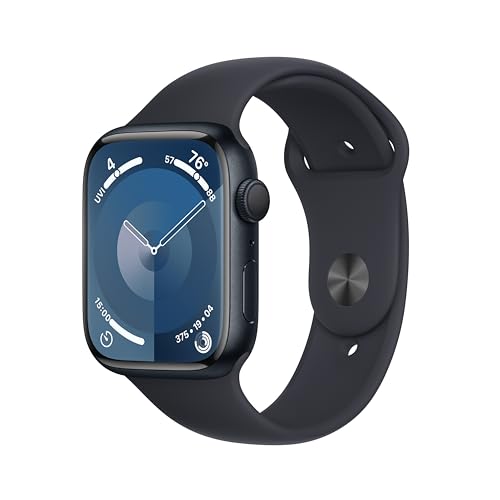
Apple Watch Series 9 (45mm) Renewed
A polished balance of health tracking, performance and smart features with excellent display brightness and responsiveness. Battery life on renewed units varies, but the S9 chipset keeps performance snappy for daily tracking and workouts.
Overview
The Series 9 brings the S9 chip and a very bright display to Apple’s core smartwatch line, making it an excellent choice for calorie tracking and daily activity monitoring. As a renewed 45mm GPS unit with an aluminum case and sport band, it delivers the core Apple Watch experience at a lower price point.
Key features and tracking capabilities
These features translate into reliable calorie-burn estimates across walking, running, and gym sessions, with frequent heart-rate sampling improving overall accuracy. The watch uses Apple’s activity rings and workout algorithms, which combine heart rate, motion and user profile to estimate energy expenditure.
Practical benefits, limitations and tips
For most iPhone users who want accurate everyday calorie tracking, this model balances features and cost well. Renewed units are a budget-friendly option but inspect battery health and seller ratings before purchase. For best results, ensure personal details are accurate in the Health app and update watchOS regularly; consider enabling higher-frequency heart-rate sampling during workouts for better calorie estimates.
Garmin Venu 3S Premium Fitness Smartwatch
A stylish smartwatch with a bright AMOLED display and a strong suite of health metrics. It balances fashion and function, delivering accurate day-to-day calorie and activity tracking in a compact form factor.
Overview
The Venu 3S is Garmin’s answer for users who want a premium-looking watch without sacrificing fitness capability. With a 1.2-inch AMOLED screen and a polished stainless-steel bezel option, it’s crafted to perform at the gym and look good at the office.
Fitness and calorie tracking highlights
These features make it easy to track calories burned across structured workouts and day-to-day activity while keeping an eye on recovery and stress indicators. The onboard workout guidance and animated exercises help users maintain consistent intensity, which improves calorie estimate relevance.
Who should consider the Venu 3S
Choose this watch if you want a polished design with robust fitness tracking for everyday use. If you prioritize ultra-long battery life or need advanced multisport navigation, a dedicated Garmin endurance model may be a better fit. For most users seeking accurate daily calorie insights in a stylish package, the Venu 3S is a strong contender.
Fitbit Charge 6 Fitness Tracker
Combines reliable fitness tracking with useful smart features like Google maps and Wallet in a compact band form. Strong battery life and accurate sensors make it a solid choice for daily calorie and activity monitoring.
Overview
The Charge 6 is Fitbit’s feature-packed fitness band that adds Google apps and smart conveniences to a reliable tracker platform. It’s designed for users who want detailed calorie and health metrics without wearing a larger smartwatch.
Why it tracks calories well
These tracking capabilities help produce consistent calorie estimates during varied activities — walking, running, gym sessions and more. The ability to keep the tracker on for several days reduces missed data, which is important for accurate daily calorie totals.
Practical tips and limitations
If you use Google Maps or Wallet on the device, set up the apps through the Fitbit app to ensure smooth operation. Some users report intermittent phone connectivity issues when launching map features; ensure firmware and app updates are current. For best calorie accuracy, enable GPS on outdoor workouts and position the band with a snug fit for continuous HR sampling.
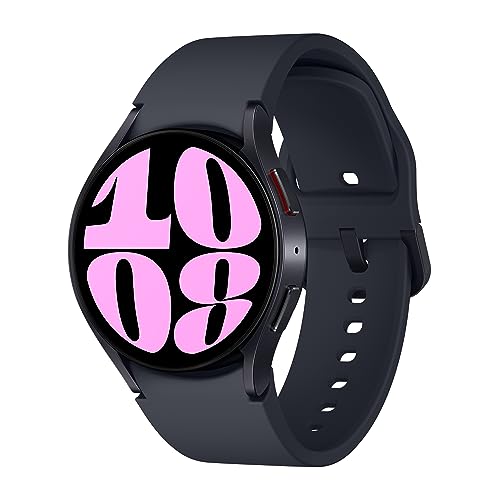
Samsung Galaxy Watch6 (40mm) Renewed
A capable smartwatch for Android users that delivers solid heart-rate and activity tracking with useful wellness features. Renewed pricing makes it a budget-friendly way to get accurate daily calorie estimates and smart features like sleep coaching and BIA sensing.
Overview
The Galaxy Watch6 packages advanced sensors and user-friendly software into a well-built circular smartwatch geared toward Android users. The 40mm Bluetooth model provides personalized heart-rate zones, sleep coaching, and a BIA sensor, which together help refine calorie and body-composition context.
Tracking features and value proposition
Taken together, these capabilities produce meaningful day-to-day calorie tracking and health insights, particularly when paired with a Samsung or Android phone for full functionality. Renewed units offer strong bang for buck, but buyers should confirm seller grading and battery condition.
Practical recommendations
If you want a cost-effective Android smartwatch with advanced health features, this renewed model is appealing. Expect typical smartwatch battery life that decreases with heavy usage; turn off always-on display or reduce sampling rates to extend runtime. Verify renewal warranty and battery health when buying used to avoid unexpected issues.
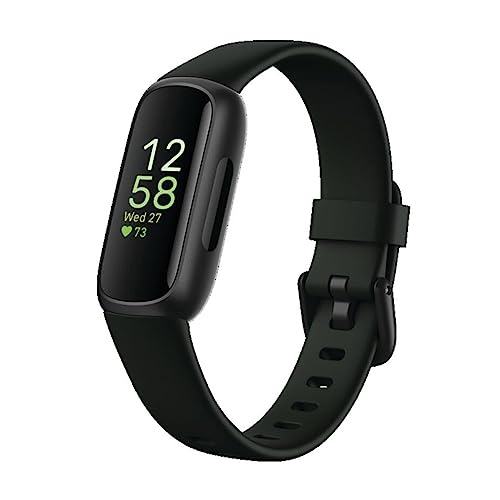
Fitbit Inspire 3 Slim Health Tracker
A slim, no-frills tracker that covers essential activity, heart rate and sleep metrics with long battery life. It’s ideal for users who want straightforward calorie estimates without the complexity of a full smartwatch.
Overview
The Inspire 3 is Fitbit’s entry-level fitness tracker focused on comfort and simplicity. It provides 24/7 heart rate monitoring, activity tracking, sleep insights and readiness scores, making it an approachable option for everyday calorie tracking and habit building.
Key features relevant to calorie tracking
For users who want a light tracker that simply records movement and heart rate to estimate calories burned, this device performs well. The calorie estimates are appropriate for general trend tracking rather than clinical precision — they’re helpful for seeing relative changes in activity level and for motivating movement.
Limitations and practical advice
Because it’s an economical tracker, expect fewer metrics, no built-in GPS (phone GPS required) and occasional syncing hiccups reported by users. To improve calorie estimate consistency, wear the tracker snugly during workouts, keep personal profile data up to date, and pair it with the Fitbit app for trend analysis.
Final Thoughts
Pick the Apple Watch Ultra 2 (49mm) GPS + Cellular if you need the most reliable all‑around calorie tracking for long outings and multisport adventures. Strengths: rugged titanium case, excellent battery life, ultra‑bright display for outdoor visibility, precise GPS and a robust sensor set. Ideal for ultra runners, hikers, triathletes and anyone who spends hours collecting data away from a charger.
Choose the Garmin Forerunner 965 Running & Triathlon Bundle if you’re a runner or triathlete who wants the most detailed training metrics and lightweight comfort. Strengths: bright AMOLED screen, advanced running/triathlon metrics, very accurate GPS and physiology data that improve calorie estimates during high‑intensity training. Ideal for structured training plans, interval work, and athletes who prioritize precise exertion and recovery tracking.
Minor nitpick: the expert badges are helpful but I’d love a quick ‘best battery vs best value’ callout. For example, is Fenix 7 the overall best battery performer even vs Ultra 2 when solar is factored in?
Yep — solar can be a game changer on extended treks. I think the article could add a quick comparison table for that exact reason.
Good suggestion — concise callouts would help. Generally, Fenix 7 with solar can extend battery longer on sunny outings, while Ultra 2 has a strong base battery and rugged build. So for continuous multi-day solar-assisted use, Fenix has an edge; for raw durability + bright display, Ultra 2 excels.
I’m training for a marathon and calorie tracking during long runs is critical. The Forerunner 965 looks ideal with its training metrics — has anyone found differences in calories reported by Forerunner vs Apple Watch Series 9 in long endurance sessions?
For long endurance sessions Garmin tends to give slightly more conservative calorie estimates based on detailed physiology and power metrics (if available). Apple Watch can be more aggressive in some cases but both are good; consistency matters more than exact numbers.
Thanks — that helps. I’ll probably stick with the Forerunner for training data accuracy 🙏
I ran the same 3-hour training run with a Forerunner 965 and an Apple Watch Series 9. Differences were within ~5-10% most of the time. I trust Garmin more for pacing and recovery though.
I have a dumb question: do these trackers calculate calories burned during weightlifting accurately? I mostly lift heavy and hear mixed things about accuracy for resistance training.
Good question. Most trackers estimate calories for resistance training using heart rate and movement patterns, which can under-report anaerobic effort. Watches with manual strength workout modes and muscle oxygen or HRV metrics (some Garmins) can improve estimates, but none are perfect for heavy lifting.
I track lifts with a combination of watch and manual logging. Heart rate-based calories are often low for heavy sets, so I add a margin or use the workout intensity minutes as context.
I appreciate the style angle for Garmin Venu 3S — as someone who cares about looks, it’s refreshing. But does it match the Fitbit or Samsung for sleep tracking accuracy?
I swapped from Fitbit to Venu and my sleep tracking felt consistent. YMMV, but both are strong contenders.
Venu 3S has very capable sleep tracking, comparable to Fitbit in many ways. Fitbit may still be slightly better at some sleep-stage algorithms, but Venu gives a strong overall picture plus extra health insights.
Serious battery users: does the Apple Watch Ultra 2 really last ‘extra-long’ like the description says? I’m on trails for 2-4 days sometimes and charging is a hassle.
Also check route recording frequency — lowering GPS sampling can extend battery a lot if you don’t need second-by-second tracking.
I use my Ultra 2 for 2-day trips with GPS on and it performs great. For 4+ days I still bring a lightweight battery pack or the Fenix with solar. Depends on your GPS usage.
Ultra 2 offers significantly better battery life than the regular Series models, and in low-power modes you can stretch it. For multi-day backcountry trips, Garmin’s solar features (Fenix 7) might outlast it if you’re relying on intermittent sun.
Can someone compare Samsung Galaxy Watch 6 (renewed) vs Fitbit Inspire 3 for calorie tracking while using a rowing machine? I do a lot of indoor rows and want something that reads effort well.
I row frequently. I use a Polar chest strap paired with my watch — that made calories much more reliable than wrist alone.
Rowing can be tricky — wrist motion is limited. The Galaxy Watch 6 with BIA and better HR sensors might give more accurate heart-rate-based calories than Inspire 3, but chest strap + watch pairing is the best approach for rowing accuracy on either device.
I’m on Android and on a budget. The Galaxy Watch 6 (renewed) seems tempting. Anyone compared it to the Fitbit Charge 6 for calorie accuracy and daily tracking?
For pure daily tracking and battery life, the Charge 6 is hard to beat in a simple band form factor. Galaxy Watch 6 offers more smartwatch features and BIA but may have slightly different calorie estimates — both are good, depends on whether you want smartwatch features.
I switched from a Charge 5 to a Galaxy Watch 6 renewed. Calorie numbers were close enough but I love having full notifications and apps on the Galaxy. If you want simpler daily tracking with long battery, stick with Fitbit.
Also worth noting: Fitbit integrates tightly with Google services now, so pairing with Android is smoother than before.
This article made me realize how different trackers are for ‘adventure’ vs ‘daily life’. Short story: I bought the Fitbit Inspire 3 for basic tracking and wow — such long battery life and very light. Not fancy but great for sleeping and everyday steps.
Agreed. I gifted one to my mom for similar reasons — she charges it like once a month and uses it to track walks and sleep. Basic, but works.
Totally — Inspire 3 is a perfect low-maintenance option. Good for people who want reliable day-to-day calorie estimates without the distraction of a full smartwatch.
Quick question: Does the PlayBetter Garmin Forerunner 965 bundle actually come with a usable portable charger? Or is it one of those tiny gimmicks that doesn’t help much on long runs?
I had the same bundle — the charger is compact and gave me about 20-30% extra on a long training weekend. Not a full replacement but better than nothing.
The bundle usually includes a small portable charger that gives a decent top-up for race day or long outings, but don’t expect it to replace a full power bank. It’s handy for emergencies.
Love that you included a renewed Series 9 and Galaxy Watch 6 option — budgets matter. For someone who wants notifications and decent health metrics without spending a fortune, is renewed a good route? Any caveats buying renewed from Amazon?
Also check included accessories — sometimes chargers aren’t original, but functional replacements are usually fine.
Bought a renewed Series 9 last year — works great, saved a ton. Just make sure the seller has a good rating and returns policy.
Renewed can be a great value, especially if you buy from reputable sellers or Amazon Renewed. Check the return window and warranty. Battery health can vary on renewed units, so look for listings that specify battery condition or include a guarantee.
Long post (sorry, I like details):
I had a FitBit Charge 3 years ago then moved to a Garmin Fenix 7 recently. The difference in calorie/exertion insight was night and day for my weekend hikes. Fenix gave me recovery time, training load, and felt more ‘serious’ about exertion levels. But the Charge 6 would’ve been a lighter daily option. If you’re mostly walking and casual workouts, save money; if you train hard or go on long adventures, invest in Garmin or Apple Ultra.
This mirrors my experience. Fenix changed how I approach recovery after big hikes. Worth the upgrade if you use the metrics.
Thanks for the detail — helped me decide to get a Venu instead of splurging on Fenix for now.
Great breakdown — that’s exactly how many users split their choices. Wearable choice often comes down to lifestyle: lightweight daily comfort vs deep performance metrics.
Love the mix of high-end and budget picks. One thought: the Apple Watch Ultra 2 is great but pricey. For someone who wants a lot of outdoor features but can’t justify Ultra, is the Series 9 (renewed) a decent compromise, or is Garmin the way to go?
Series 9 (renewed) is a reasonable compromise — you get snappy performance and core fitness features. But for serious outdoor navigation/long battery, Garmin (Fenix or Forerunner) is superior. It depends whether you value iOS integration or off-grid capabilities more.
If you value maps and battery over smartwatch features, Garmin. If you want a good all-around iPhone experience with decent tracking, Series 9 renewed is fine.
Thanks for this roundup — super helpful. I’m trying to decide between the Apple Watch Ultra 2 and the Garmin Fenix 7 for weekend bikepacking. Battery life and GPS accuracy are my top priorities. The Ultra 2 looks great for outdoors, but I’ve heard Garmin’s mapping is better. Any real-world tips?
I took a Fenix 7 on a 3-day bikepacking trip last month — maps were solid, battery lasted with solar assist, and the recovery metrics actually helped me pace better. Garmin is the choice for multi-day navigation imo.
I own an Ultra 2 and it’s brilliant in full sun (display is crazy bright). If you do a lot of off-trail navigation Garmin wins, but for ruggedness + easy interaction the Ultra 2 felt more intuitive to me.
If you prioritize mapping and battery for multi-day trips I’d lean Fenix 7. The solar charging and GNSS give it an edge for long adventures. Ultra 2 is tougher and has an awesome display for bright conditions, though.
Anyone tried the Garmin Venu 3S for workouts that are both office-friendly and gym-ready? I’m tired of looking like I’m wearing a mini-computer to meetings but want accurate calorie counting for HIIT sessions.
Venu 3S is a nice balance — looks dressy enough for office wear and has solid HIIT tracking. I’ve been impressed with the display and it’s less bulky than Fenix/Ultra.
I use mine in meetings frequently — nobody notices, and the battery is reasonable. Calorie burn during intense classes looked accurate vs gym equipment.
Venu 3S is a good pick if you want something stylish with strong health metrics. For very technical training metrics Garmin’s Fenix/Forerunner line is deeper, but Venu handles most gym stuff well.
Humor me: If I want to flex at the gym and accurately track my calorie burn, which one makes me look the least like a data nerd while still being legit? 😂
Venu 3S or the Apple Watch Series 9 (renewed) both look sleek without screaming “I track everything.” Venu is more subtle and stylish, Series 9 blends in as a premium watch. Fitbit Inspire is even more understated if subtle = priority.
Wear a Venu and pretend it’s just a fashion watch. People won’t notice the nerdiness until you tell them your VO2 max 😂
Small PSA: if you’re tracking calorie burn for weight loss, remember trackers are estimates. Use them for trends, not exact numbers. That said, I love how the Forerunner 965 breaks down training load — actually motivated me to recover smarter.
Exactly — wearables are best for trends and behavior changes. Training load and recovery tools are great for preventing overtraining though, so devices like the Forerunner 965 are worth it for serious athletes.
100% agree. Calories are estimates. Use them to see if you’re moving more over weeks/months, not to micromanage every meal.
Also: sync to manual food logs rather than trusting devices alone — that’s kept my progress realistic.
I bought the Fitbit Charge 6 because of the 6-months Premium and Google features mentioned. One tiny issue: GPS when tethered to phone sometimes lags. Anyone else seen this?
Also ensure the app is allowed to use location in the background; Android/iOS may block it otherwise.
Had the same — updating the Fitbit app and disabling battery optimizations for it fixed the lag for me.
Some users report GPS tethering lag depending on phone model and Bluetooth stability. If you need stand-alone GPS, use the built-in GPS (if available) or ensure your phone’s Bluetooth background permissions are set to always. Also try restarting both devices.