

Why securing tracker health data matters
Securely storing health data from trackers protects privacy, prevents misuse, and preserves long-term usefulness. This guide walks through six practical steps, inventory, encryption, access control, retention, backups, and audits, to keep personal tracker health data safe, secure, and fully compliant.
Requirements

Do You Track Your Workouts with a Fitness Tracker or Notion?
Step 1 — Take a Full Inventory of Your Tracker Data
Know everything or expect surprises — what if a forgotten app is leaking your heart rate?Inventory every tracker and every data flow. List devices, paired phones, cloud services, third‑party apps and export formats (CSV, JSON, FIT, HL7). Example: “Fitbit → iPhone (Health kit) → Google Drive (CSV).”
Record the following for each item:
Encrypt the inventory and update it whenever devices, apps, or accounts change.
Step 2 — Encrypt Everything That Matters
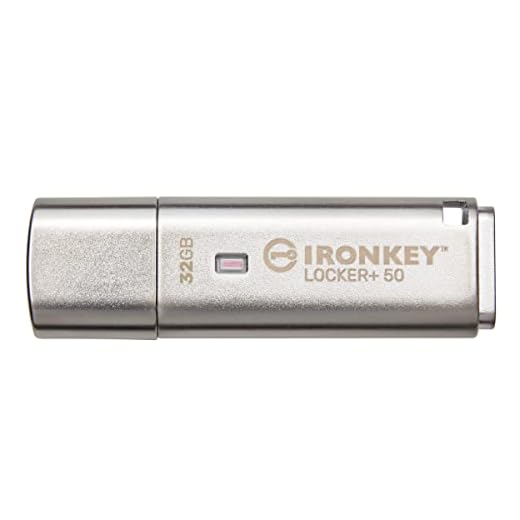
Encryption isn't optional — it's the single best defense against casual and targeted breaches.Apply strong encryption to all stored tracker health data. Enable device‑level encryption on phones and wearables (e.g., FileVault, Android FDE) and use secure app storage for health apps.
Encrypt exports and databases with AES‑256 (or equivalent). Manage keys separately from the data and prefer hardware‑backed keys (TPM, Secure Enclave). Rotate keys on schedule or after suspected compromise. Use TLS for data in transit and enable cloud server‑side encryption with customer‑managed keys (CMKs) when available.
Avoid storing plaintext sensitive fields; pseudonymize or hash identifiers and truncate raw location traces unless necessary.
Follow these checklist items:
Step 3 — Lock Down Access and Authentication
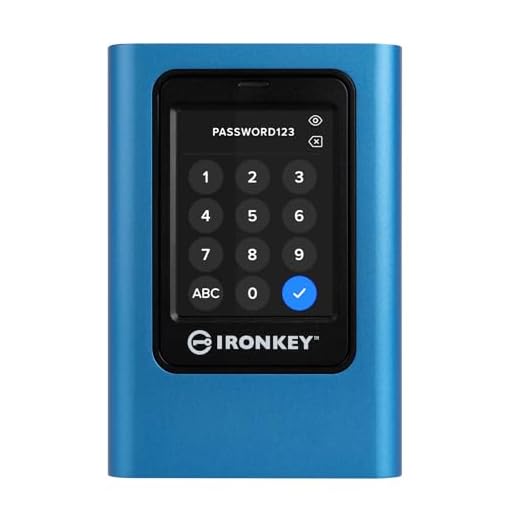
Who should really see this data? Hint: fewer people than you think — strict roles win.Control who can view and change tracker health data with strict, least‑privilege policies. Grant minimal permissions and separate roles for viewing, editing, and administration (e.g., clinician = view; data scientist = pseudonymized read; admin = role management).
Require strong authentication for all accounts and enforce MFA for owners, clinicians, and administrators. Use short‑lived API tokens (minutes–hours), scope‑limited credentials, and OAuth 2.0 for integrations. Implement session controls and inactivity timeouts in apps.
Audit accounts regularly and remove unused or orphaned accounts. For family/shared access, create separate profiles or consent flows to prevent accidental overexposure. Maintain immutable access logs (append‑only or WORM/cloud object lock) and automate alerts for anomalous access. Apply step‑up authentication for risky operations and require vendor security assessments plus quarterly access reviews with documented remediation.

Step 4 — Collect Less, Retain Less, Delete Right
More data means more risk — smarter retention saves privacy and panic later.Minimize what you store and keep data only as long as necessary. Define a retention period per data type and automate deletion or archival workflows. For example, swap 1‑Hz raw streams for 5‑minute summaries to cut exposure while keeping analytics useful.
Step 5 — Backups, Recovery, and Integrity Checks
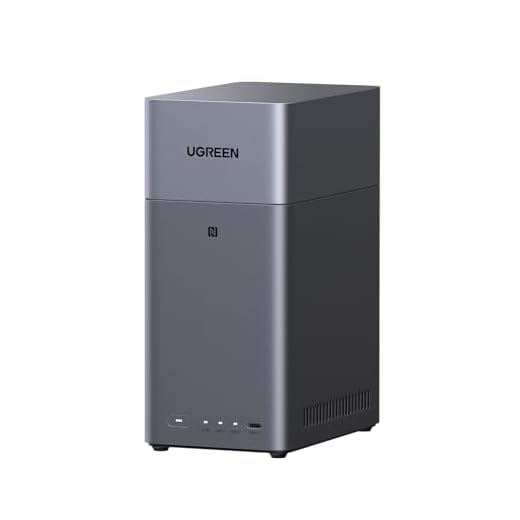
Backups are your safety net — but they can become liabilities if unmanaged.Implement and test a reliable backup and recovery strategy. Follow the 3‑2‑1 rule: keep three copies, on two media types, with one offsite copy (for example: primary DB, on‑prem NAS, encrypted S3 Glacier). Encrypt backups and store backup credentials separately from production keys.
Use versioning and immutable snapshots to stop ransomware from altering history. Automate checksums (e.g., SHA‑256) and send alerts to your SIEM when corruption or unexpected changes occur.
Test restores and run quarterly disaster drills. Document and agree on RTO and RPO with clinicians and compliance officers, and rehearse incident notification templates. For cloud services, verify SLAs, export procedures, and account recovery steps. Align backup retention with your retention policy to avoid preserving excess sensitive data and costs.
Step 6 — Monitor, Audit, and Prepare for Incidents
Detect early, respond fast — the difference between a contained glitch and a headline.Establish continuous monitoring and centralized logging for access, configuration changes, and data exports. Record user ID, timestamp, target dataset, and source IP — e.g., alert on a clinician exporting a month of step counts at 2 AM from a new IP.
Protect logs from tampering by using write‑once storage, forwarding to a SIEM, and retaining per policy. Automate integrity checks and alert on missing or altered logs.
Deploy anomaly detection to flag unusual access patterns or data flows and integrate alerts into an incident response workflow.
Maintain a documented incident response plan that defines roles, escalation paths, communication channels, legal notification obligations, and timelines for containment, eradication, and recovery. Conduct tabletop exercises, penetration tests, and third‑party assessments regularly.
Maintain audit documentation and evidence collection, engage legal counsel for notifications, run compliance reviews, and publish periodic transparency reports for stakeholders publicly.

Conclusion — Put these practices into action
Follow these six steps to inventory, encrypt, limit access, retain sensibly, back up, and monitor tracker health data; review regularly, be transparent with users, try it and share your results.
Finally, a guide that doesn’t just scream “install antivirus and you’re done” 😂
My two cents: step 4 (collect less) should be the headline. So many teams hoard data like it’s free. Also, legal teams love long retention periods — fight them 😆
Haha, agreed. Data hoarding is a security and privacy trap. Work with legal to create business-justified retention windows — policy beats panic.
Tell legal you can still aggregate for analytics without storing PII. Often a compromise solves both sides’ needs.
Short and to the point — Step 3 on locking access is gold. MFA + role-based access saved us from at least one near-miss.
Question: anyone using hardware keys for dev/admins? How painful is onboarding?
We rolled out yubikeys last year. Initial pain, but training + a recovery policy made it fine. Definitely recommend for prod access.
Hardware keys add friction but massively reduce account takeover risk. For onboarding, document the process, keep a small pool of spare keys, and combine with software tokens for recovery.
Really liked the flow — inventory -> encrypt -> monitor. A few practical notes from my experience:
– Retention: set automated deletion with logs. Manual deletions are dangerous and hard to prove in audits.
– Backups: keep at least one immutable backup (WORM or object lock) in a separate account/region.
– Monitoring: alerts are useless unless someone triages them — set up escalation paths.
Also, consider documenting data provenance for each tracker model/version. Different vendors tag timestamps differently and that messes up integrity checks.
Great additions — immutable backups and documented escalation paths are often overlooked. Provenance tracking is a great call, especially for multi-vendor environments.
Escalation paths are key. We filter alerts to actionable ones and route them to on-call with clear SOPs — otherwise they just get ignored.
For provenance we added a small metadata layer that stores vendor, firmware, and ingestion timestamp. It helped debugging massively.
If anyone wants, I can share a sample metadata schema and an alert triage checklist in a follow-up — would that be useful?
Totally agree on automated deletion logs. We had to prove deletion timelines for a compliance audit and the logs saved us.
Good tips but wondering about small teams with zero security budget — how realistic is full encryption + KMS + immutable backups? Feels expensive.
Also, any recommendations for lightweight auditing tools? We don’t have a security engineer yet and the audit part seems overwhelming.
We used open-source tools like Auditbeat + centralized logging to get basic audit trails without big cost. Not fancy, but it worked while we grew.
For KMS costs, many providers have free tiers for small usage. Also consider using object locks for immutable backups instead of expensive third-party vaults.
Totally valid concern. Start small: enable built-in encryption from your cloud provider (often free), use service-managed keys, and schedule simple nightly backups to a different account/region. For auditing, cloud native audit logs + a daily digest email can go a long way before buying a full SIEM.
If you’d like, share a little about your stack and I can suggest concrete, low-cost steps to implement the core controls.
Love this guide — super practical. A couple things I did differently at my small clinic:
1) I started by mapping device owners to data types (heart rate vs activity) — saved a ton of time.
2) Encrypting at rest + in transit was a no-brainer, but key rotation tripped me up the first month 😅
3) The bit about “collect less” is underrated — we dropped fields we never used and it reduced risk instantly.
Thanks for putting this together!
If your KMS supports envelope encryption, you can decrypt on a secure server and re-encrypt per-request with temporary keys. Keeps the rest of your store safe and still satisfies export requests.
Glad it helped, Ava — mapping owners to data types is a smart shortcut. For key rotation, consider automating with your KMS and schedule quarterly rotations; it avoids the manual headache.
Curious — how did you handle exporting data when patients requested it? We worry about preserving encryption while providing usable files.